
Illustrated Reforestation Compendium
Tree Species of the Isthmian-Atlantic Slope — Rancho Garza
Written & Illustrated by Malcolm Wyer
Para la versión en español, haga clic aquí.
Isthmian-Atlantic Moist Forests Ecoregion
Tropical & Subtropical Moist Broadleaf Forests Biome
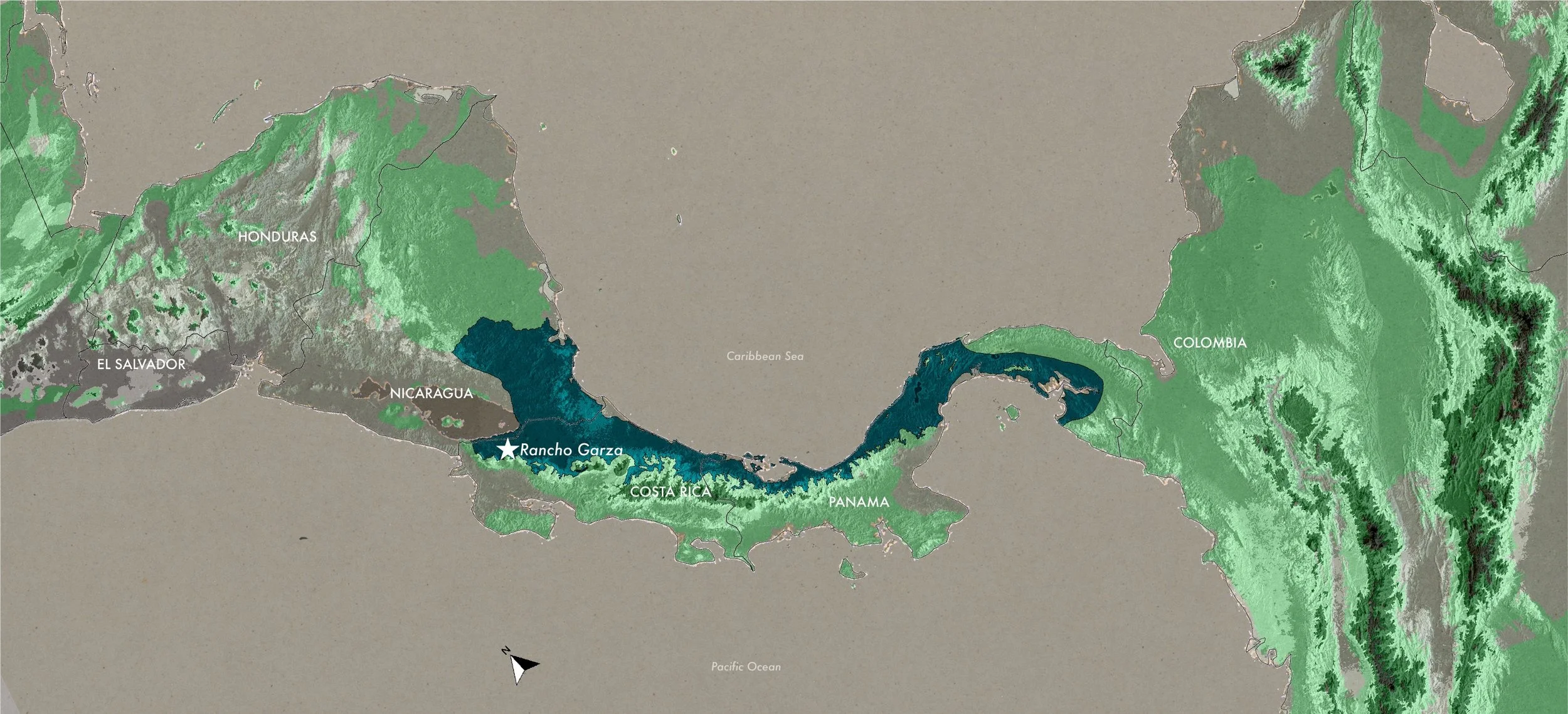
Rancho Garza sits on the Caribbean-facing slope of the Rincón de la Vieja volcano, in Costa Rica's Zona Norte — inside the Isthmian-Atlantic Moist Forests ecoregion. This compendium documents the native tree species we've drawn on to reforest it, in the hope that the species and strategies here prove useful well beyond our own fence lines.
The work unfolds in three parts. “Part 1: Which tree, and when?” is an illustrated guide to each tree species, organized by its role in forest succession — from fast-growing pioneers to shade-tolerant climax canopy. “Part 2: How much work am I signing up for?” lays out the reforestation strategies open to a landowner, from passive natural regeneration to full commercial plantation, illustrated throughout with axonometric diagrams. “Part 3: Where do these trees actually go?” puts those same species to work in productive landscapes, assembling them into sectional diagrams of a silvopasture system, a riparian corridor, and an agroforestry farmscape.
Taken together, the three parts aim at something close to a comprehensive planning document: one built for a landowner reforesting this particular slope, but useful, I hope, to anyone working the broader Tropical Moist Broadleaf Forest biome.
Part 1
Which tree, and when?
Our first year in Costa Rica, we applied to the Instituto Costarricense de Electricidad (ICE) for free reforestation trees. A few months later, a batch arrived. ICE runs three forest nurseries, in Cachí, La Garita, and Tronadora, producing hundreds of thousands of trees a year. Their operating philosophy is refreshingly indiscriminate: any tree is a good tree, whether it's a true reforestation native, a garden ornamental, or a plantation lumber species. You sign up, you wait, you receive trees.
It isn't a coincidence that a national electric utility runs the country's most ambitious tree giveaway program. The logic traces back to 1956, when ICE first moved to protect the watershed above the Reventazón River, and it hasn't really changed since. Forest cover on a slope means rain soaks into the ground instead of running off it. That recharges the nacientes, the springs, that feed the rivers ICE dams for power. More forest, more groundwater, more electricity. It's a simple equation, and I still think it's one of the better government programs I've ever encountered.
We tried, that first year, to keep our new trees labeled and identified. We staked a name tag next to each one, photographed the leaves, ran searches trying to confirm what we'd actually been given. What it might look like mature. How it might behave once it found its place in a forest community instead of a nursery row. It was a piecemeal effort in a climate that was still entirely unfamiliar to us, squeezed into the gaps of everything else that first year demanded. Looking at that planting now, only a handful of those original trees are still standing.
This compendium is my real reckoning with what ICE actually gave us, annually for five years now. It started, unglamorously, with a sprained ankle that kept me at my desk for the better part of two months. I finally did the identification work properly instead of hastily. I'd find the best available photo of a mature specimen, one without flowers or fruit crowding the frame, just the plain architecture of the tree. I'd print it out and trace its morphology in ink: trunk, branching structure, the logic of how the canopy held itself up. Then I'd come back over that ink with watercolor, looser this time, evoking the foliage instead of rendering it exactly. Alongside the drawings I started keeping spreadsheets, height, family, range, wood density, and the spreadsheets slowly grew into what are now the written notes.
Somewhere in those two months at the desk, I had to admit something about my own taste that this project eventually pushed me past. I love dark, intact canopy forest, the kind pioneer species can't grow in, the kind that takes decades or centuries to build. Given the choice, I'll always be drawn to the climax trees, the emergents that break above everything else, the hardwoods that hold their ground for a hundred years. Pioneer species, by comparison, seemed almost beneath notice. Scrubby. Short lived. The trees you tolerate on the way to the forest you actually want.
It took a long time, and a lot of species entries, to walk that bias back. Pioneers aren't the lesser draft of a forest. They're the only reason a forest gets a chance to be drafted at all. They're the ones willing to grow on bare, sun blasted, landslide scarred ground that nothing else will touch, soil too exposed and too hot and too abandoned for anything patient to survive in. They grow recklessly fast because they have to. They're racing to close a canopy before the grasses and vines choke out everything beneath them. In doing that, they rebuild the microclimate, the shade, the humidity, the leaf litter. By the time I'd drawn and researched enough of them, I'd stopped seeing pioneers as the lesser trees and started seeing them for what they actually are: scrappy, intrepid, structurally doomed, and doing more to build the eventual dark canopy than any climax tree ever could on its own.
That shift in how I saw pioneers is really what convinced me there's no other sensible way to organize these trees than by successional guild. Guild is the only frame that tells you why a tree looks and behaves the way it does, because it tells you what the tree is racing against, what it's willing to tolerate, and what it's ultimately built to hand off to something else. A pioneer's soft wood and its urgency aren't separate facts about it. They're the same fact. In Part 2, I'll look more closely at how you actually put these guilds to work together, layering them into real reforestation strategy on real ground. But here, in this section, I wanted each guild to stand alone first, to be understood on its own terms before it gets folded into a plan.
The succession spectrum
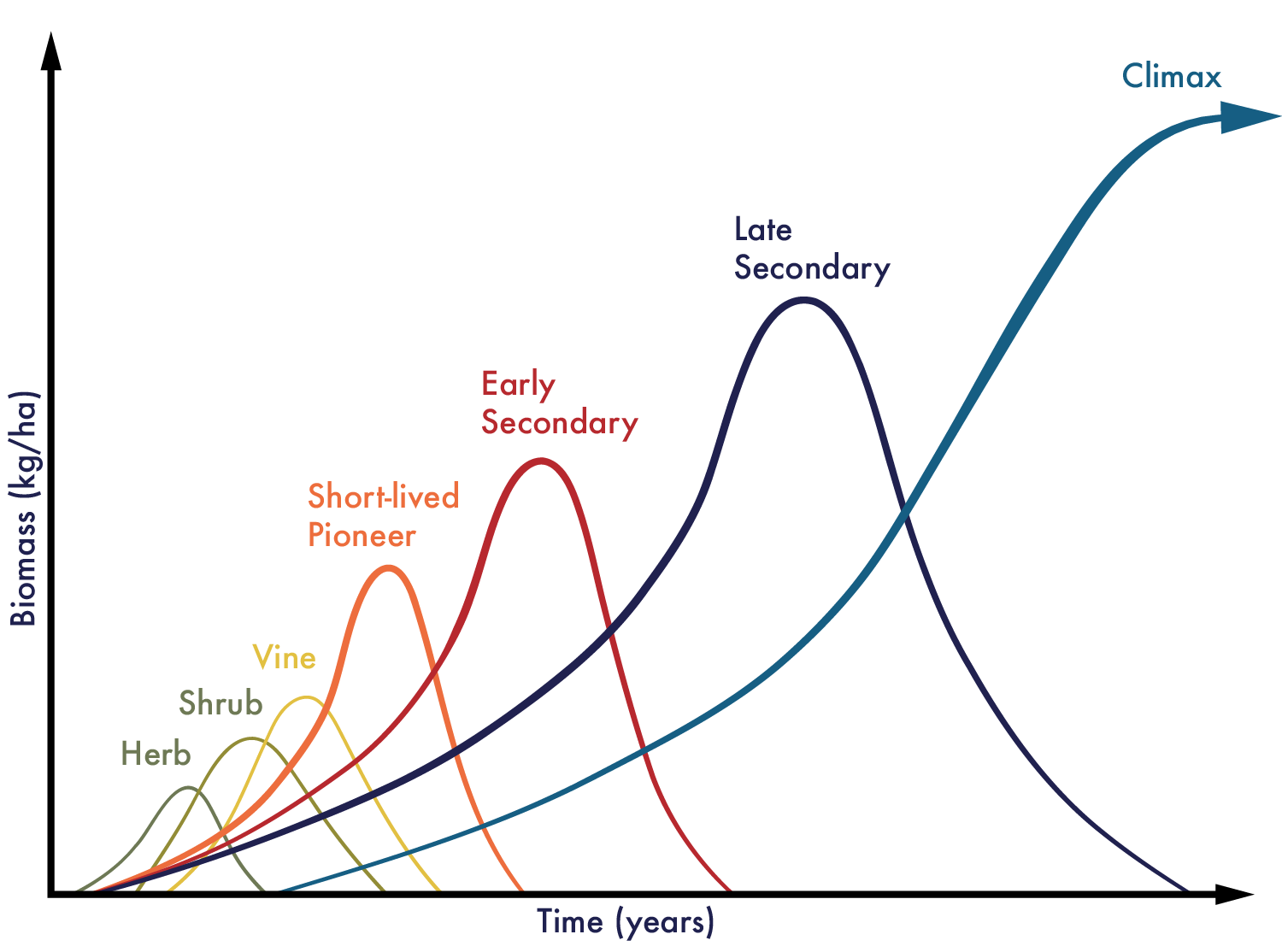
Tree functional groups across tropical forest succession.
In the first five years, herbaceous plants, herbs, shrubs, and vines, establish first and are gradually replaced by short-lived pioneer trees. Longer-lived pioneers and shade-tolerant species follow after that. If you plotted each group's biomass over time, every one would rise and fall at its own characteristic point in the sequence. But none of them hand off to the next in a clean step. They all overlap, continuously, the whole way through.
Sources:
Budowski, G. (1965). Distribution of tropical American rain forest species in the light of successional processes. Turrialba, 15(1), 40–42.
Finegan, B. (1996). Pattern and process in neotropical secondary rain forests: the first 100 years of succession. Trends in Ecology & Evolution, 11(3), 119–124. https://doi.org/10.1016/0169-5347(96)81090-1
Pioneer Species
Pioneer species are the trees willing to grow where nothing else will. They colonize the bare, sun blasted, disturbed ground, landslide scars, abandoned pasture, the raw edges left behind after clearing. Fast growing and short lived, dependent on full sun, with seeds that can sit dormant in the soil for years, waiting for exactly the right flash of direct light to wake them. Their wood is soft and cheaply built, because density was never the point. Speed was. In the time they have, they do the essential first work: shading out the grasses that would otherwise choke a clearing forever, moderating the heat and dryness at ground level, building the first real layer of leaf litter and organic soil. But a pioneer can't regenerate in its own shade. Once the canopy it built closes above it, it has already done its job, and the forest moves on without it, exactly as it was built to.
Fast Pioneers
-
![Illustration of Balsa (balso, burillo, enea, nisperillo), Ochroma pyramidale, fast pioneer reforestation tree of the Isthmian-Atlantic slope, at mature height with figure for scale.]()
Balsa
Ochroma pyramidale
-
![Illustration of Burío (Red-branch jonote; jonote, corcho, majagua, mozote, jolocín), Heliocarpus appendiculatus, fast pioneer reforestation tree of the Isthmian-Atlantic slope, at mature height with figure for scale.]()
Burío
Heliocarpus appendiculatus
-
![Illustration of Capulín (Jamaican nettletree; capulín, capulín blanco, jucó, vara blanca), Trema micrantha, fast pioneer reforestation tree of the Isthmian-Atlantic slope, at mature height with figure for scale.]()
Capulín
Trema micrantha
-
![Illustration of Colpachí (Snowy croton; corpachí, copalchí, copalchín, canela blanca), Croton niveus, fast pioneer reforestation tree of the Isthmian-Atlantic slope, at mature height with figure for scale]()
Colpachí
Croton niveus
-
![Illustration of Gallinazo (Brazilian firetree; zorra, cañafistol, tambor, frijolillo), Schizolobium parahyba, fast pioneer reforestation tree of the Isthmian-Atlantic slope, at mature height with figure for scale.]()
Gallinazo
Schizolobium parahyba
-
![Illustration of Guácimo (West Indian elm; guácimo ternero, caulote, tapaculo), Guazuma ulmifolia, fast pioneer reforestation tree of the Isthmian-Atlantic slope, at mature height with figure for scale.]()
Guácimo
Guazuma ulmifolia
-
![Illustration of Guarumo (Trumpet tree; guarumo colorado, yagrumo, yarumo, trompetillo), Cecropia obtusifolia, fast pioneer reforestation tree of the Isthmian-Atlantic slope, at mature height with figure for scale.]()
Guarumo
Cecropia obtusifolia
-
![Illustration of Guayaba (Guava; guayabo, guayaba dulce, guayaba manzana), Psidium guajava, fast pioneer reforestation tree of the Isthmian-Atlantic slope, at mature height with figure for scale.]()
Guayaba
Psidium guajava
-
![Illustration of Güitite (Wild tobacco tree; palo de pollo, tabacón, huele de noche, tomatillo), Acnistus arborescens, fast pioneer reforestation tree of the Isthmian-Atlantic slope, at mature height with figure for scale.]()
Güitite
Acnistus arborescens
-
![Illustration of Hule (Panama rubber tree, caucho, palo de hule, castilloa rubber), Castilla elastica, fast pioneer reforestation tree of the Isthmian-Atlantic slope, at mature height with figure for scale.]()
Hule
Castilla elastica
-
![Illustration of Indio desnudo (Gumbo limbo; palo mulato, chacaj, jiñocuabo, almácigo, jiote, carate), Bursera simaruba, fast pioneer reforestation tree of the Isthmian-Atlantic slope, at mature height with figure for scale.]()
Indio Desnudo
Bursera simaruba
-
![Illustration of Papaturro (Inland seagrape; uvero, uvita, uva silvestre, uvero de hoja grande), Coccoloba caracasana, fast pioneer reforestation tree of the Isthmian-Atlantic slope, at mature height with figure for scale.]()
Papaturro
Coccoloba caracasana
-
![Illustration of Targuá (Dragon's blood tree; sangregado, sangre de drago, llorasangre, palo de sangre), Croton draco, fast pioneer reforestation tree of the Isthmian-Atlantic slope, at mature height with figure for scale.]()
Targuá
Croton draco
-
![Illustration of Tubú (Tree Daisy; tubús, tobú), Montanoa guatemalensis, fast pioneer windbreak tree of Monteverde and the Isthmian-Atlantic slope, at mature height with figure for scale.]()
Tubú
Montanoa guatemalensis
-
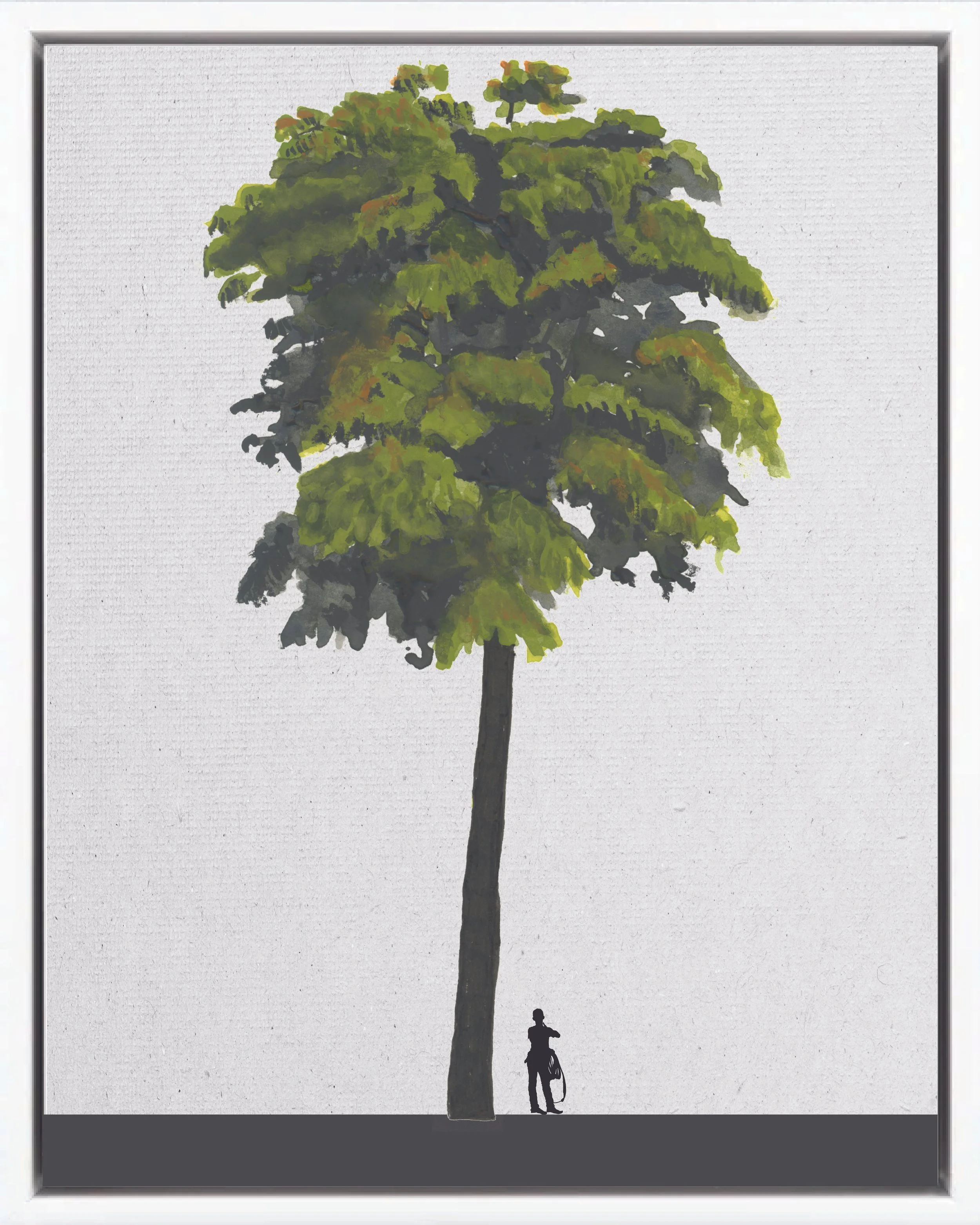
![Illustration of Vainillo (Yellow bells; sardinillo, tronadora, amarguito, cholán, guarán amarillo), Tecoma stans, fast pioneer reforestation tree of the Isthmian-Atlantic slope, at mature height with figure for scale.]()
Vainillo (Sardinillo)
Tecoma stans
-
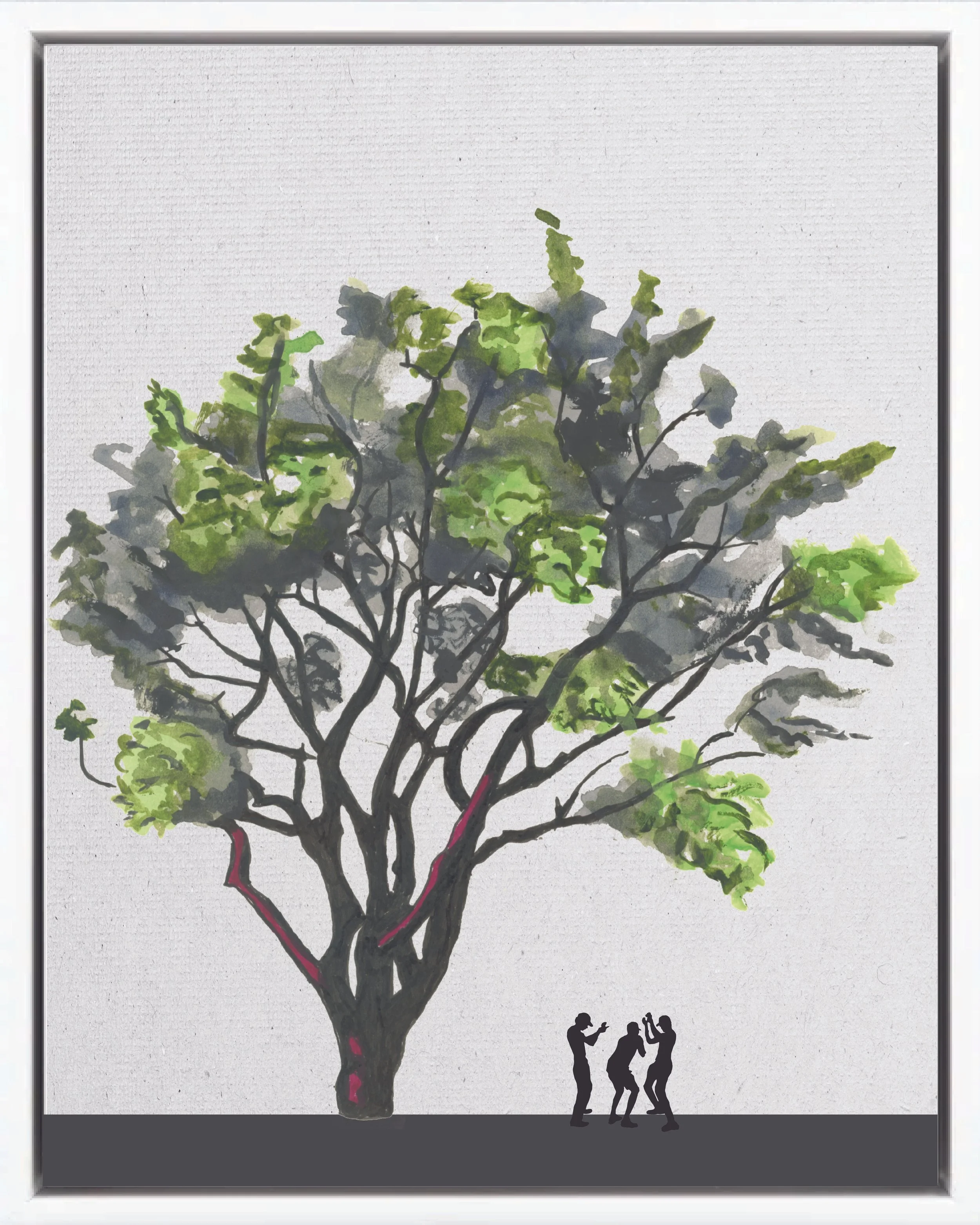
![Illustration of Yos (Milkwood; lecherón, curupí, leche de olivo, olivo macho, pijiño), Sapium glandulosum, fast pioneer reforestation tree of the Isthmian-Atlantic slope, at mature height with figure for scale.]()
Yos
Sapium glandulosum
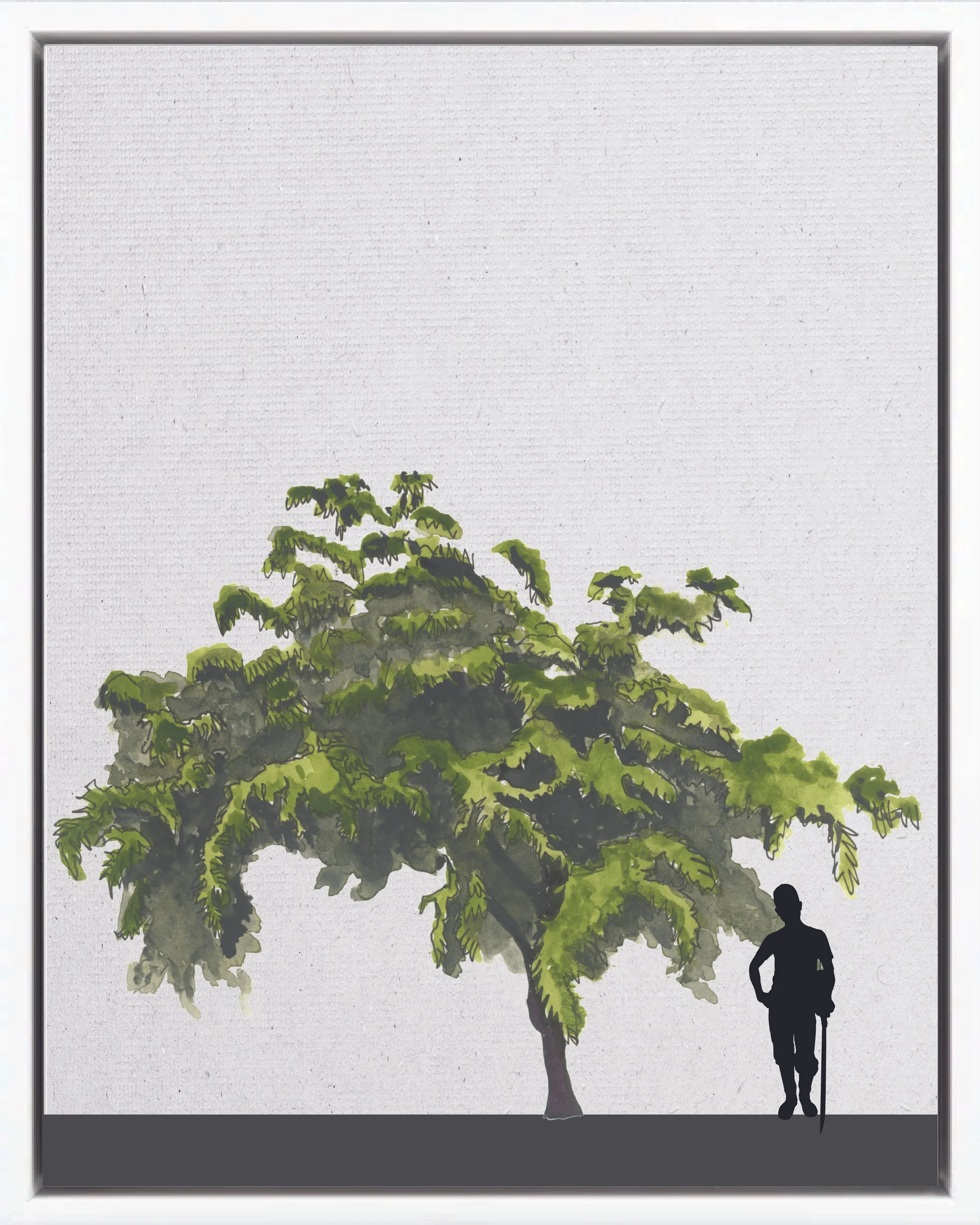
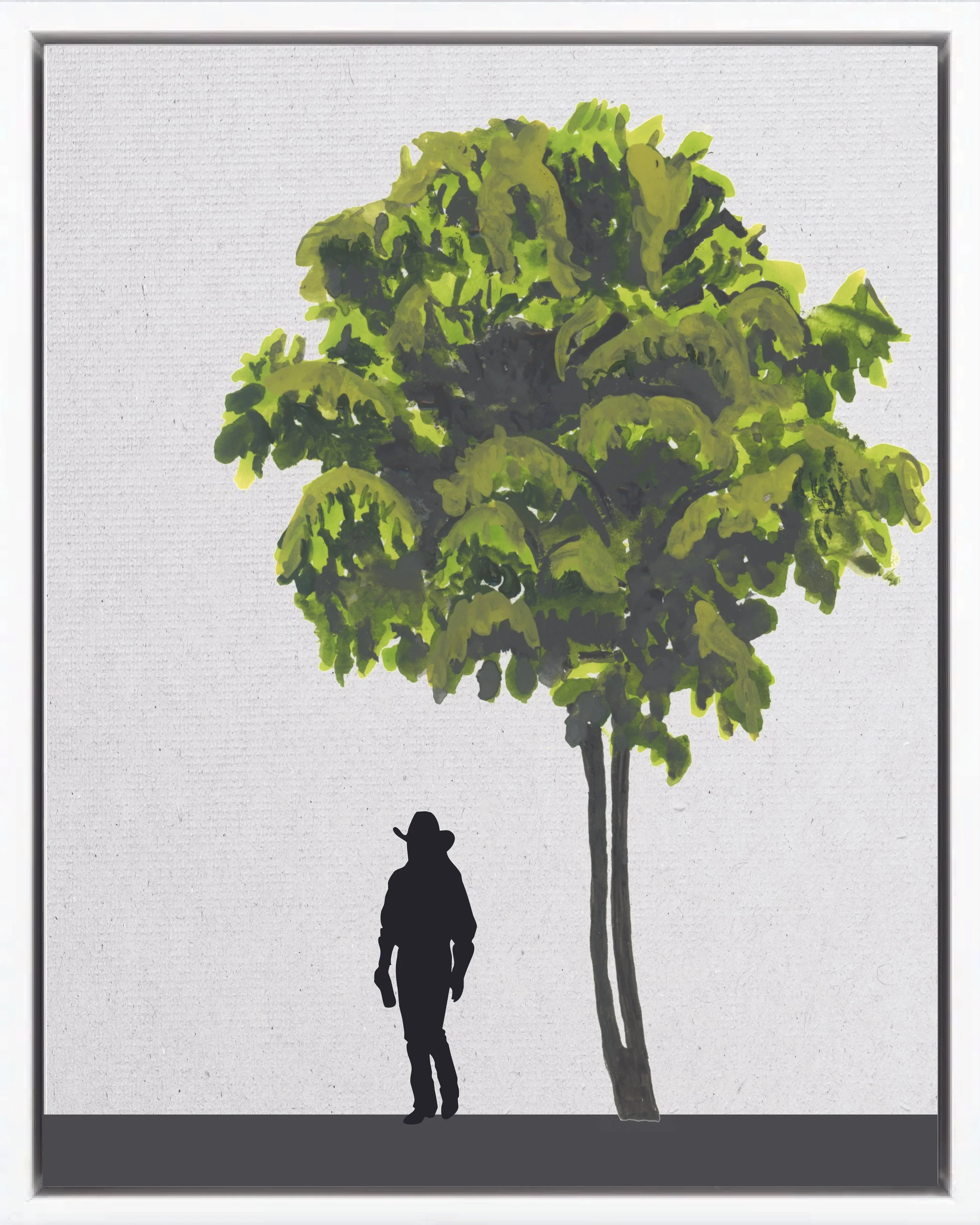


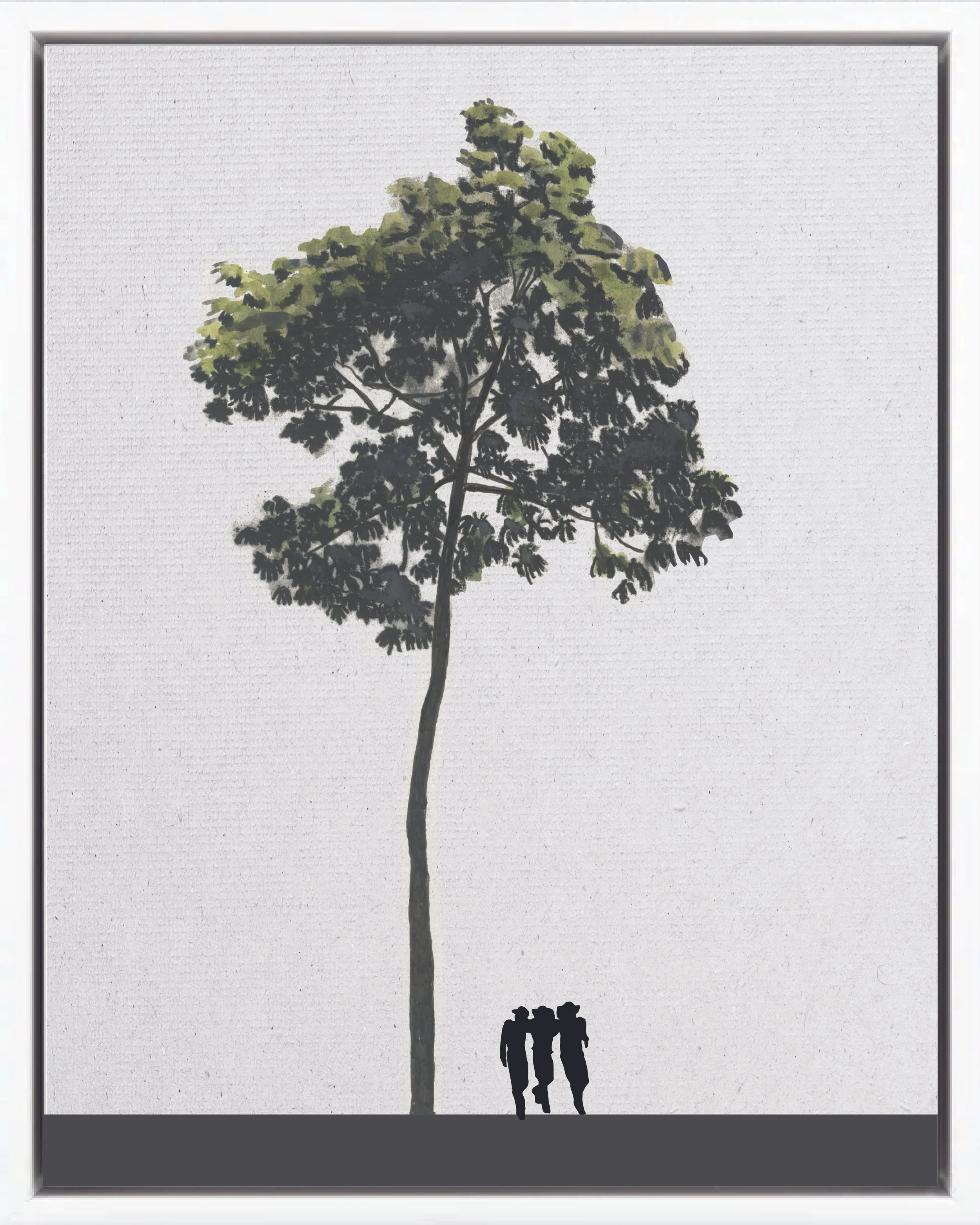
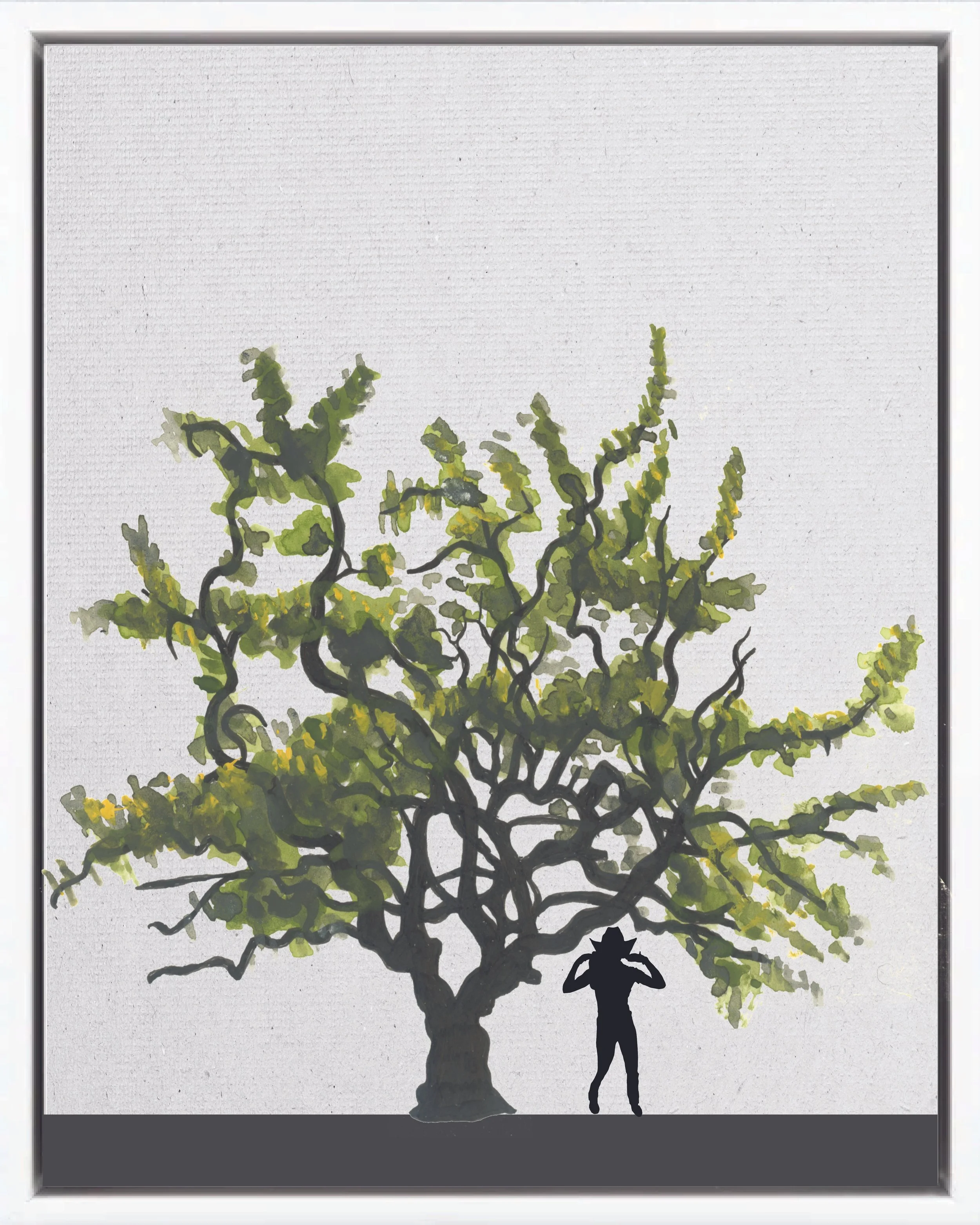


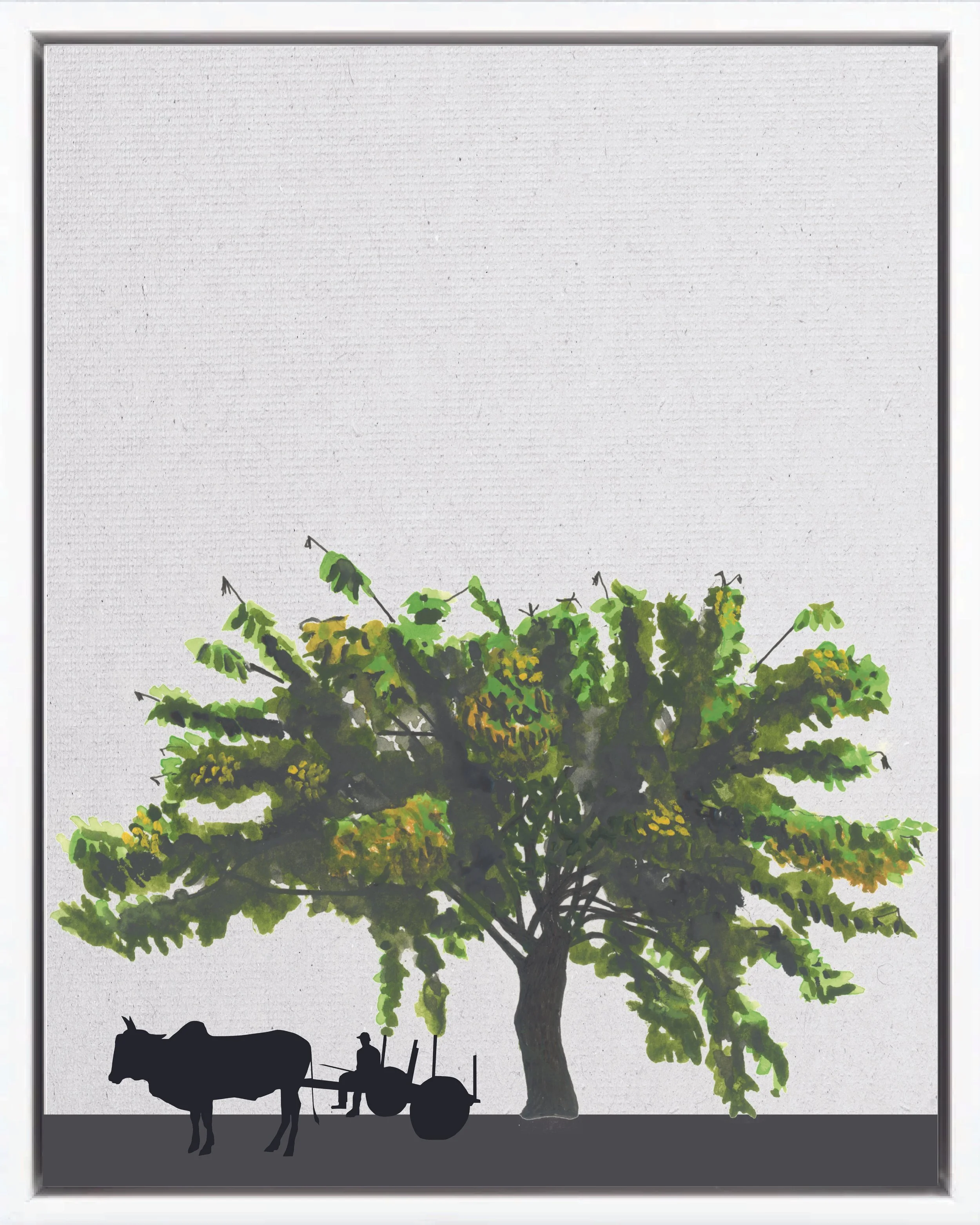
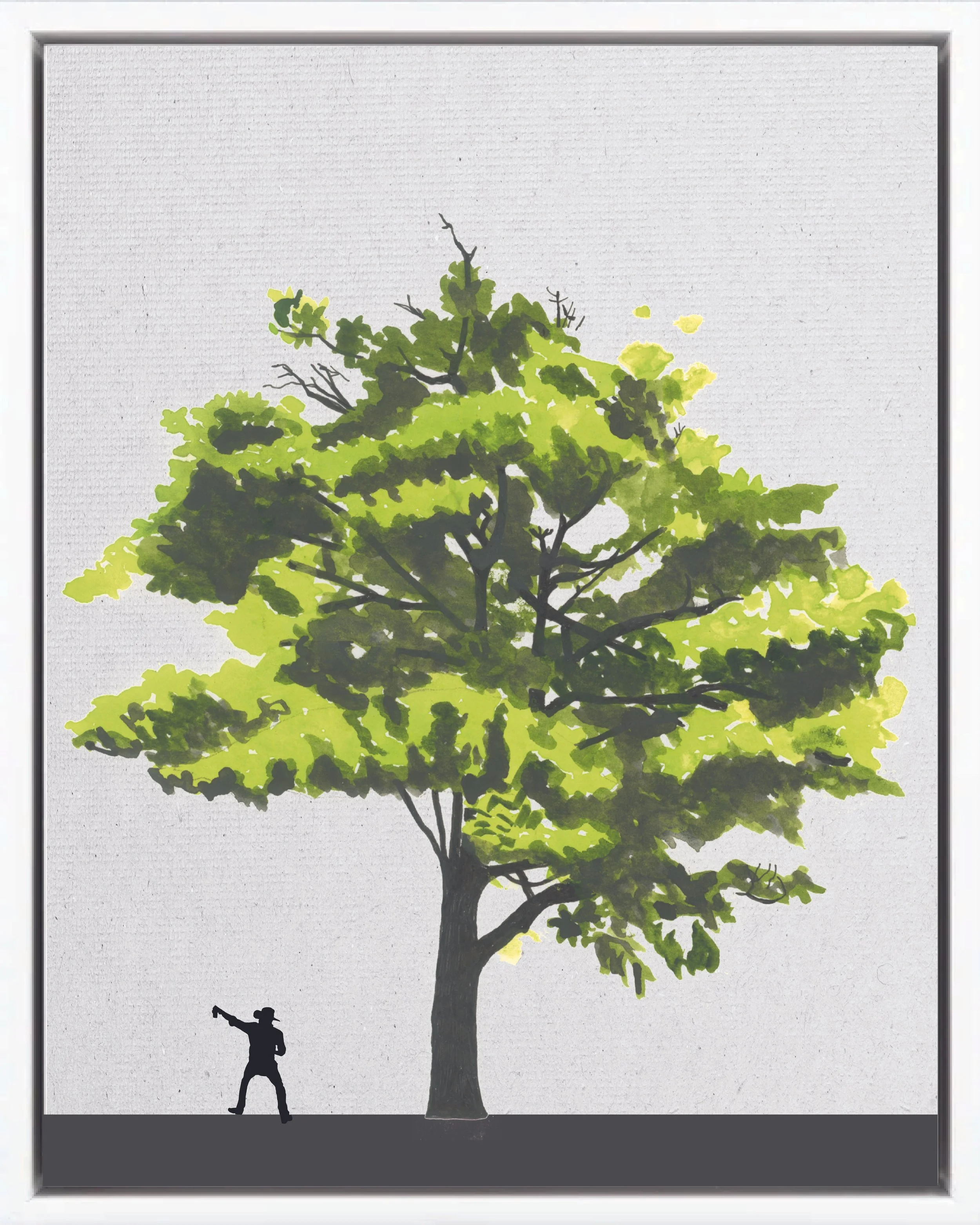
Nitrogen-Fixing Pioneers
-
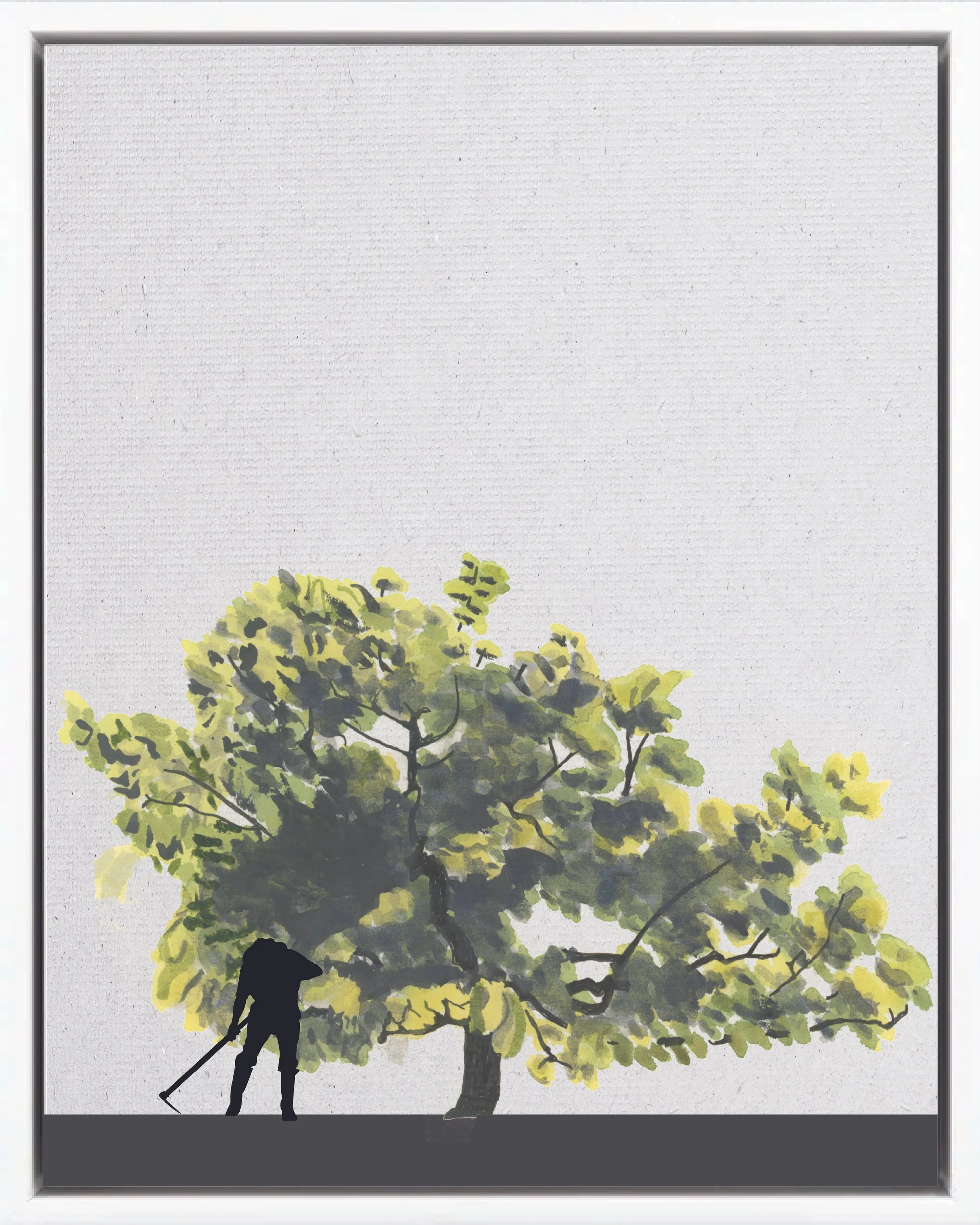
![Hand-illustrated portrait of Guaba (Ice-cream-bean; guama, pepeto, cuajiniquil, shimbillo), Inga spp., nitrogen-fixing pioneer reforestation tree of the Isthmian-Atlantic slope, at mature height with figure for scale.]()
Guaba
Inga spp.
-
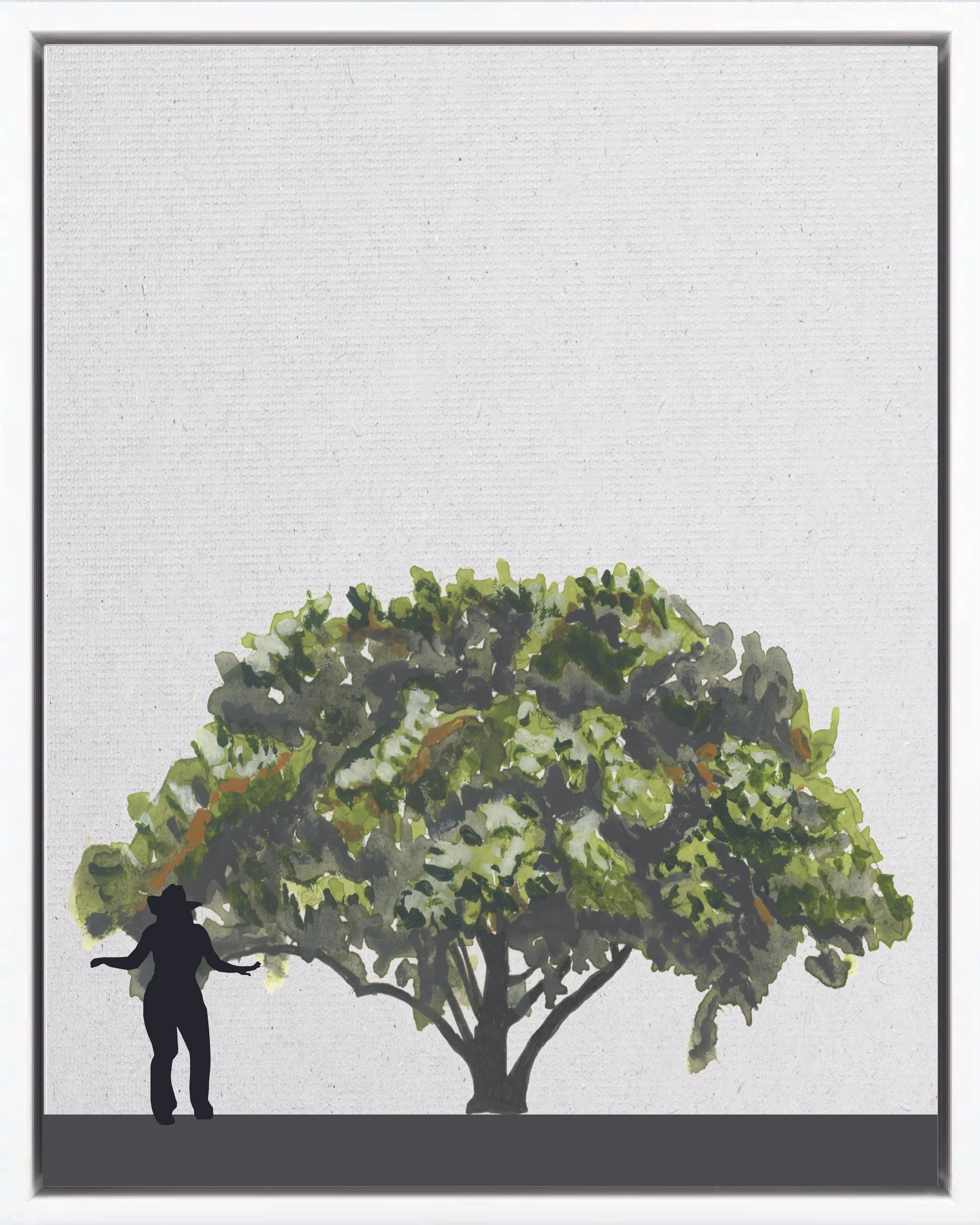
![Hand-illustrated portrait of Guaba machete (Ice-cream-bean; guaba de mono, pacay, ingá-cipó, pois doux), Inga edulis, nitrogen-fixing pioneer reforestation tree of the Isthmian-Atlantic slope, at mature height with figure for scale.]()
Guaba Machete
Inga edulis
-
![Hand-illustrated portrait of Guajiniquil (Ice-cream-bean; cuajiniquil, jinicuil, chalum, ojoche), Inga jinicuil, nitrogen-fixing pioneer reforestation tree of the Isthmian-Atlantic slope, at mature height with figure for scale.]()
Guajiniquil
Inga jinicuil
-
![Hand-illustrated portrait of Guachapelí (Silktree guachapelí; frijolillo, gavilán, cenízaro macho, saman), Albizia guachapele, nitrogen-fixing pioneer reforestation tree of the Isthmian-Atlantic slope, at mature height with figure for scale.]()
Guachapelí
Albizia guachapele
-
![Hand-illustrated portrait of Guachipelín (Yellow heart; guachipilín, cuachepil, macano amarillo, palo santo), Diphysa americana, nitrogen-fixing pioneer reforestation tree of the Isthmian-Atlantic slope, at mature height with figure for scale.]()
Guachipelín
Diphysa americana
-
![Hand-illustrated portrait of Madero negro (Quickstick; mataratón, cacahuananche, madre de cacao, Nicaraguan cocoa shade), Gliricidia sepium, nitrogen-fixing pioneer reforestation tree Isthmian-Atlantic slope, at mature height with figure for scale.]()
Madero Negro
Gliricidia sepium
-
![Hand-illustrated portrait of Poró (Poró gigante; poró extranjero, cachimbo, mountain immortelle, bucare), Erythrina poeppigiana, nitrogen-fixing pioneer reforestation tree of the Isthmian-Atlantic slope, at mature height with figure for scale.]()
Poró
Erythrina poeppigiana
-
![Hand-illustrated portrait of Poró de humedal (Purple coraltree; pito, gallito, elequeme, cachimbo colorado), Erythrina fusca, nitrogen-fixing pioneer reforestation tree of the Isthmian-Atlantic slope, at mature height with figure for scale.]()
Poró de humedal
Erythrina fusca
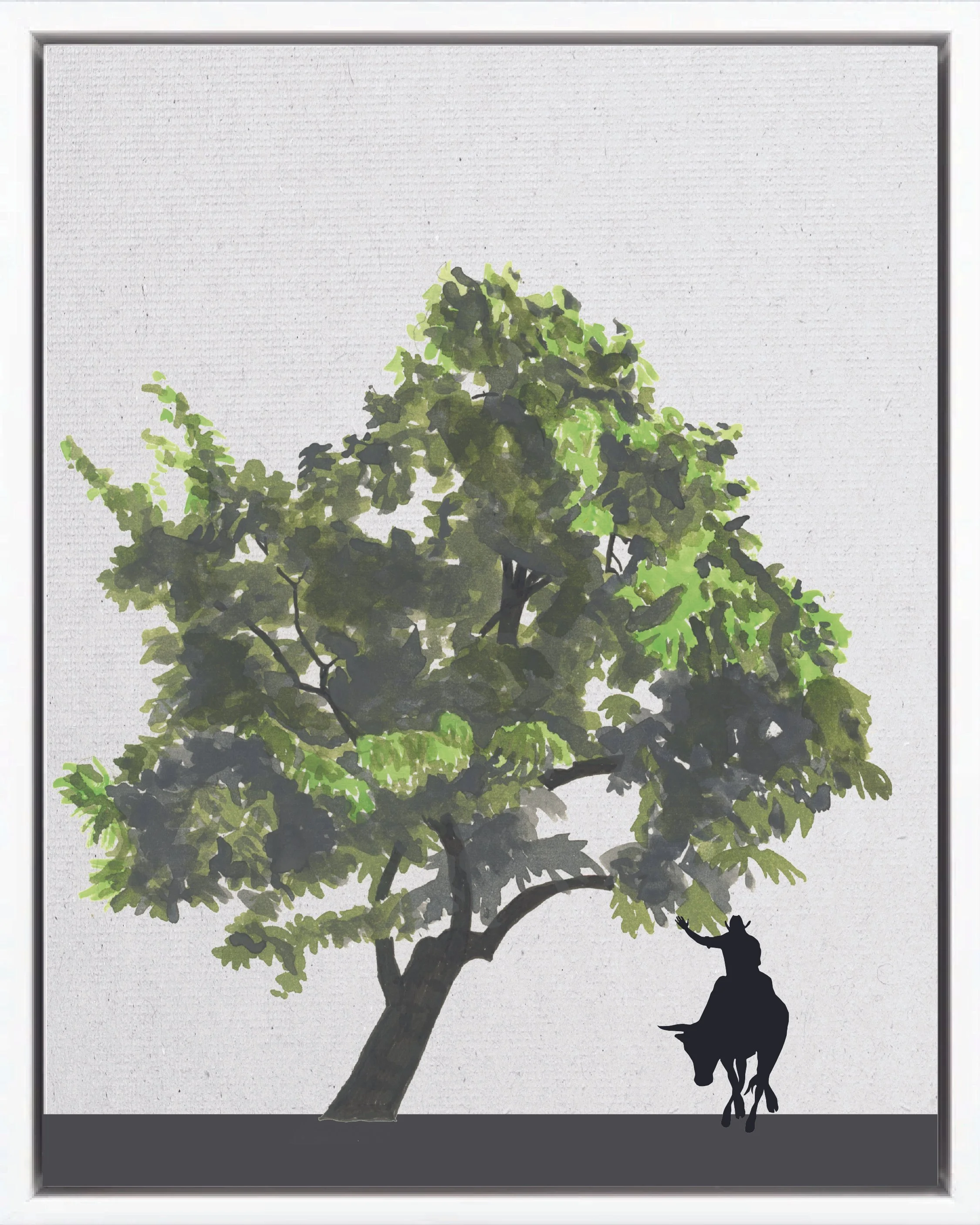
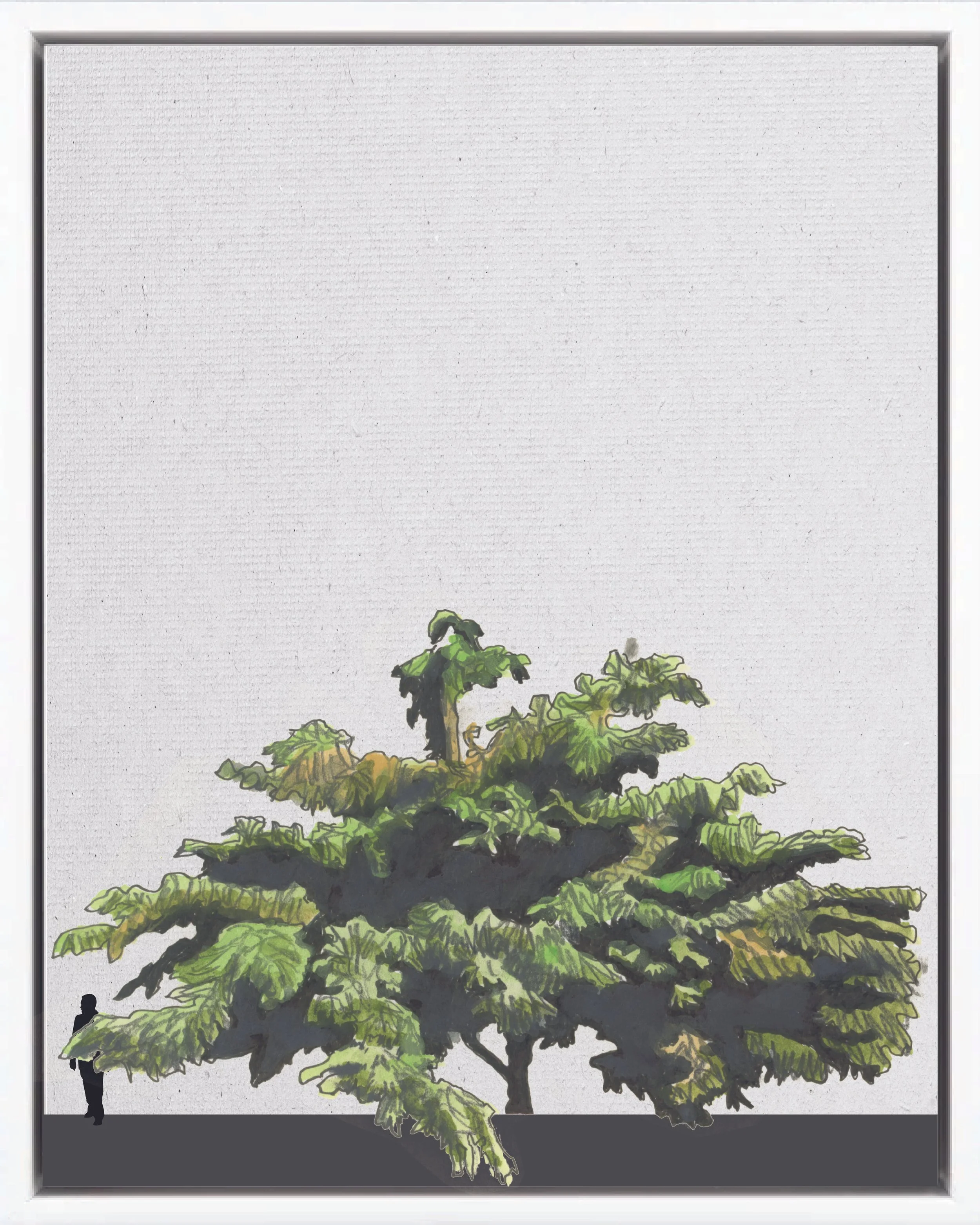
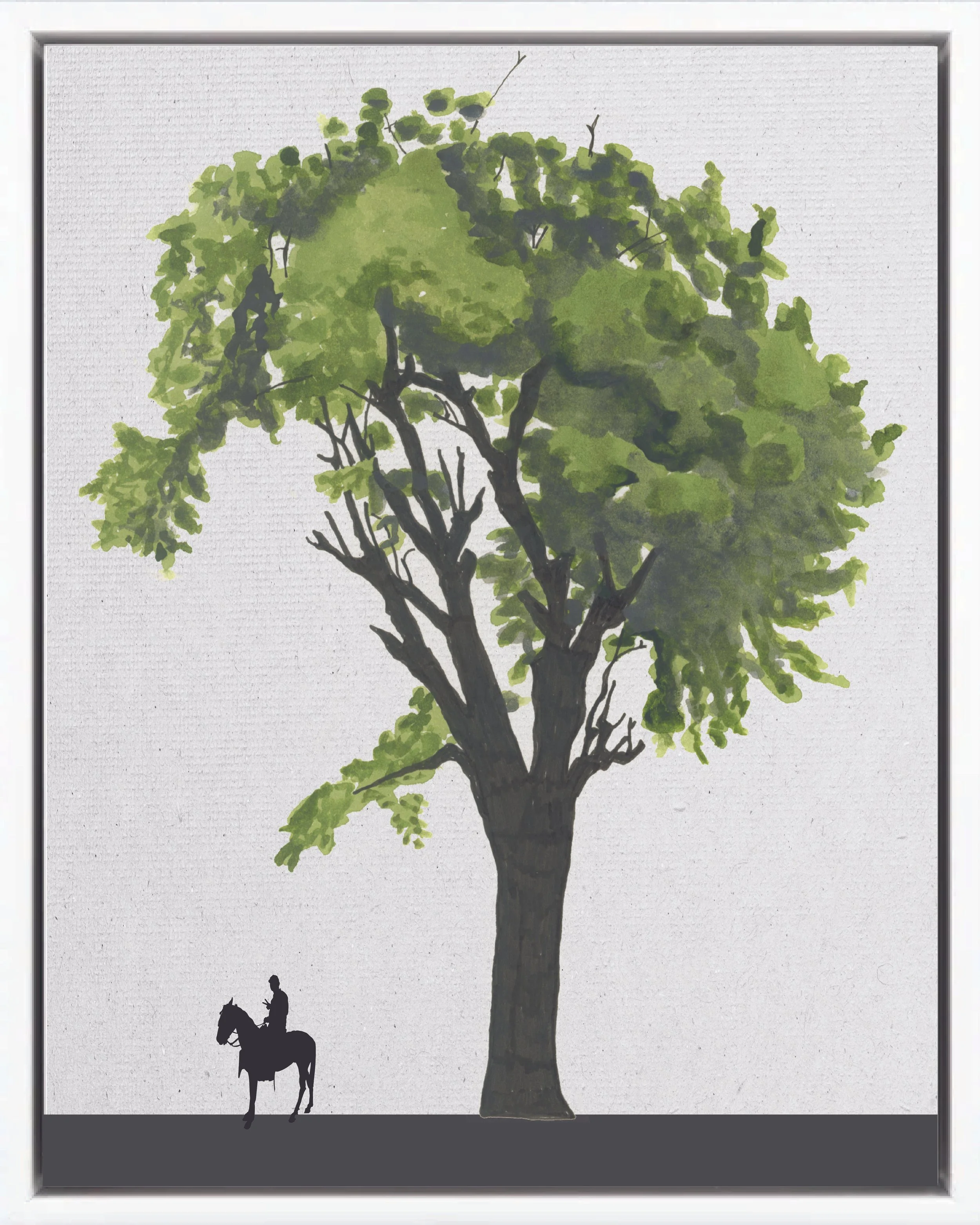
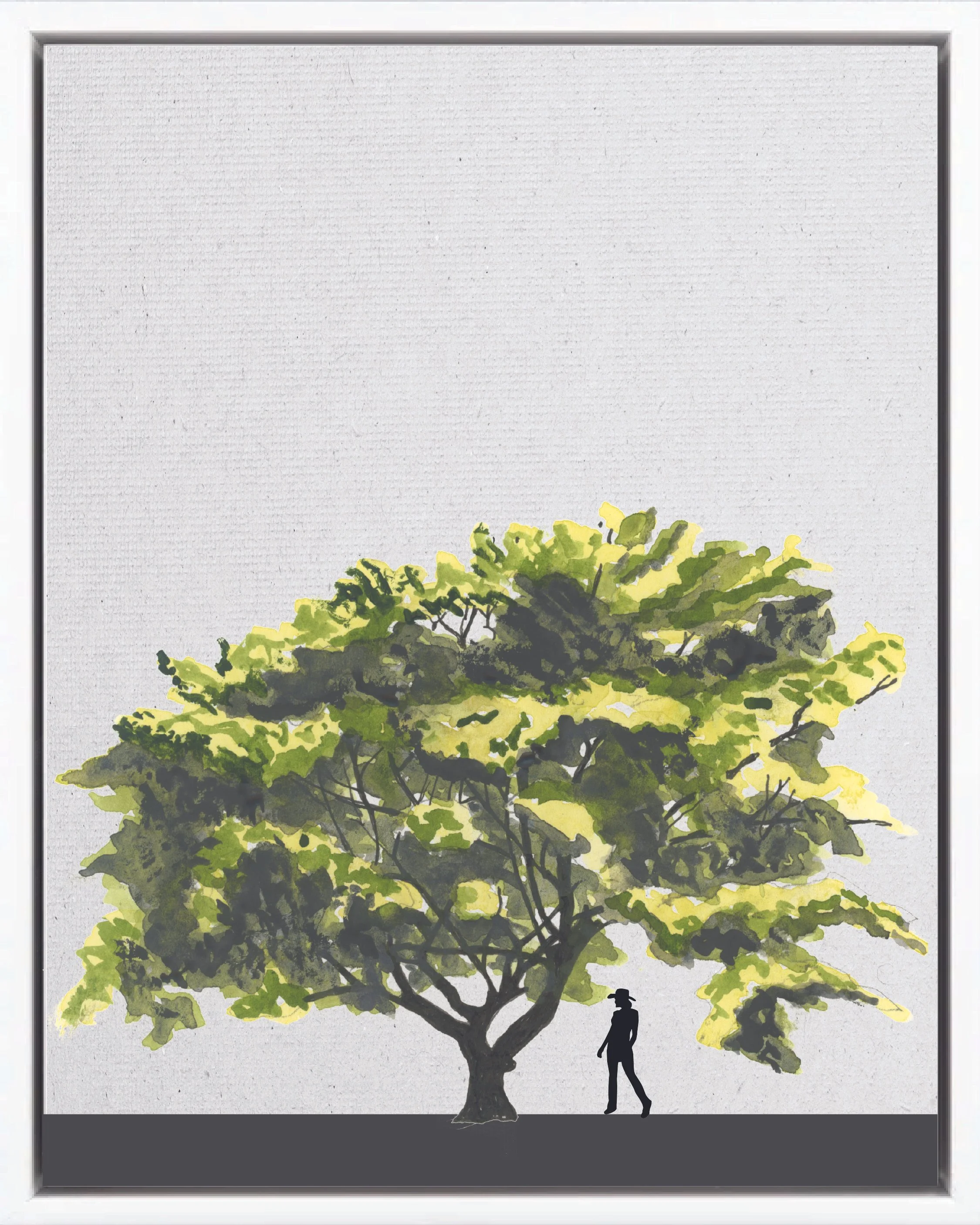
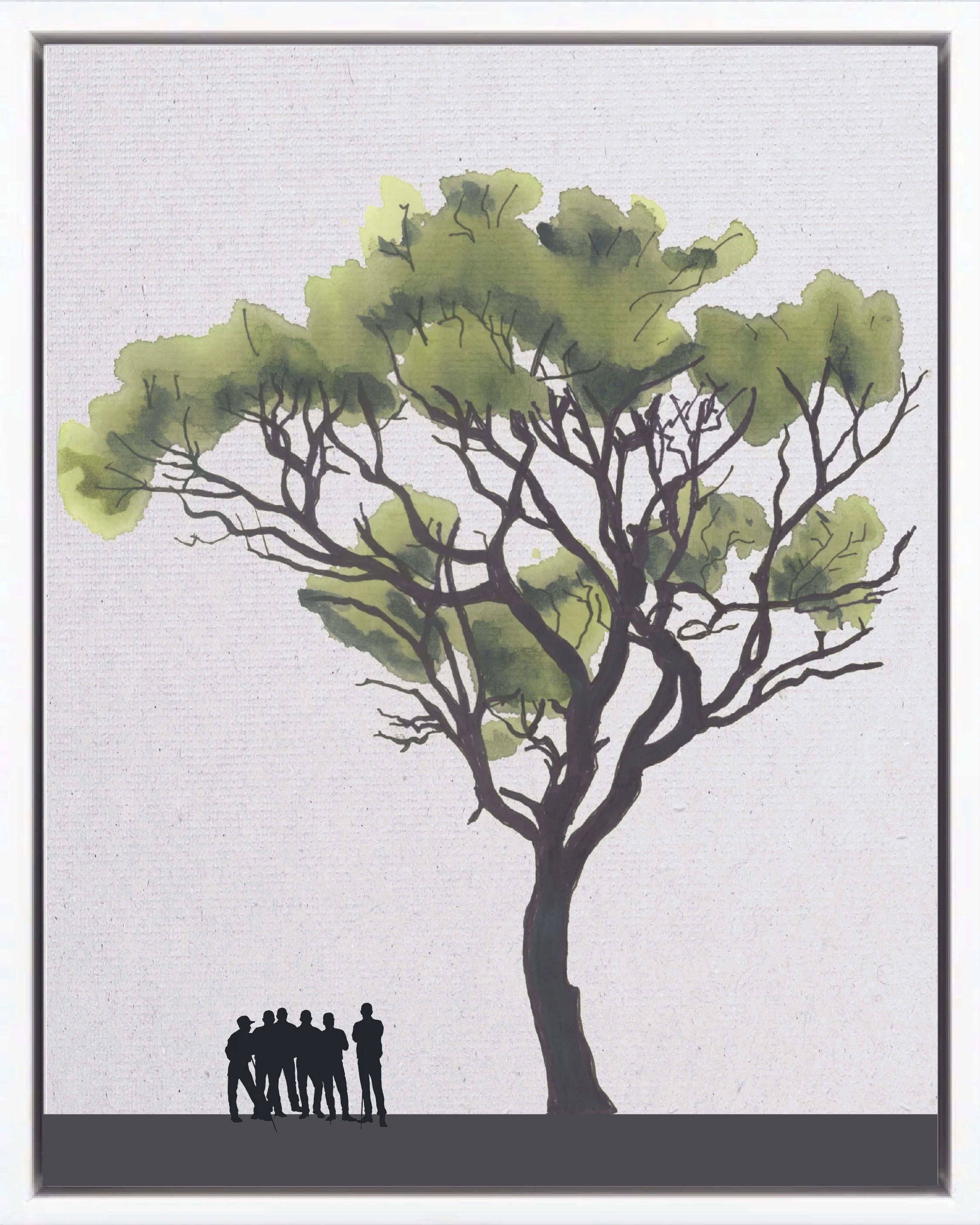
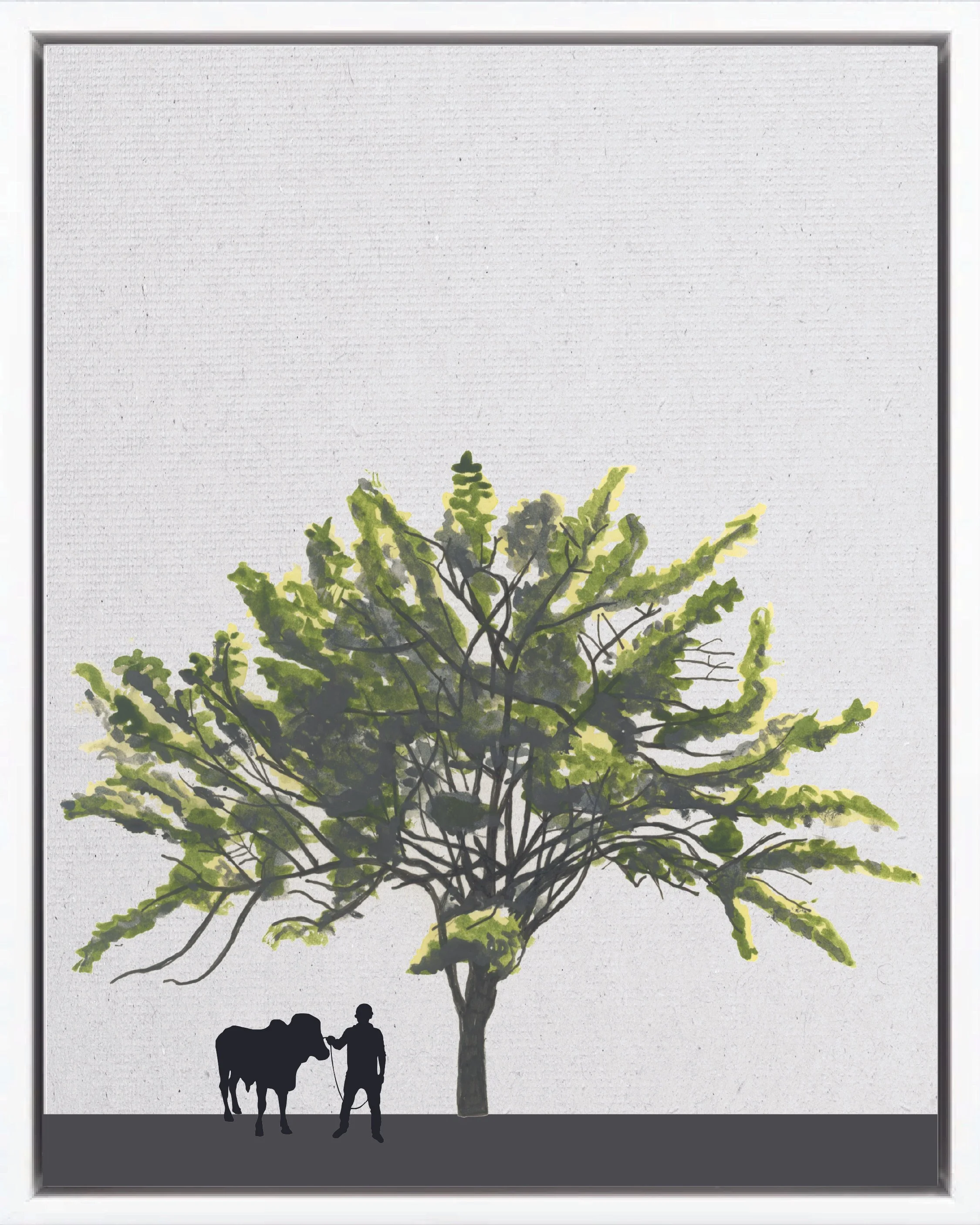
Secondary Species
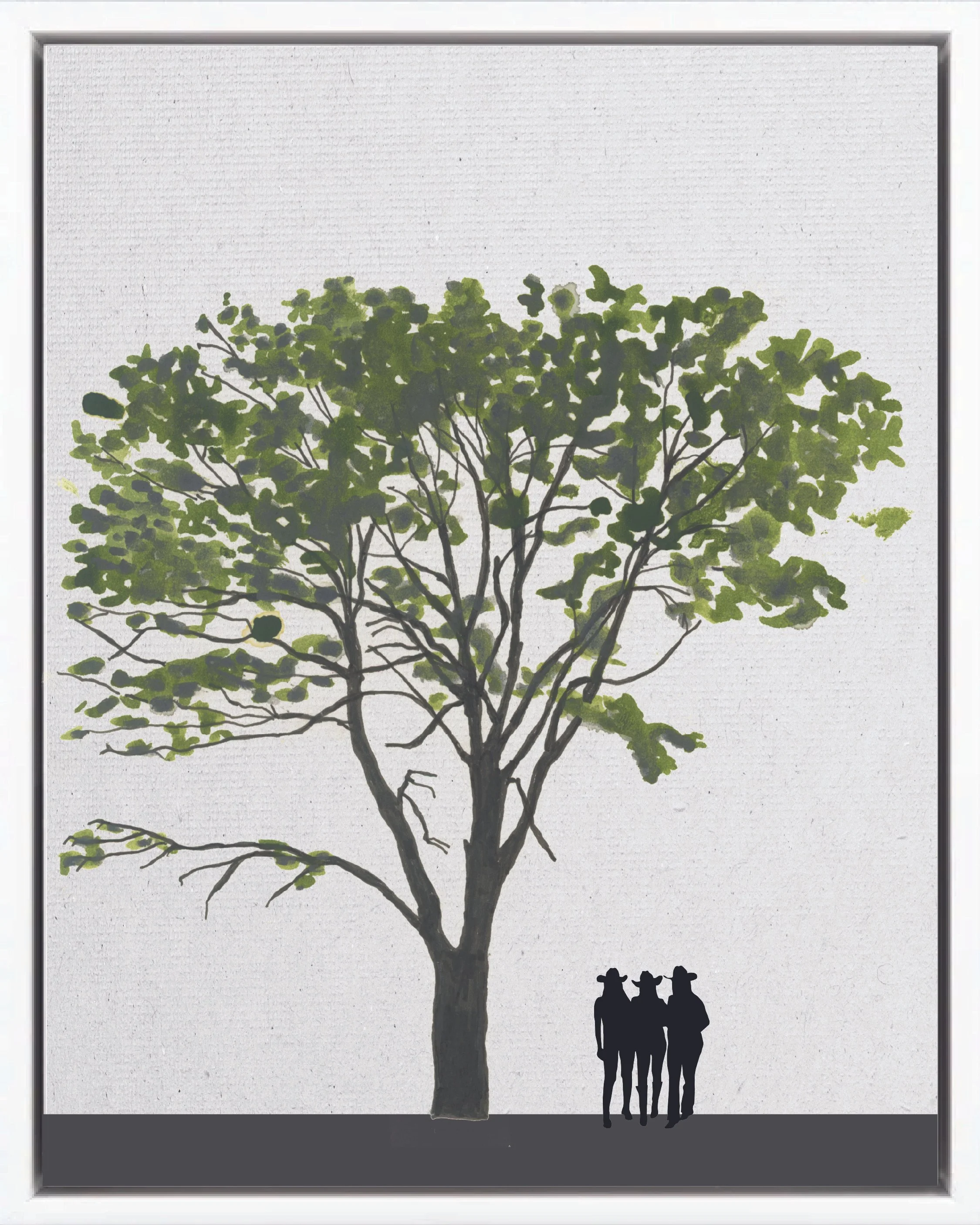
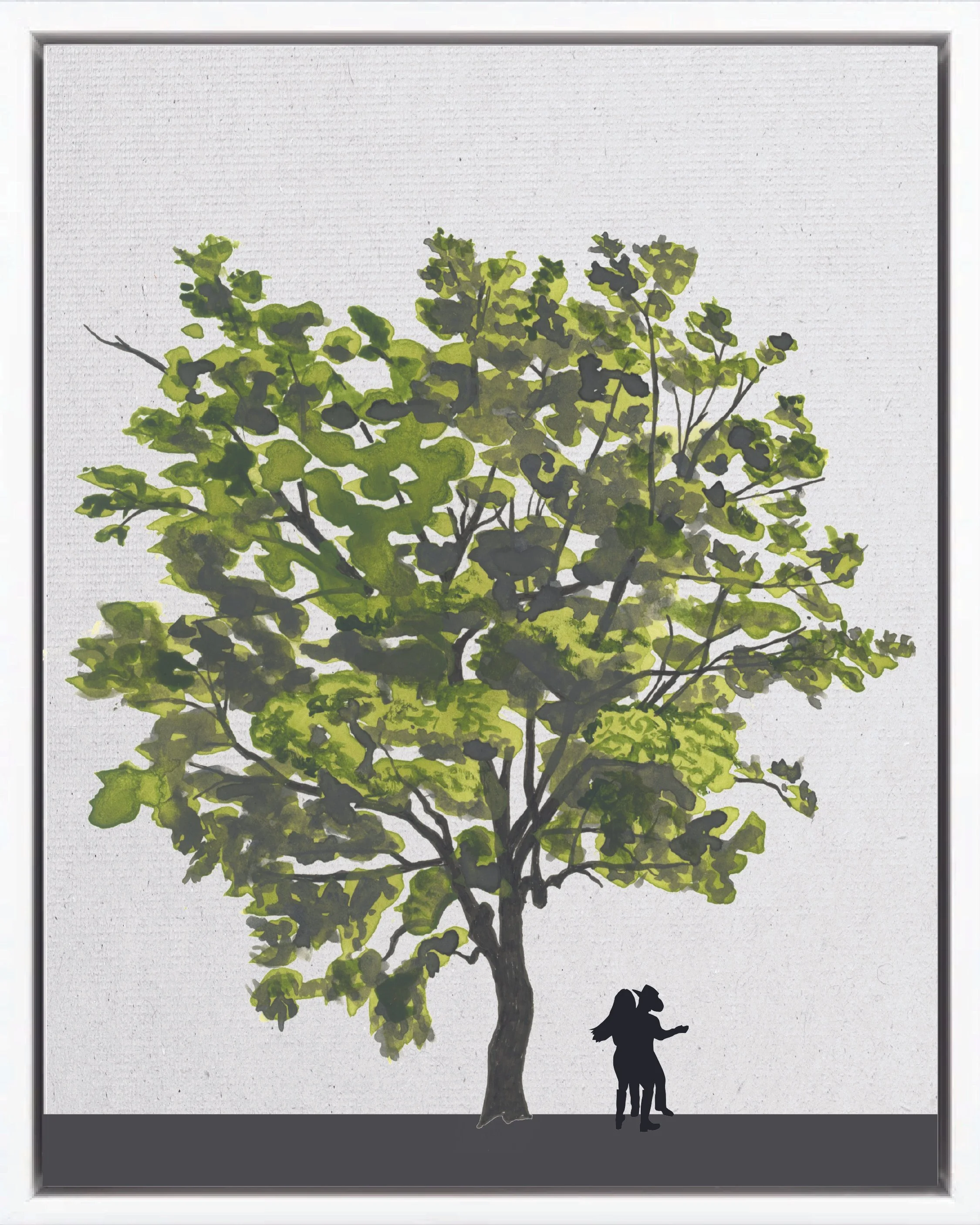
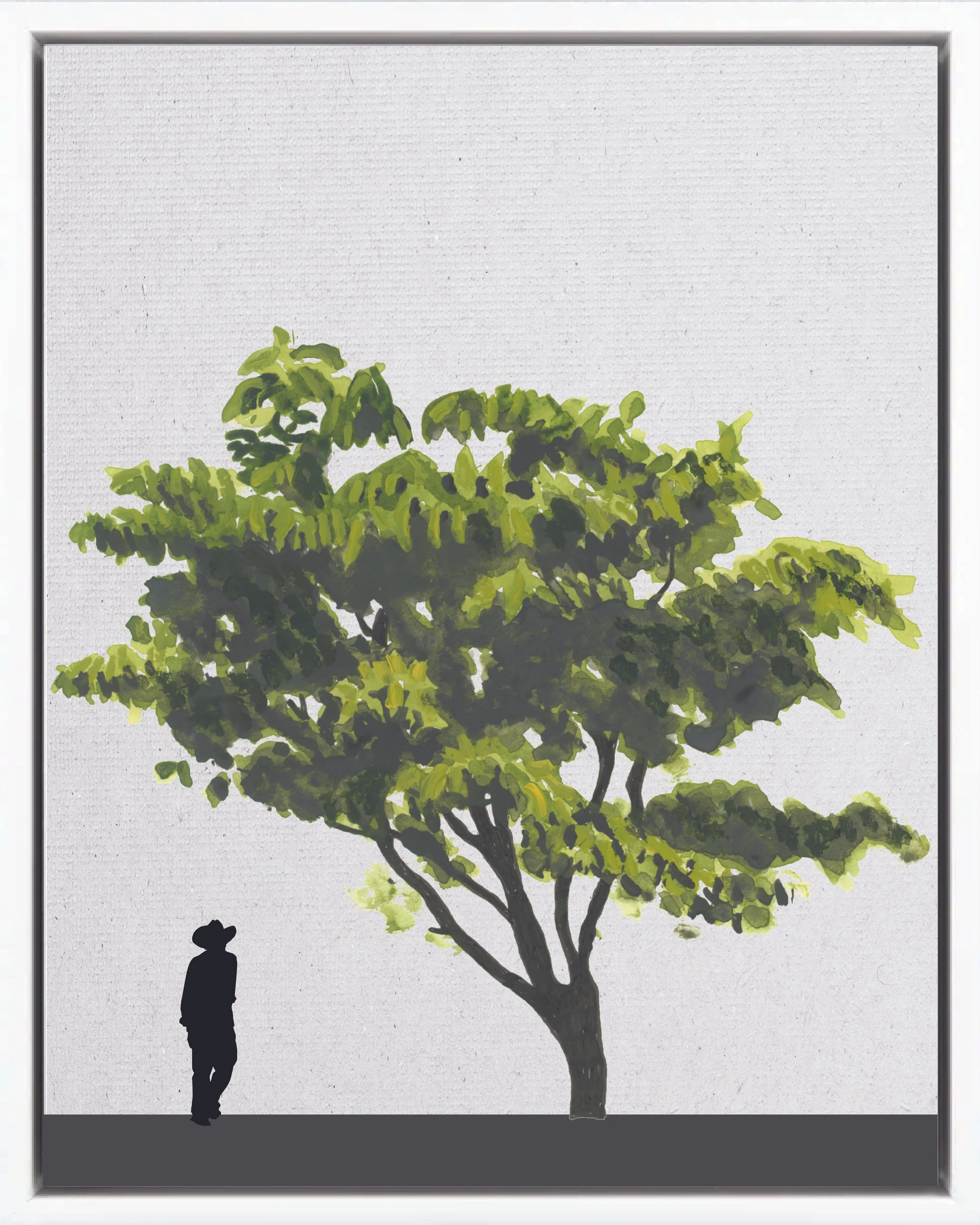
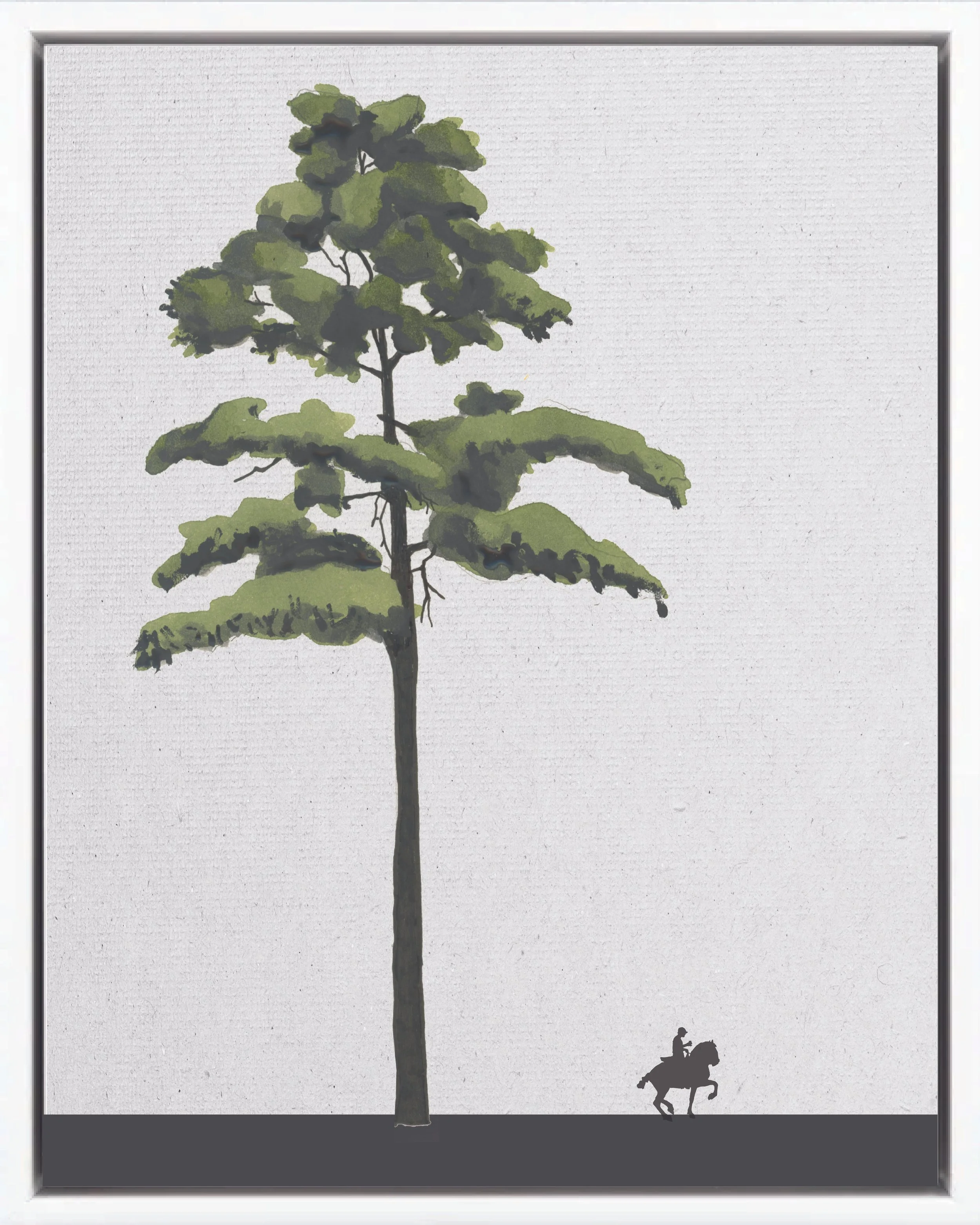
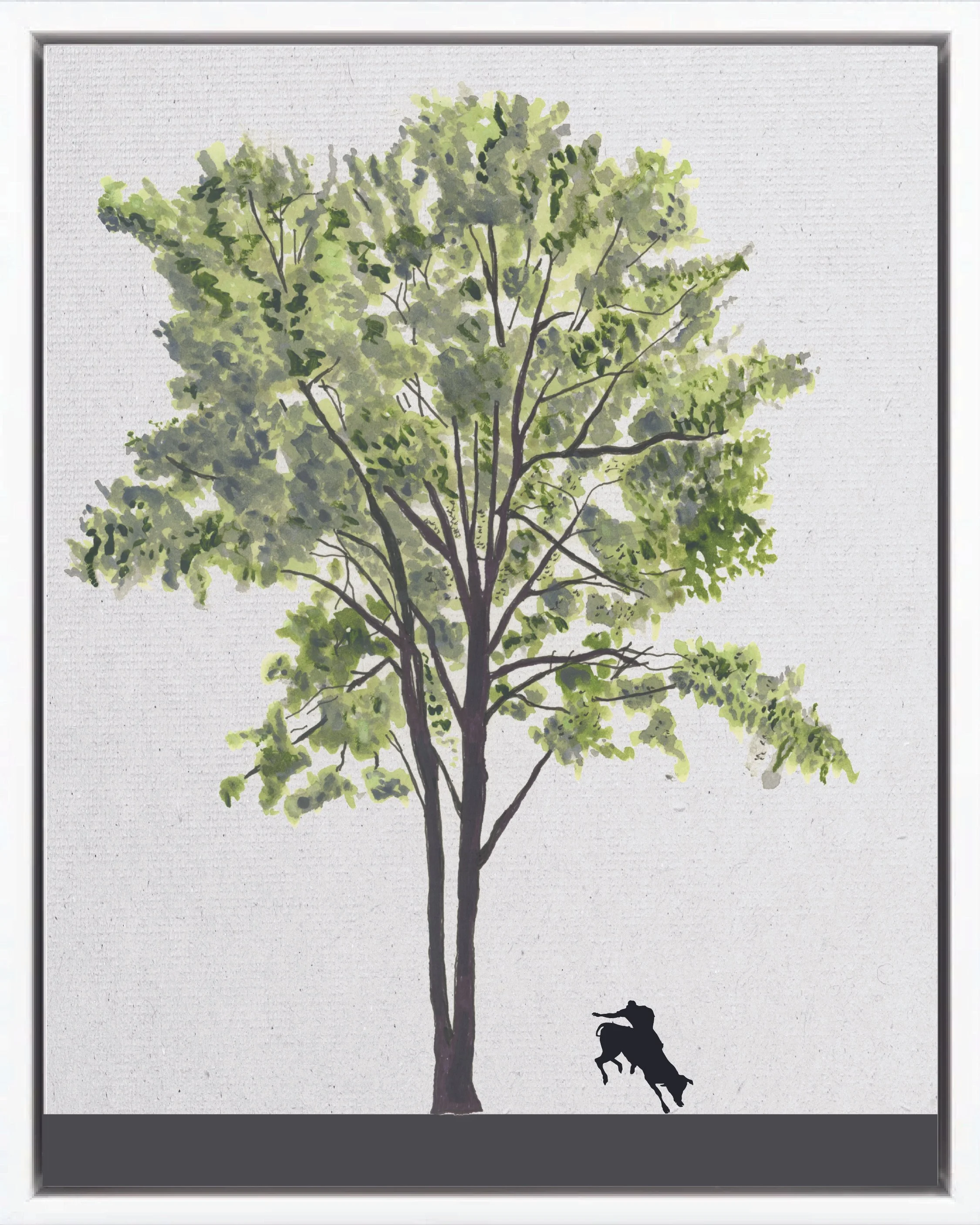
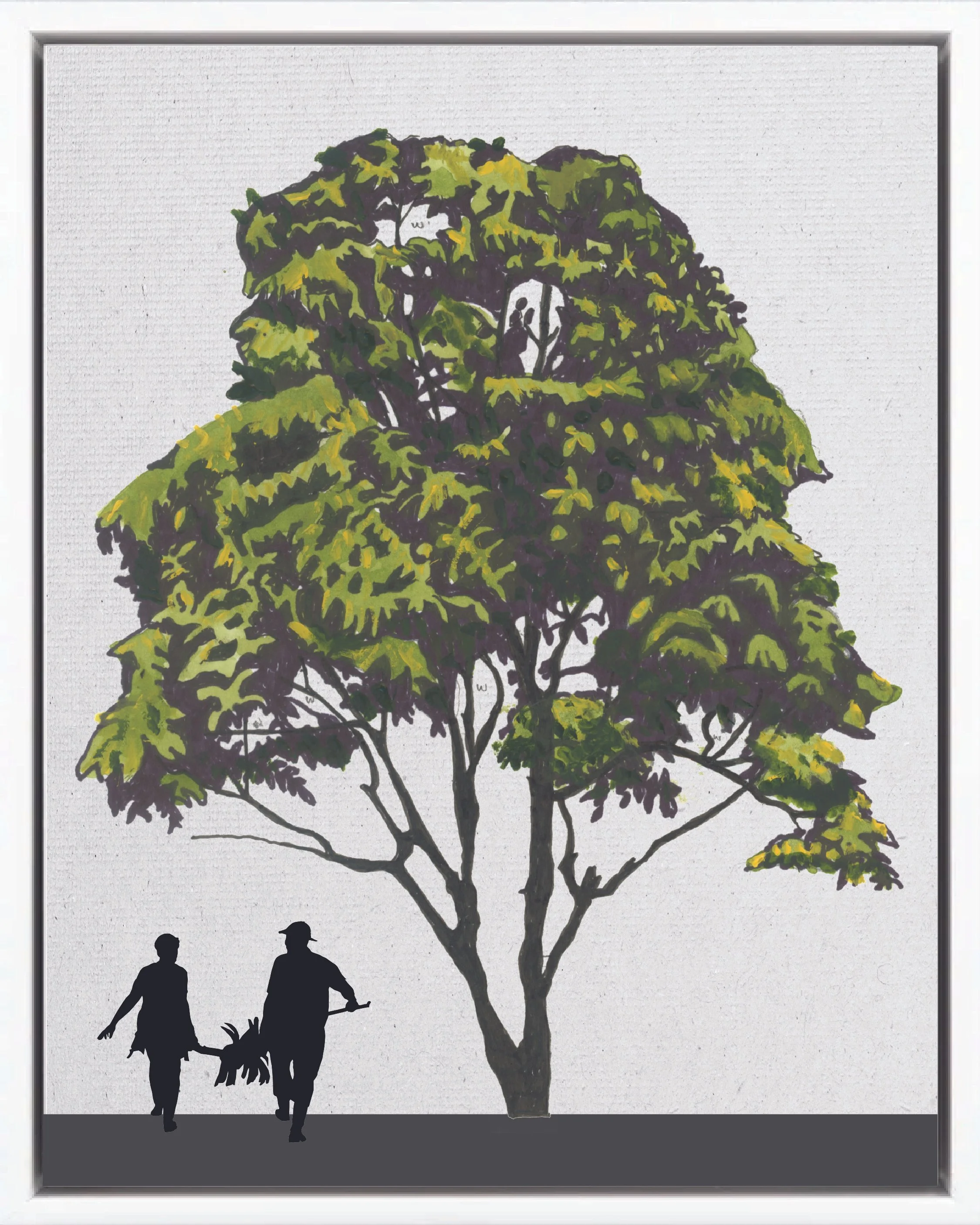
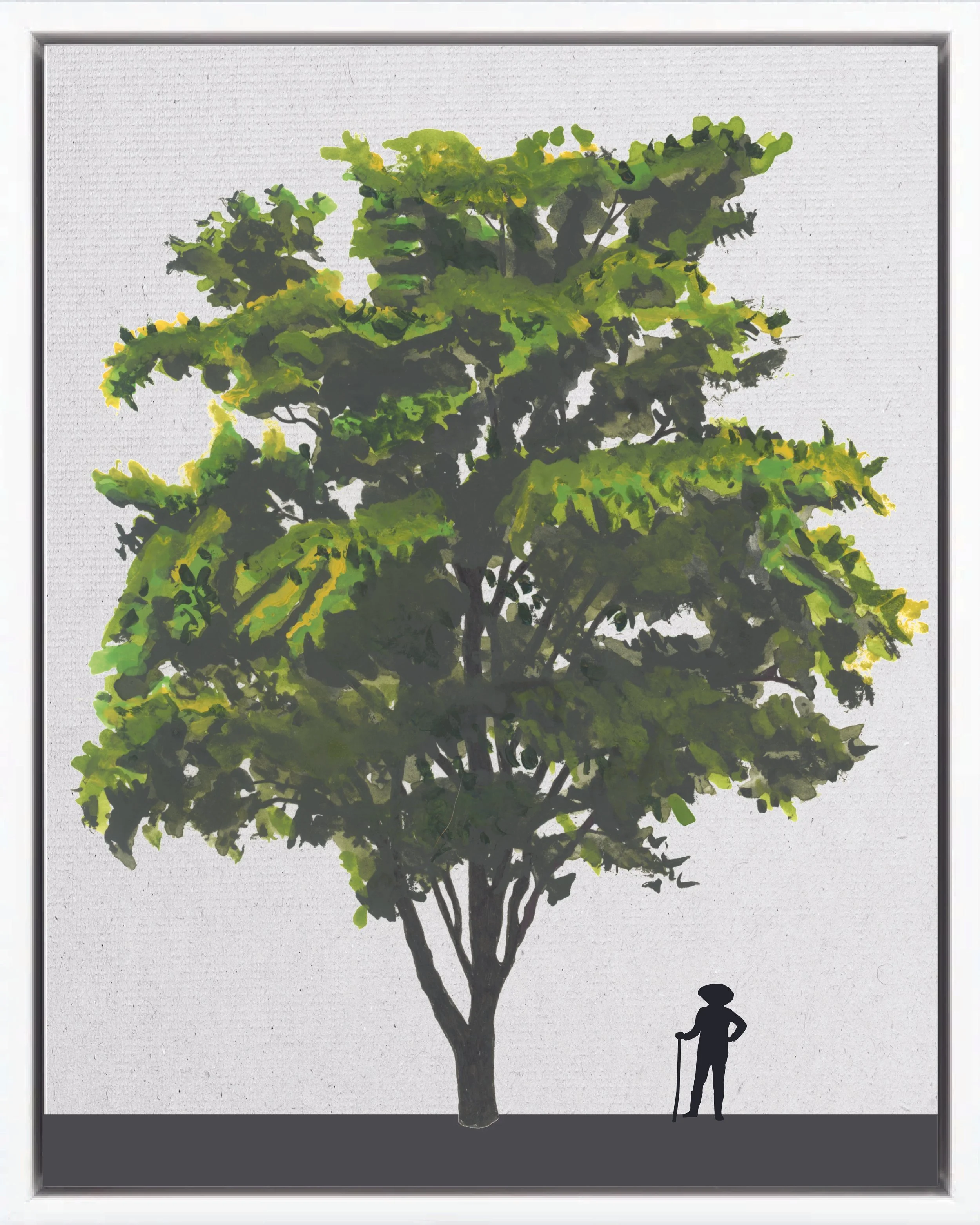
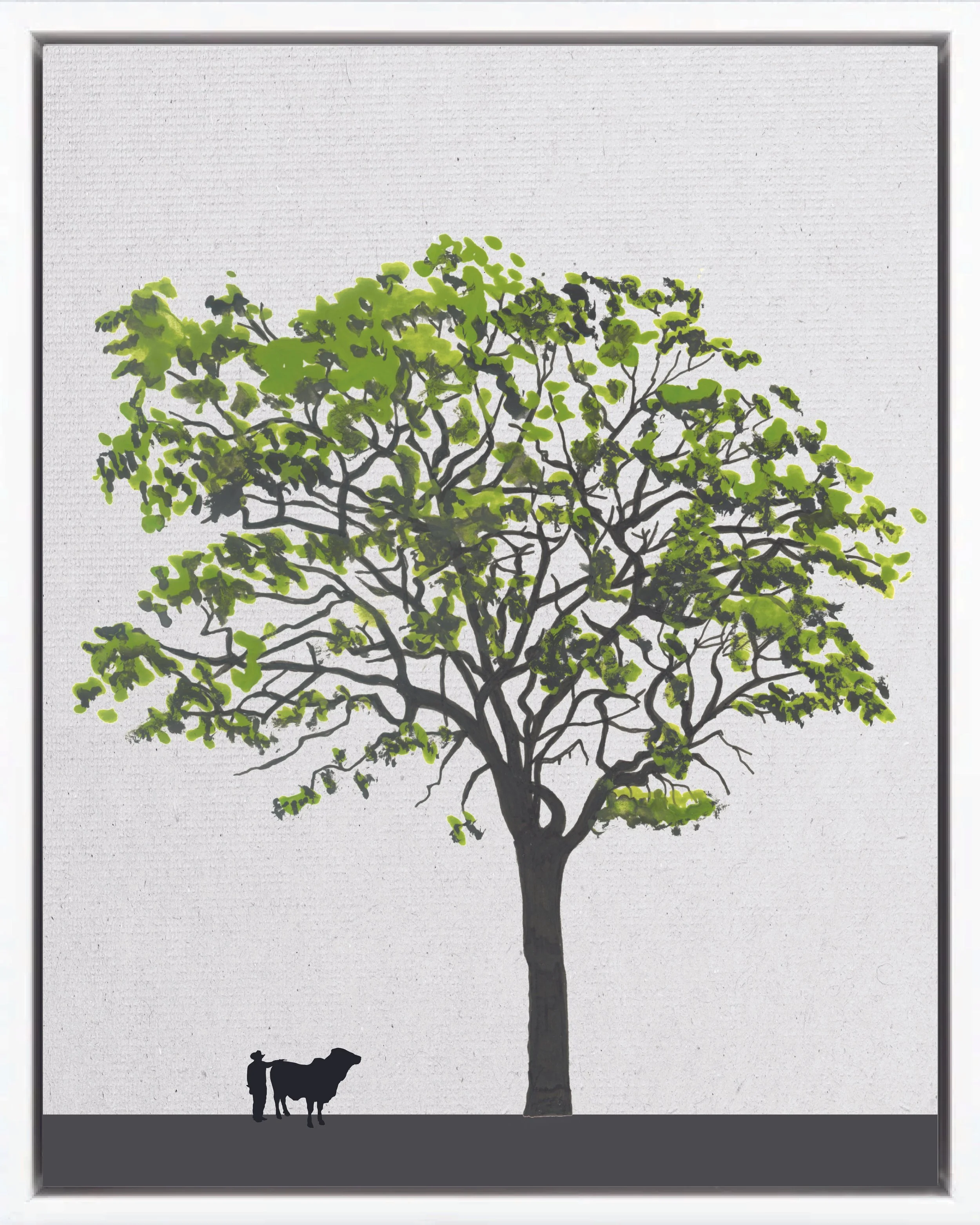
Secondary species are the long middle of a forest's story, the guild that carries a landscape from pioneer cover toward something that finally starts to resemble mature structure. They grow more slowly than pioneers and tolerate more shade, though how much of each depends on where they fall within this two part guild. Early secondary trees keep some of a pioneer's urgency, still fast, still hungry for light. Late secondary trees slow further, building denser wood and greater patience as they settle into the transitional canopy, no longer racing, but not yet arrived. A number of the late secondary hardwoods here, the Cortezes, Cocobolo, Roble sabana, carry a dry season written into their biology, dropping their leaves and flowering in unison after months without rain. That cue never comes on a perhumid slope, but they grow well regardless. I've come to think of them as a quiet reminder that Guanacaste's dry forest, an entirely different ecoregion, sits just 10 km from here.
Early Secondary
-
![Illustration of Aceituno (Paradise tree, olivo, marupá), Simarouba amara, early secondary reforestation tree of Costa Rica's Neotropical Isthmian-Atlantic slope, at mature height with figure for scale.]()
Aceituno
Simarouba amara
-
![Illustration of Bijarro (Horse balls tree, Huevos de caballo, Cojón, Cojotón), Tabernaemontana donnell-smithii (syn. Stemmadenia donnell-smithii), understory reforestation tree of Costa Rica's Neotropical Isthmian-Atlantic slope, at mature height.]()
Bijarro (Huevos de Caballo)
Tabernaemontana donnell-smithii
-
![Illustration of Botarrama (Rusty vochysia, mayo, areno colorado), Vochysia ferruginea, early secondary reforestation tree of Costa Rica's Neotropical Isthmian-Atlantic slope, at mature height with figure for scale.]()
Botarrama
Vochysia ferruginea
-
![Illustration of Cebo (White chancho, chancho blanco, mayo blanco), Vochysia guatemalensis, early secondary reforestation tree of Costa Rica's Neotropical Isthmian-Atlantic slope, at mature height with figure for scale.]()
Cebo
Vochysia guatemalensis
-
![Illustration of Chaperno, Lonchocarpus oliganthus, early secondary reforestation tree of Costa Rica's Neotropical Isthmian-Atlantic slope, at mature height with figure for scale.]()
Chaperno
Lonchocarpus oliganthus
-
![Illustration of Chaperno blanco (Seven-leaf tree, comenegro), Lonchocarpus heptaphyllus, early secondary reforestation tree of Costa Rica's Neotropical Isthmian-Atlantic slope, at mature height with figure for scale.]()
Chaperno blanco
Lonchocarpus heptaphyllus
-
![Illustration of Guaitil (Genip tree, Jagua, guaitil blanco), Genipa americana, early secondary reforestation tree of Costa Rica's Neotropical Isthmian-Atlantic slope, at mature height with figure for scale.]()
Guaitil (Jagua)
Genipa americana
-
![Illustration of Jacaranda (Copaia), Jacaranda copaia, early secondary reforestation tree of Costa Rica's Neotropical Isthmian-Atlantic slope, at mature height with figure for scale.]()
Jacaranda
Jacaranda copaia
-
![Illustration of Laurel (Salmwood, capá prieto), Cordia alliodora, early secondary reforestation tree of Costa Rica's Neotropical Isthmian-Atlantic slope, at mature height with figure for scale.]()
Laurel
Cordia alliodora
-
![Illustration of Muñeco (Clammy manjack, ateje, buriogre), Cordia collococca, early secondary reforestation tree of Costa Rica's Neotropical Isthmian-Atlantic slope, at mature height with figure for scale.]()
Muñeco
Cordia collococca
-
![Illustration of Poponjoche (Money tree, jelinjoche, zapote de agua), Pachira aquatica, early secondary reforestation tree of Costa Rica's Neotropical Isthmian-Atlantic slope, at mature height with figure for scale.]()
Poponjoche
Pachira aquatica
-
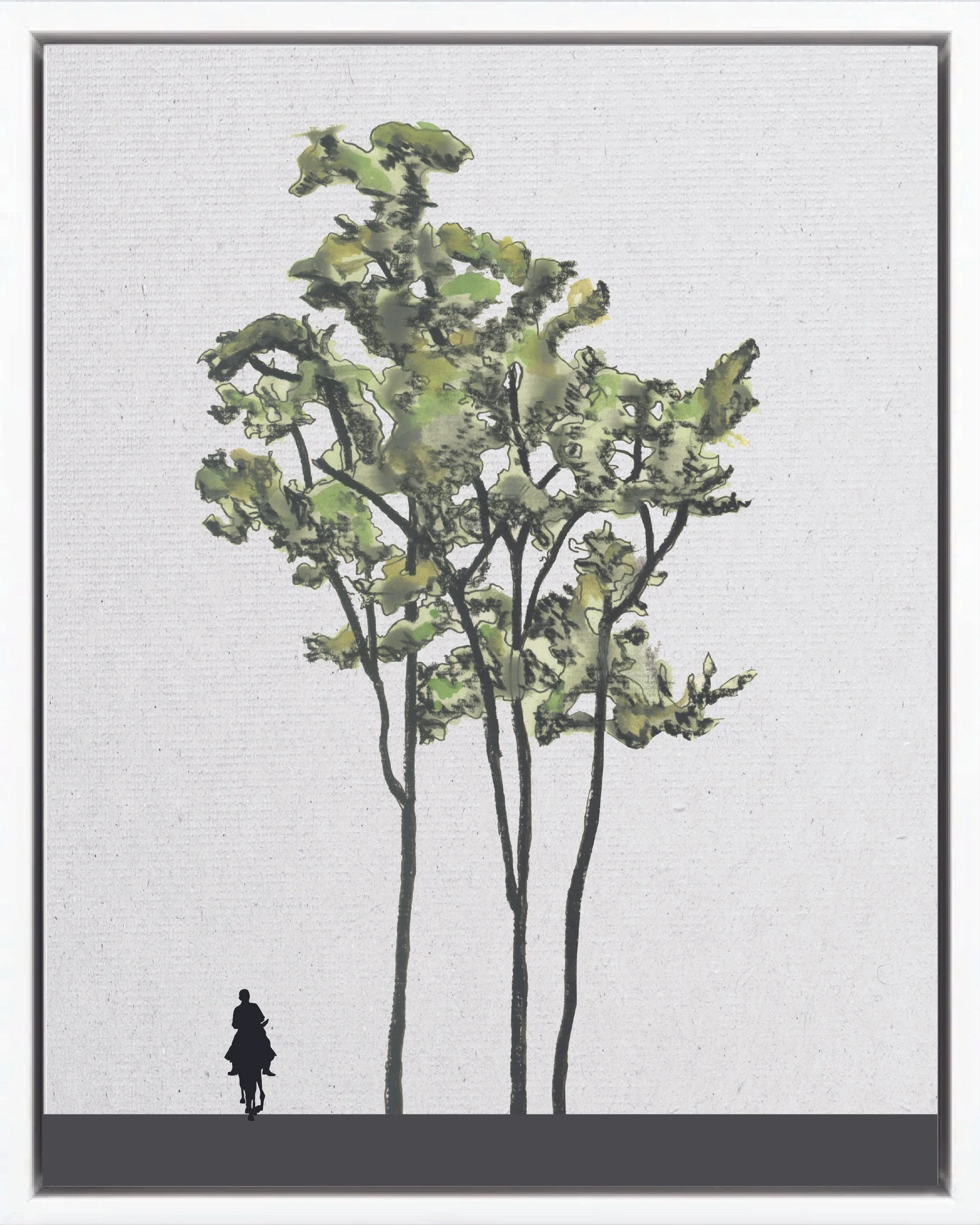
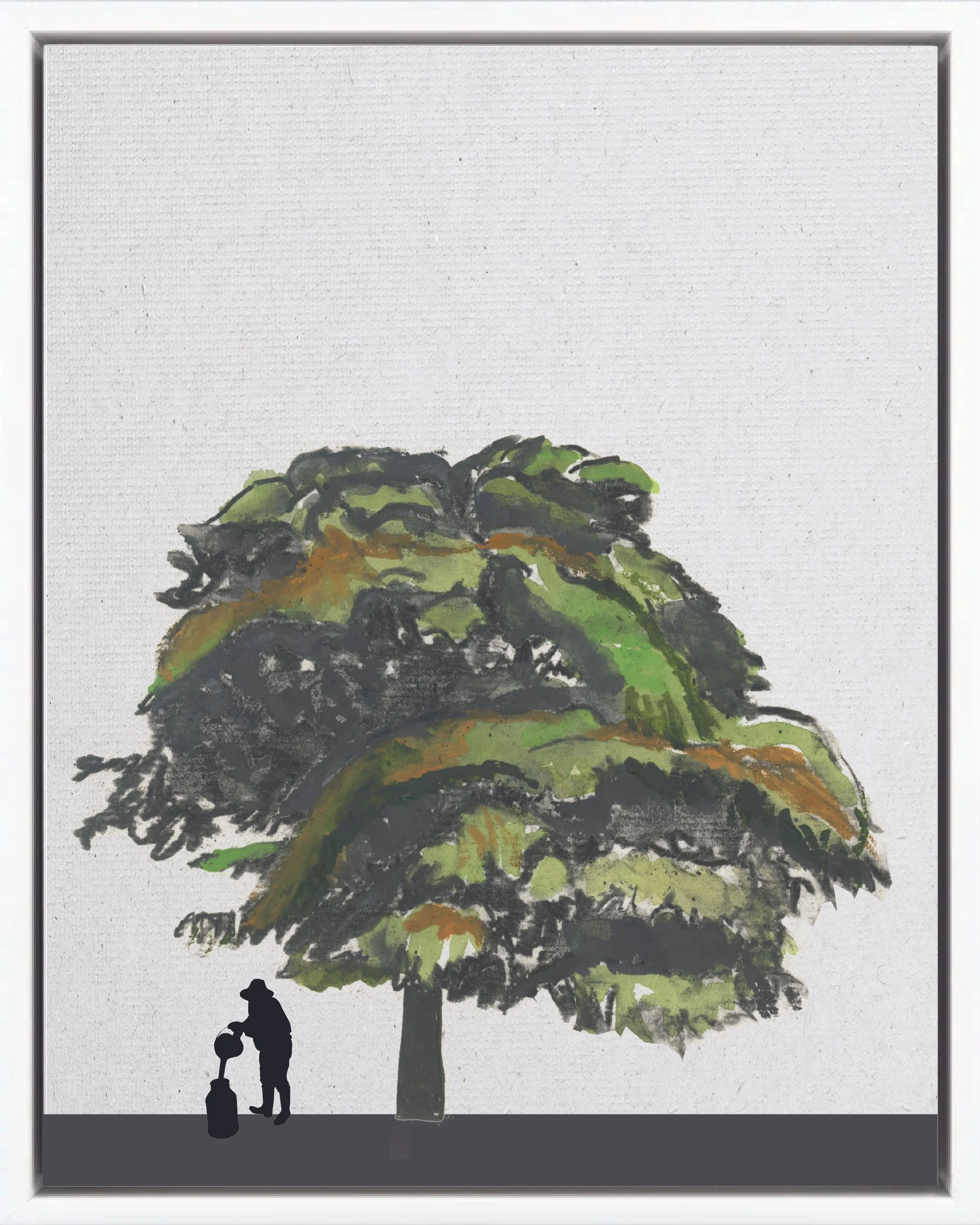
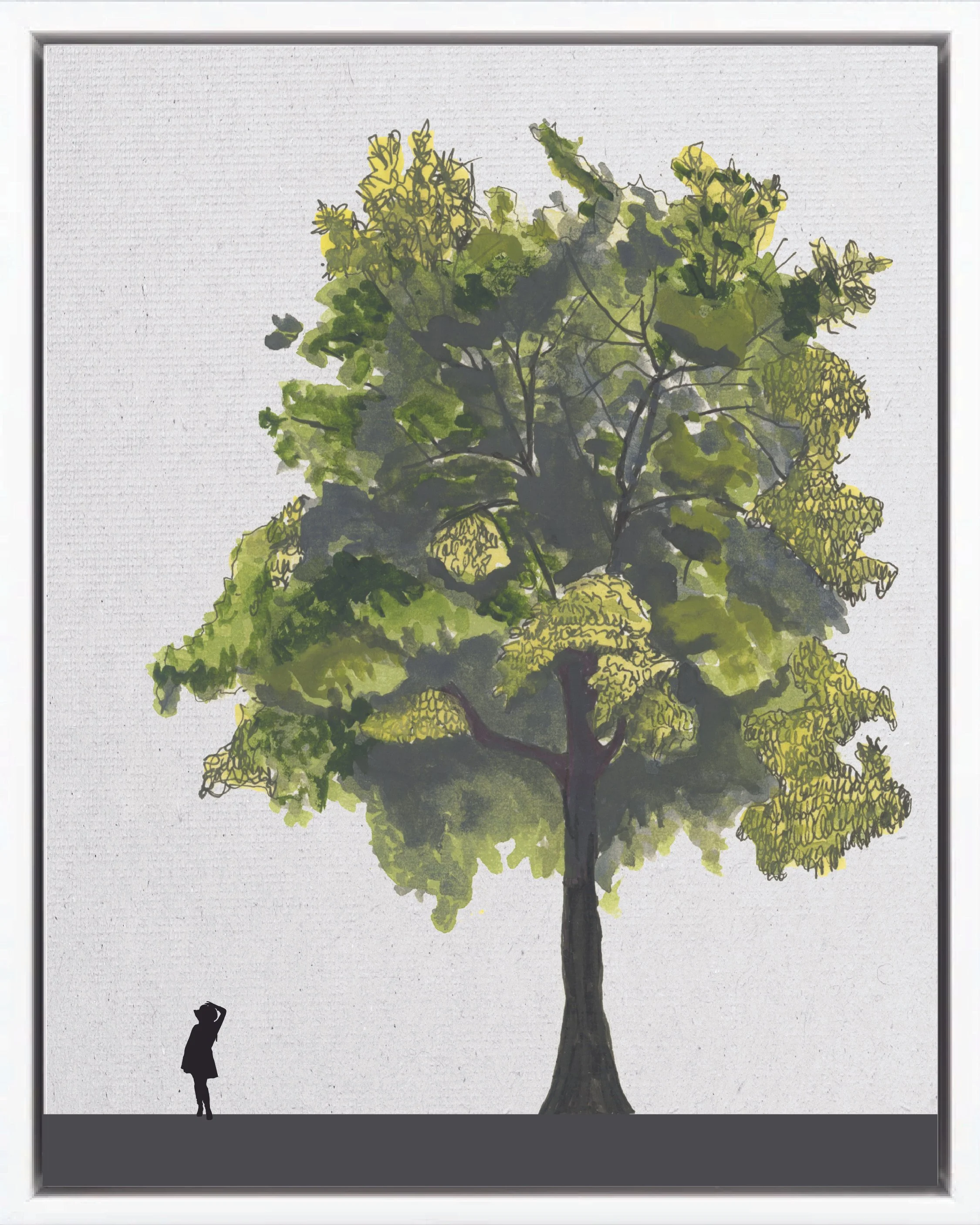
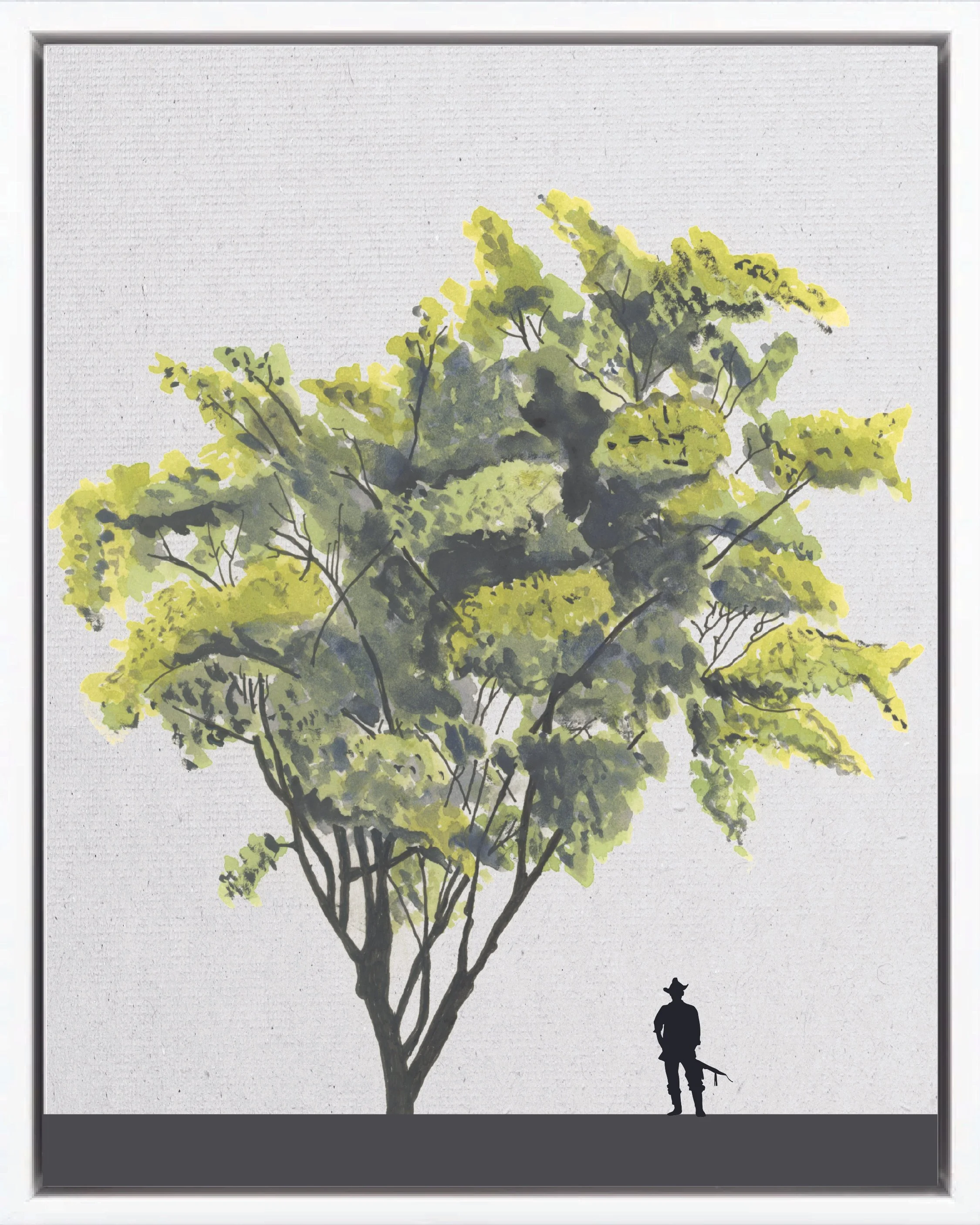
![Illustration of Sotacaballo (Horsehide tree, horse balls, barbasquillo, guabito de río), Zygia longifolia, early secondary reforestation tree of Costa Rica's Neotropical Isthmian-Atlantic slope, at mature height with figure for scale.]()
Sotacaballo
Zygia longifolia


Late Secondary
-
![Illustration of Cedro amargo (Spanish cedar, cedro, cedro blanco), Cedrela odorata, late secondary reforestation tree of Costa Rica's Neotropical Isthmian-Atlantic slope, at mature height with figure for scale.]()
Cedro Amargo
Cedrela odorata
-
![Illustration of Cirrí colorado ("Red cirrí," cirrí amarillo, dantisco de montaña), Mauria heterophylla, late secondary reforestation tree of Costa Rica's Neotropical Isthmian-Atlantic slope, at mature height with figure for scale.]()
Cirrí colorado
Mauria heterophylla
-
![Illustration of Cocobolo (Cocobolo rosewood, cocobolo prieto, granadillo), Dalbergia retusa, late secondary reforestation tree of Costa Rica's Neotropical Isthmian-Atlantic slope, at mature height with figure for scale.]()
Cocobolo
Dalbergia retusa
-
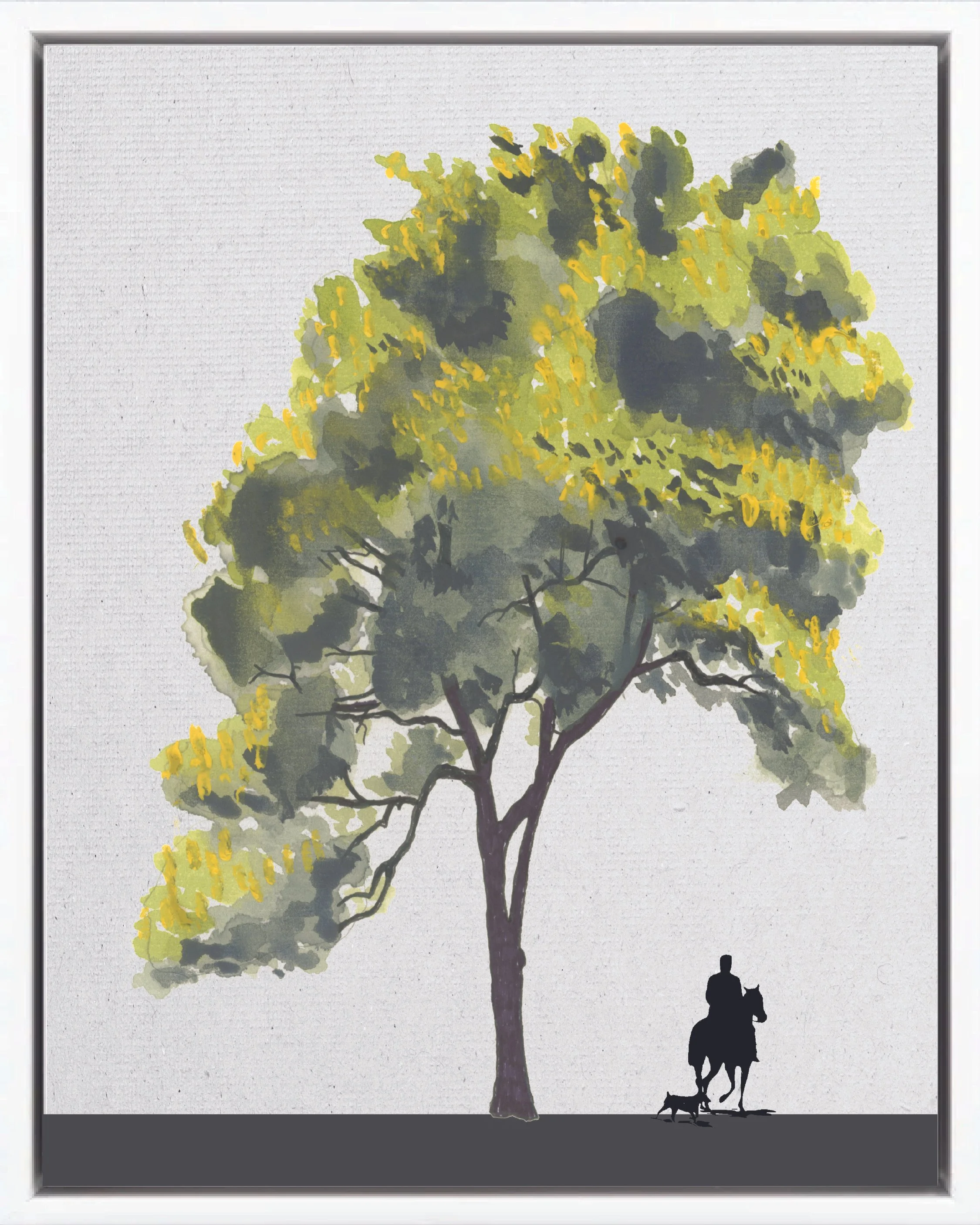
![Illustration of Cortez amarillo (Golden trumpet tree, corteza amarilla, guayacán amarillo), Handroanthus ochraceus, late secondary reforestation tree of Costa Rica's Neotropical Isthmian-Atlantic slope, at mature height with figure for scale.]()
Cortez Amarillo
Handroanthus ochraceus
-
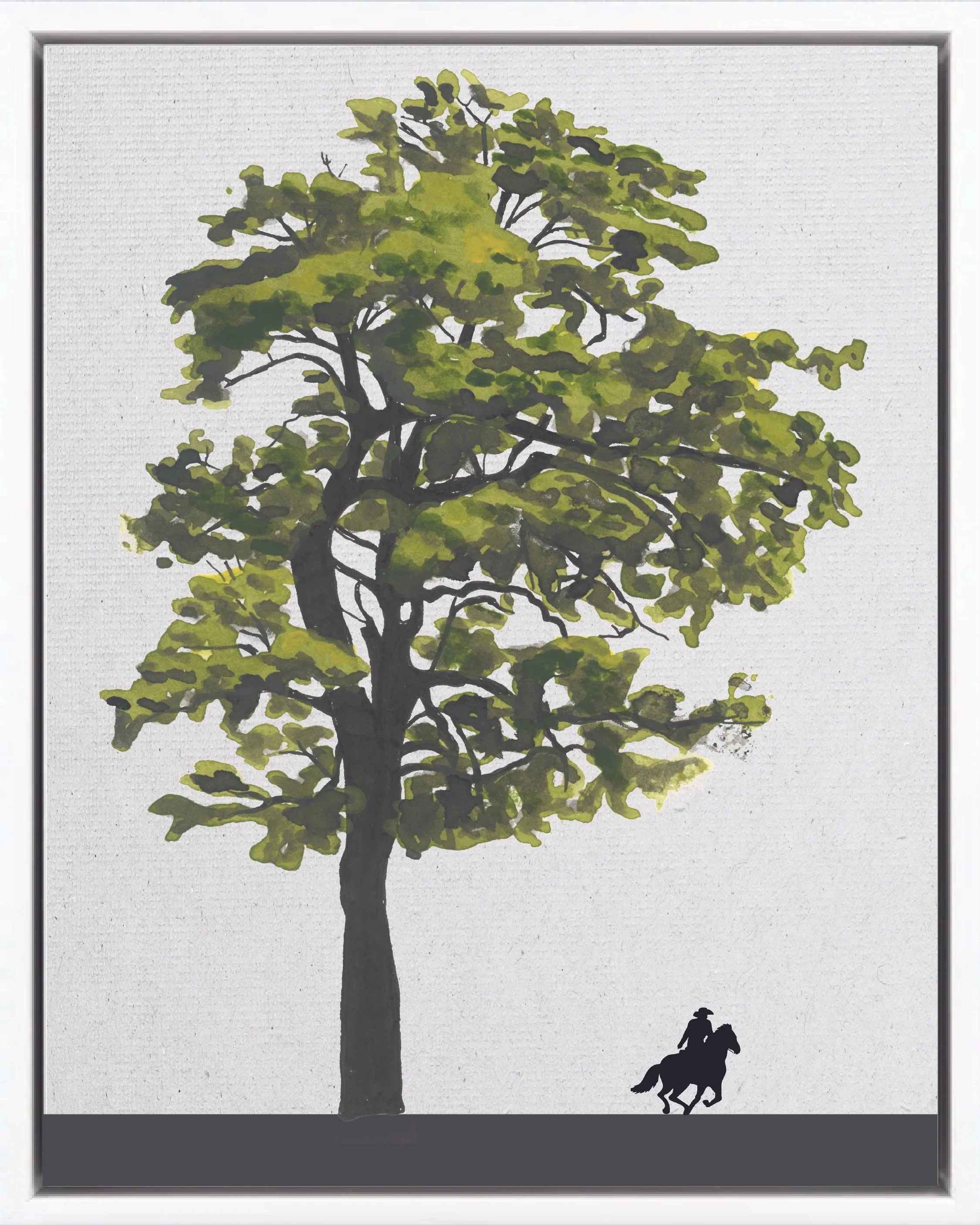
![Illustration of Cortez negro (Pink ipê, lapacho rosado, ocobo), Handroanthus impetiginosus, late secondary reforestation tree of Costa Rica's Neotropical Isthmian-Atlantic slope, at mature height with figure for scale.]()
Cortez Negro
Handroanthus impetiginosus
-
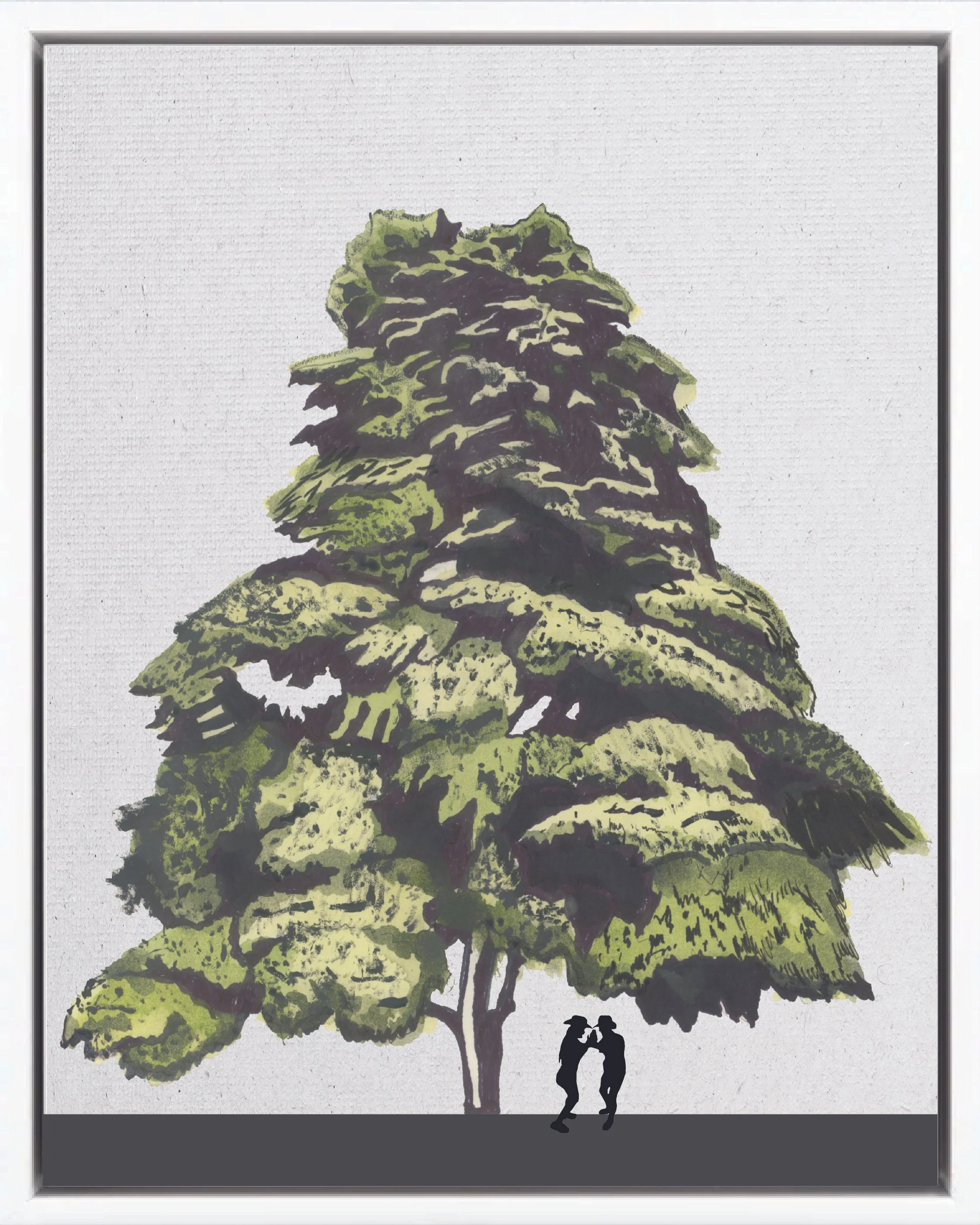
![Illustration of Madroño (Lemonwood, sálamo, urraca), Calycophyllum candidissimum, late secondary reforestation tree of Costa Rica's Neotropical Isthmian-Atlantic slope, at mature height with figure for scale.]()
Madroño
Calycophyllum candidissimum
-
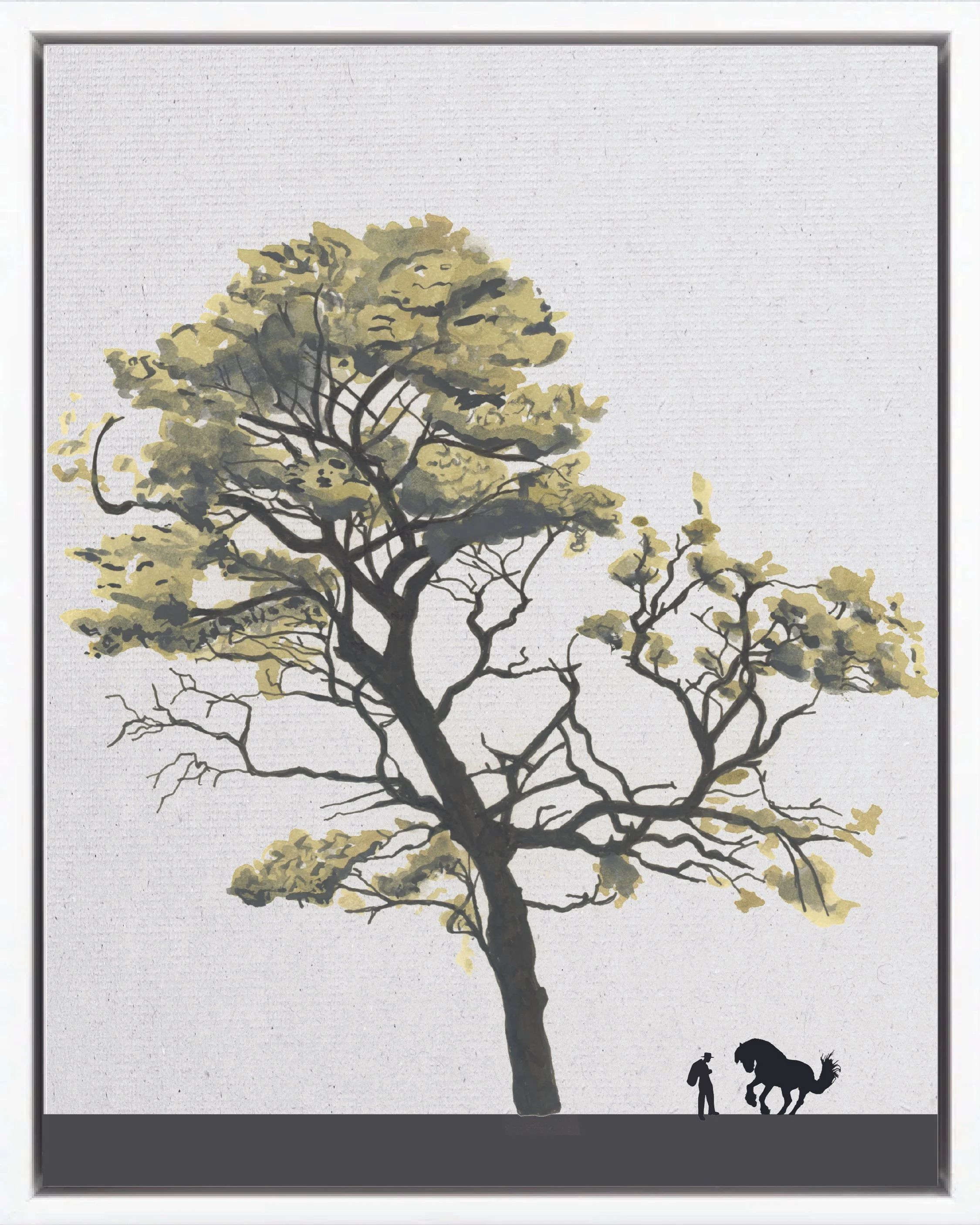
![Illustration of Roble sabana (Pink trumpet tree, apamate, maquilishuat), Tabebuia rosea, late secondary reforestation tree of Costa Rica's Neotropical Isthmian-Atlantic slope, at mature height with figure for scale.]()
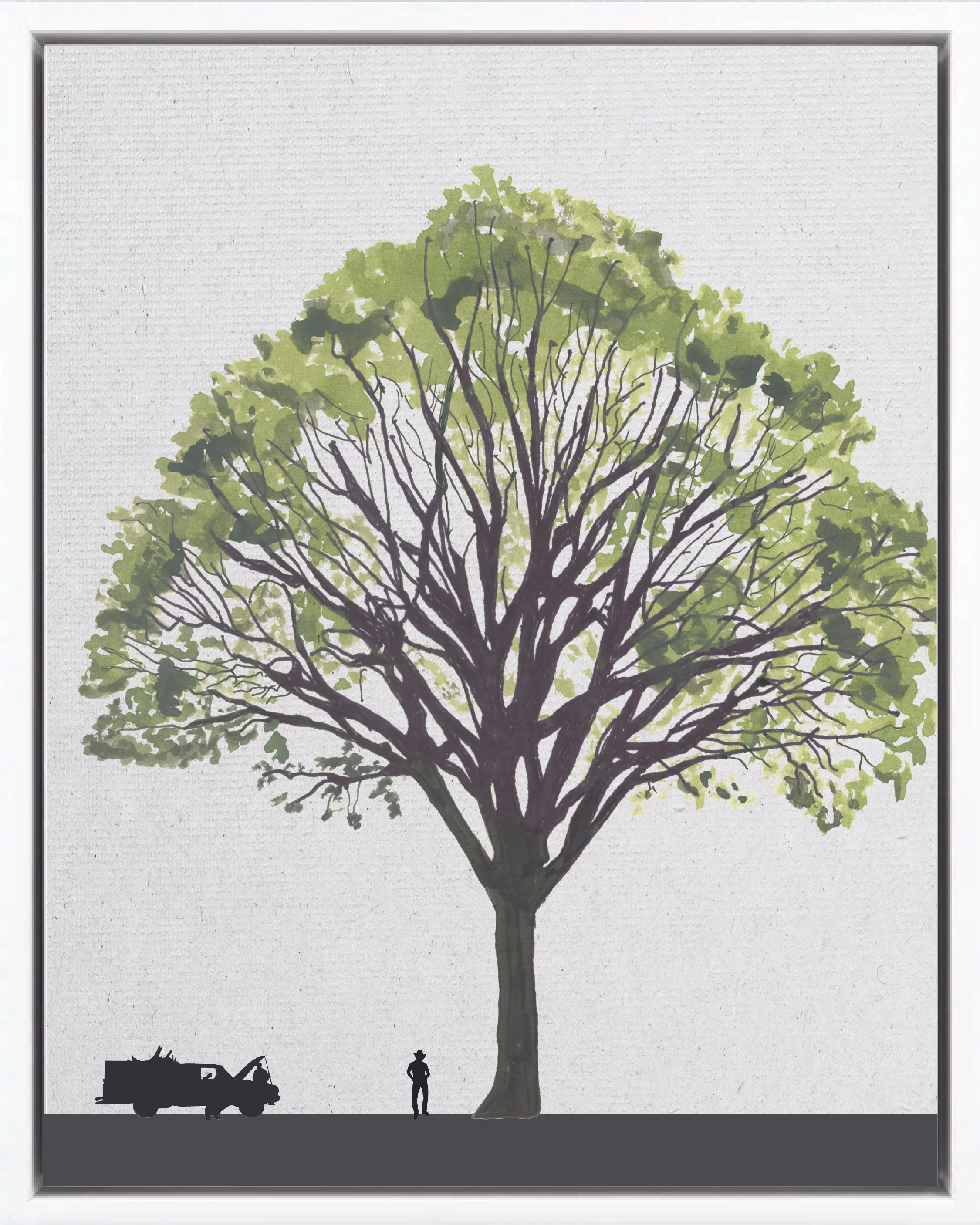
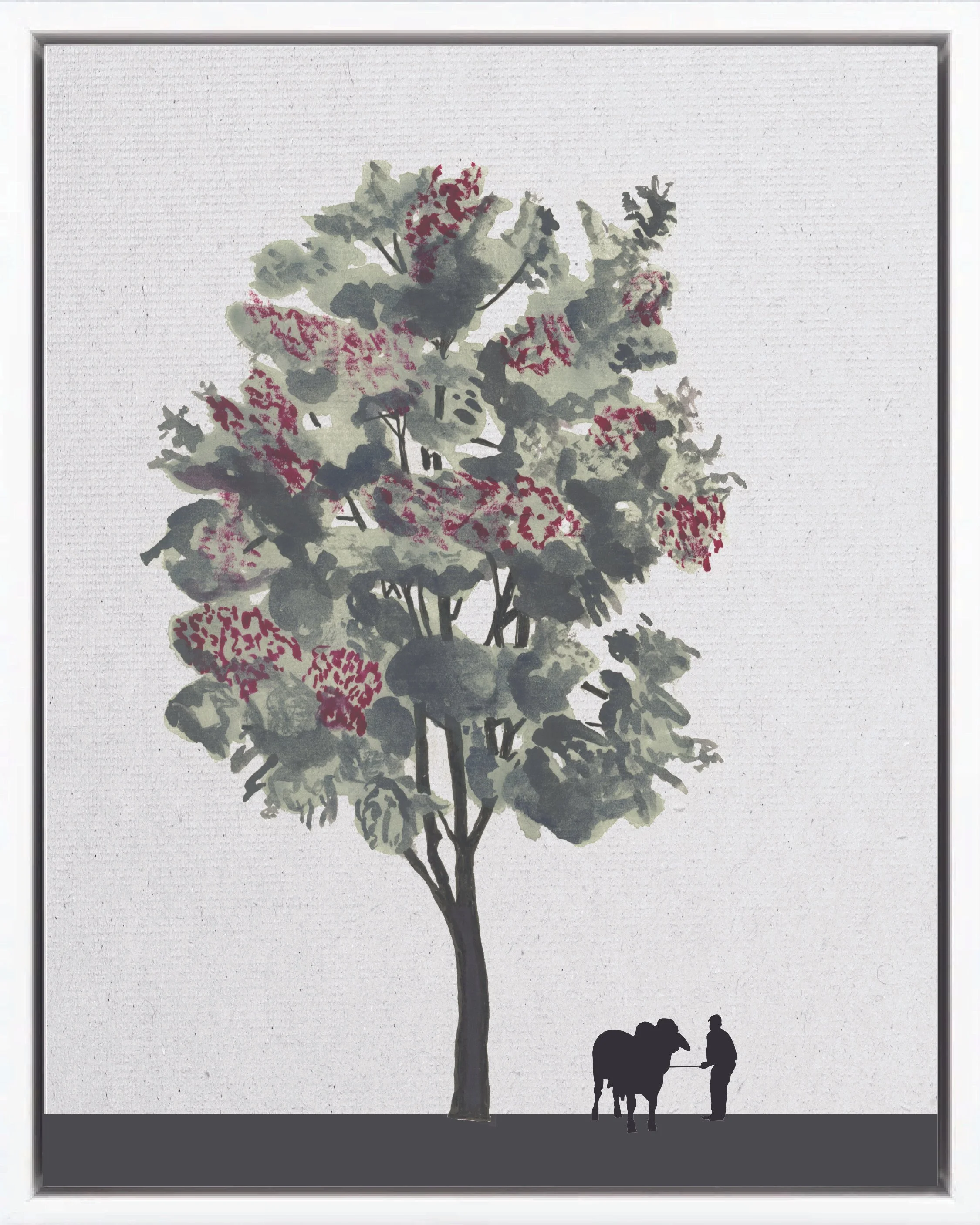
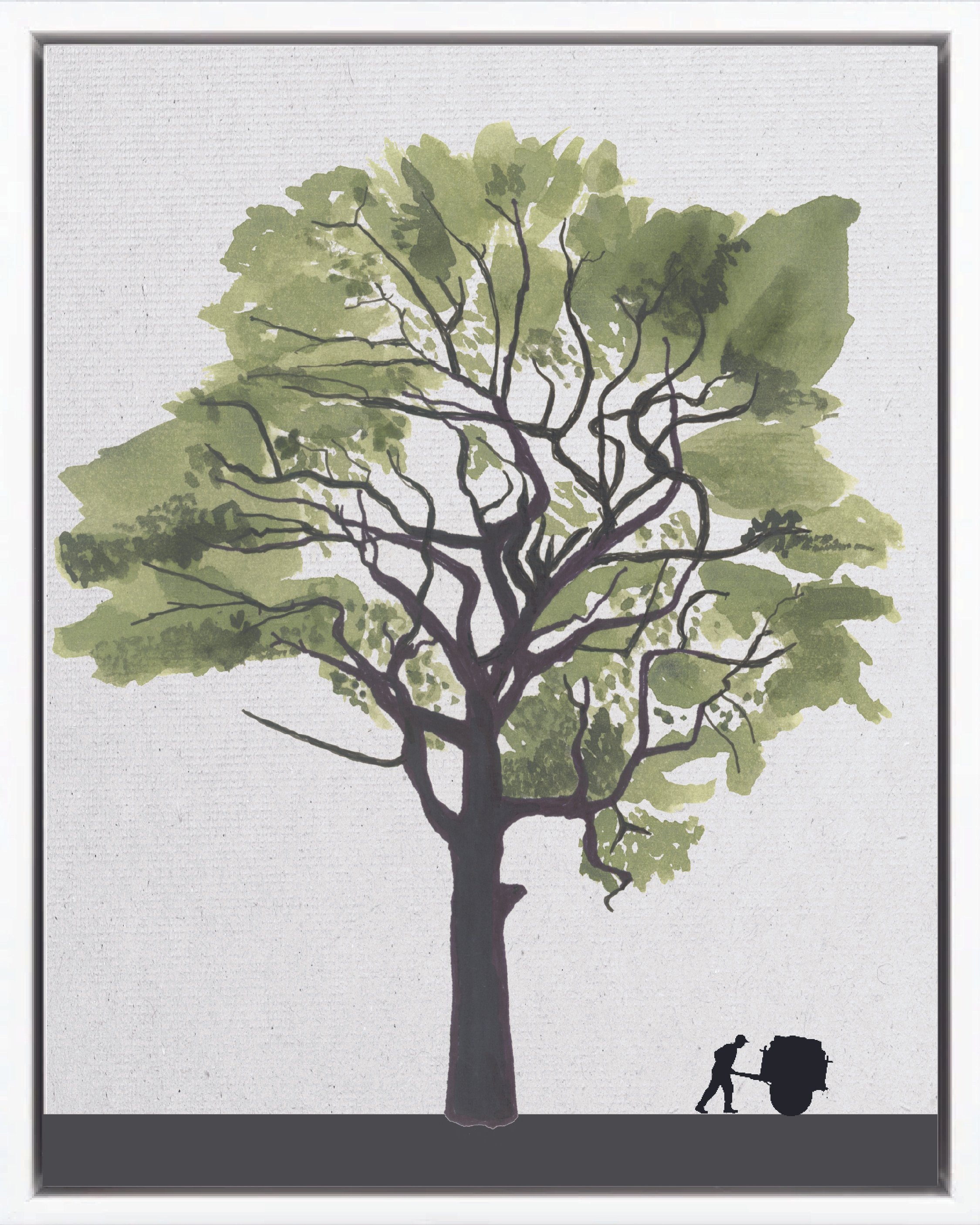
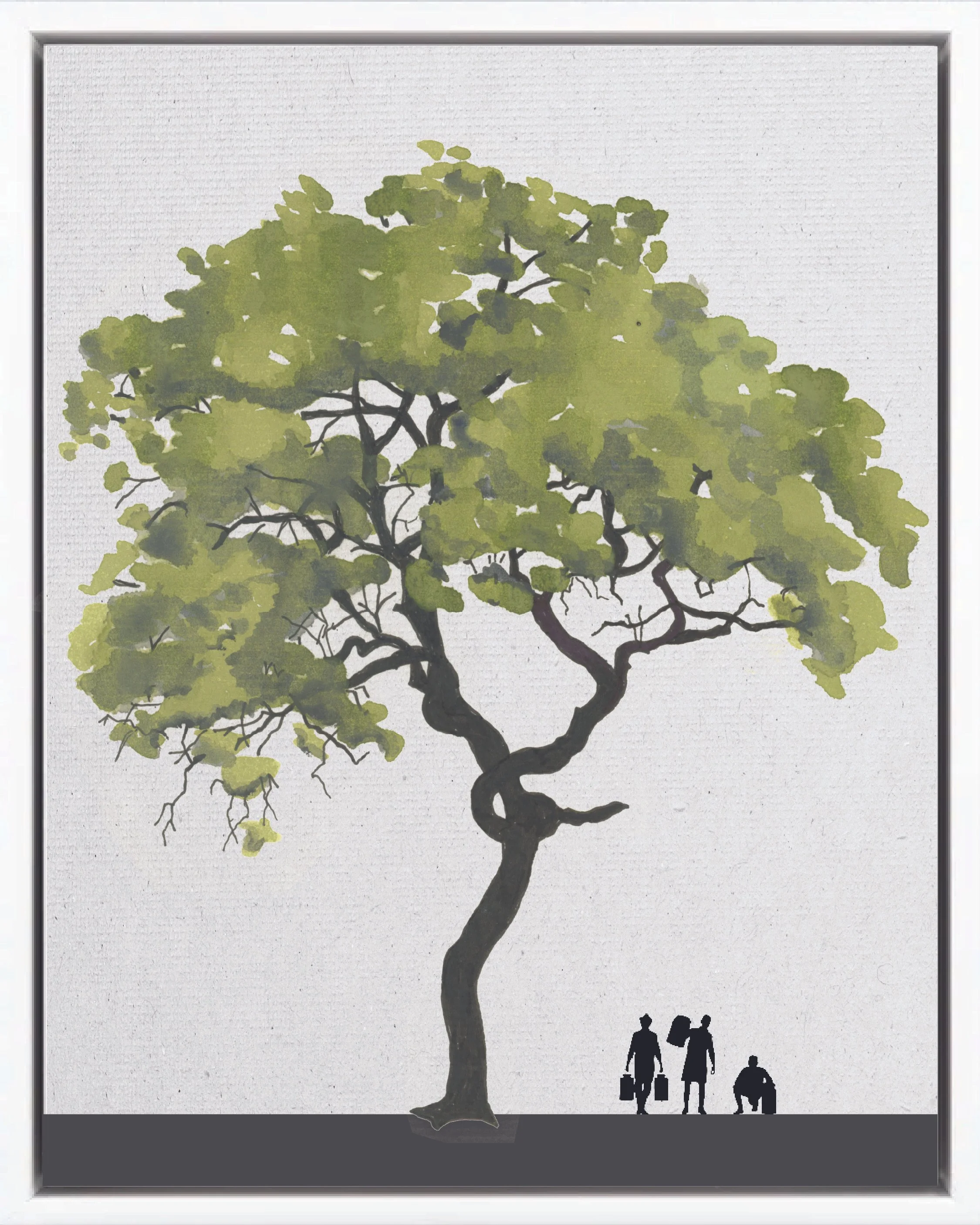
Roble Sabana
Tabebuia rosea
Climax Species
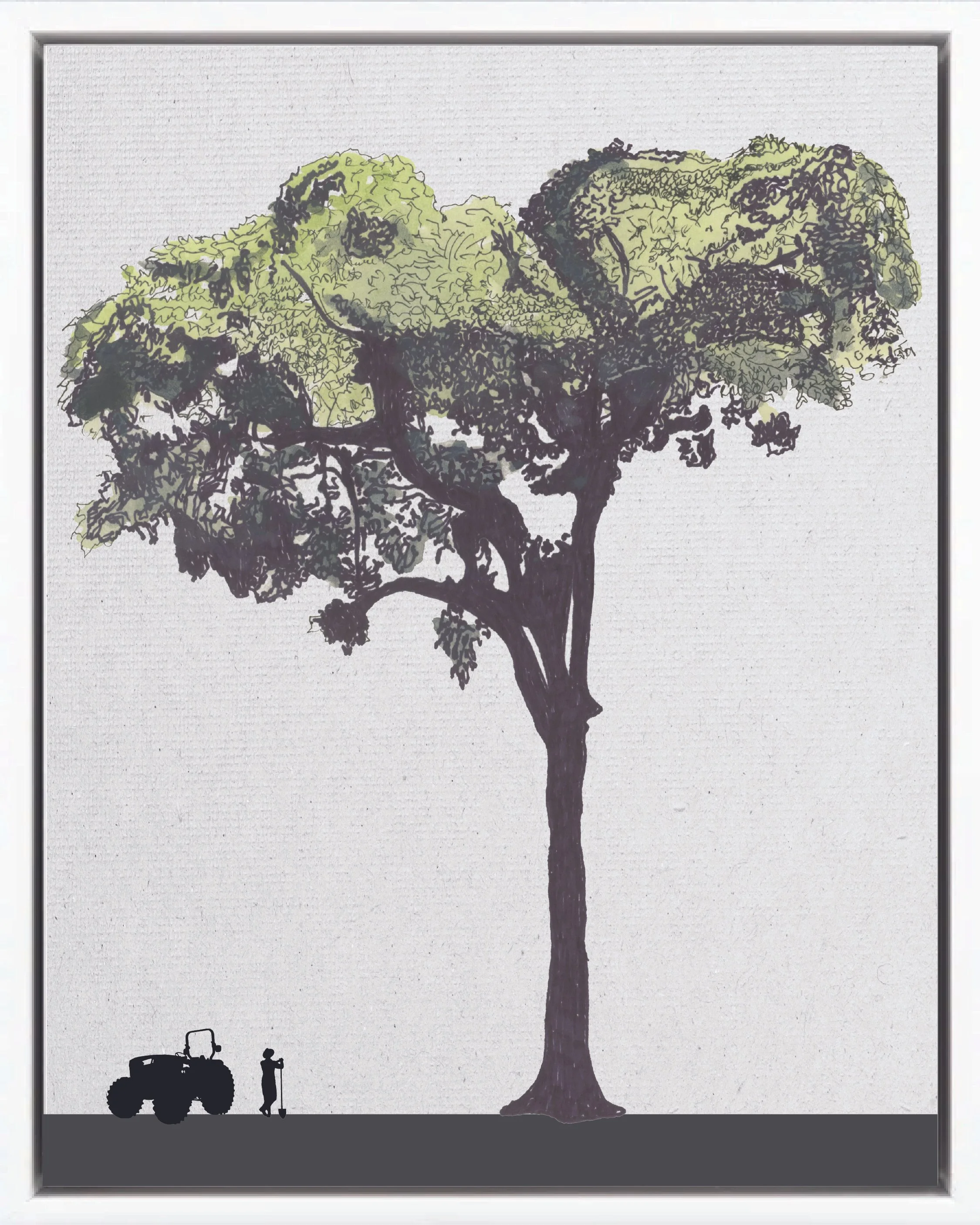
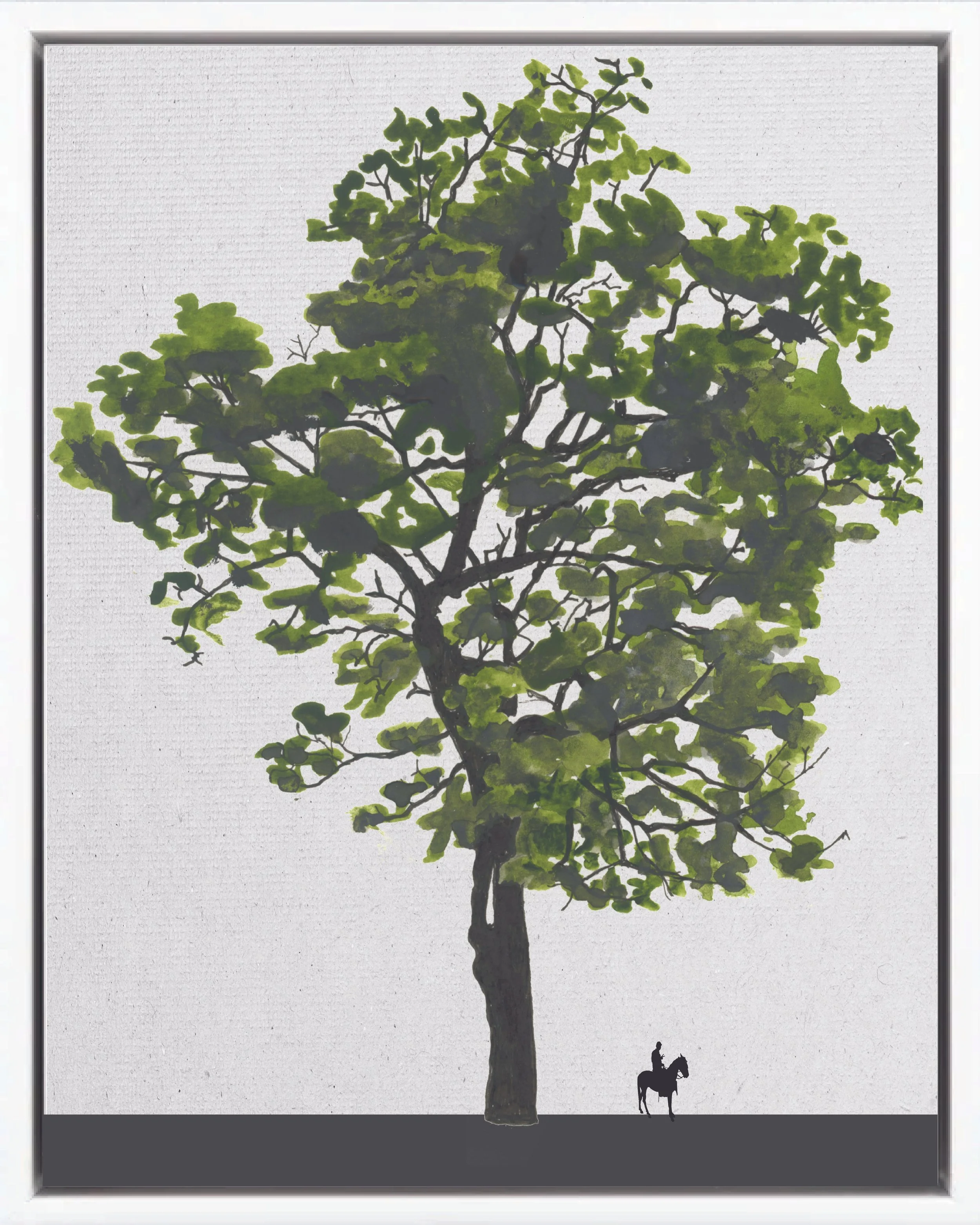
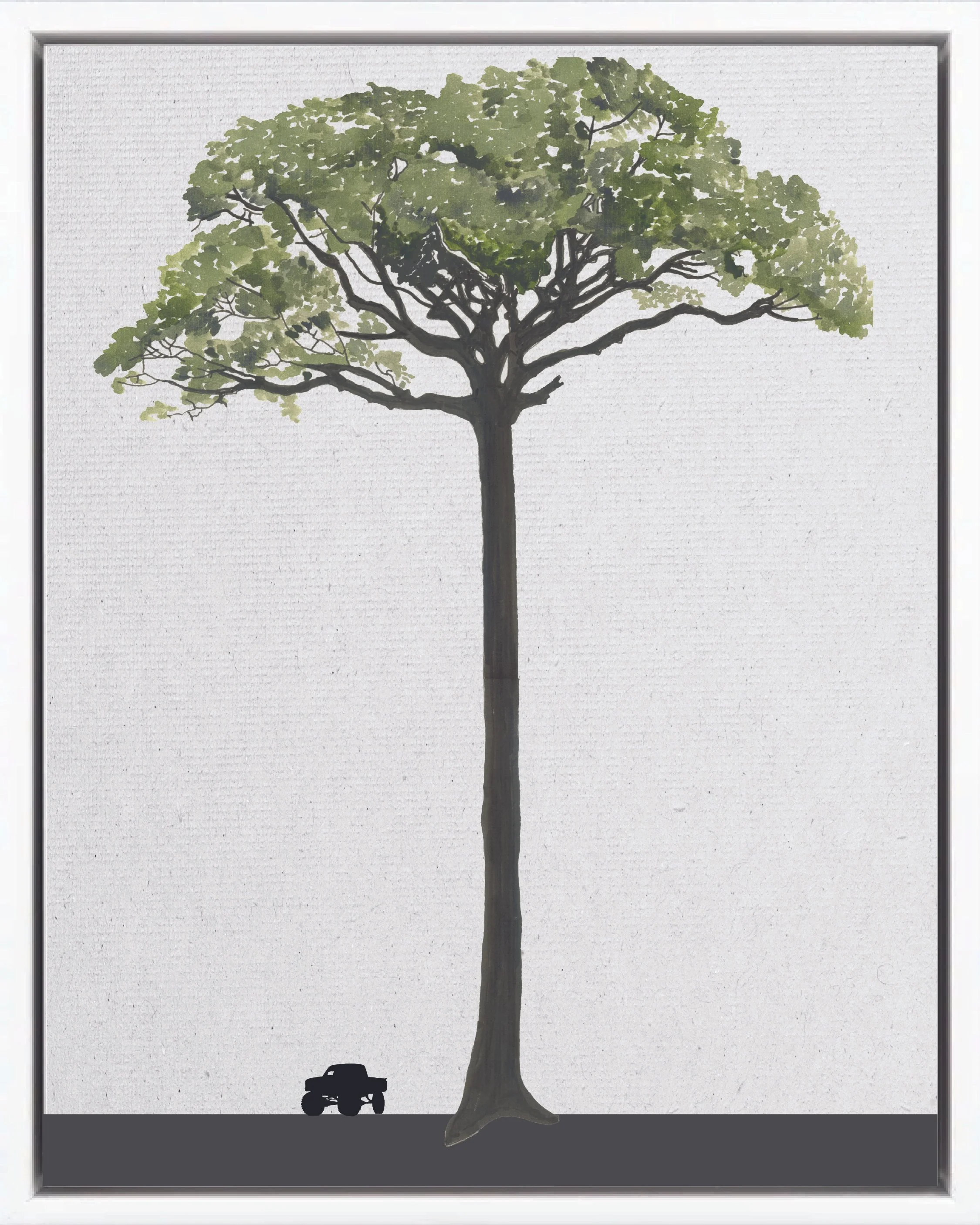
A climax seedling germinates in the deep shade of an existing canopy and survives there on almost nothing, a sliver of filtered light reaching the forest floor, growing a few centimeters a year, sometimes less, for decades if it has to. It isn't racing anyone. It's waiting for one specific thing: an old tree to fall, a gap to open, its one real chance to accelerate upward before the canopy closes again. Everything about how these trees are built reflects that strategy. Their wood grows dense and slow, cell by cell, because they aren't spending their energy on speed, they're spending it on lasting. A climax hardwood can stand for centuries once it finally gets there. At Rancho Garza this single guild spans everything from towering emergents like Ceiba and Almendro amarillo down through the full closed canopy beneath them, the buttressed giants I still stop and put my hand on every time I pass one.
Climax Canopy
-
![Illustration of Aguacatillo (Wild avocado, Quizarrá, Sigua, Ira, Sweetwood), Ocotea/Nectandra spp., shade-tolerant subcanopy reforestation tree of Costa Rica's Neotropical Isthmian-Atlantic slope, at mature height with figure for scale.]()
Aguacatillo
Ocotea/Nectandra spp.
-
![Illustration of Almendro de río (River almond, carne asada, almendro macho), Andira inermis, climax canopy reforestation tree of Costa Rica's Neotropical Isthmian-Atlantic slope, at mature height with figure for scale.]()
Almendro de Río
Andira inermis
-
![Illustration of Caoba (Big-leaf mahogany, caoba hondureña, caobo), Swietenia macrophylla, climax canopy reforestation tree of Costa Rica's Neotropical Isthmian-Atlantic slope, at mature height with figure for scale.]()
Caoba
Swietenia macrophylla
-
![Illustration of Caobilla (Crabwood, cedro macho, andiroba), Carapa guianensis, climax canopy reforestation tree of Costa Rica's Neotropical Isthmian-Atlantic slope, at mature height with figure for scale.]()
Caobilla (Cedro Macho)
Carapa guianensis
-
![Illustration of Cedro María (Brazilian beautyleaf, María, Santa María, Palo María, Aceite María, Guanandí), Calophyllum brasiliense, climax canopy reforestation tree of Costa Rica's Neotropical Isthmian-Atlantic slope, at mature height with figure.]()
Cedro María
Calophyllum brasiliense
-
![Illustration of Cristóbal (Granadillo, ñambar, hormigón), Platymiscium pinnatum, climax canopy reforestation tree of Costa Rica's Neotropical Isthmian-Atlantic slope, at mature height with figure for scale.]()
Cristóbal
Platymiscium pinnatum
-
![Illustration of Espavel (Wild cashew, caracolí, rabito), Anacardium excelsum, climax canopy reforestation tree of Costa Rica's Neotropical Isthmian-Atlantic slope, at mature height with figure for scale.]()
Espavel
Anacardium excelsum
-
![Illustration of Fruta dorada (Wild nutmeg, banak, cedro bastardo), Virola koschnyi, climax canopy reforestation tree of Costa Rica's Neotropical Isthmian-Atlantic slope, at mature height with figure for scale.]()
Fruta Dorada
Virola koschnyi
-
![Illustration of Gavilán (Pracaxi, quebracho, dormilón), Pentaclethra macroloba, climax canopy reforestation tree of Costa Rica's Neotropical Isthmian-Atlantic slope, at mature height with figure for scale.]()
Gavilán
Pentaclethra macroloba
-
![Illustration of Guapinol (Stinking toe, jatobá, algarrobo), Hymenaea courbaril, climax canopy reforestation tree of Costa Rica's Neotropical Isthmian-Atlantic slope, at mature height with figure for scale.]()
Guapinol
Hymenaea courbaril
-
![Illustration of Higuerón (Amate fig, chilamate, higuera blanca), Ficus insipida, climax canopy reforestation tree of Costa Rica's Neotropical Isthmian-Atlantic slope, at mature height with figure for scale.]()
Higuerón
Ficus insipida
-
![Illustration of Manú negro (Black manwood, acariquara, palo de hierro), Minquartia guianensis, climax canopy reforestation tree of Costa Rica's Neotropical Isthmian-Atlantic slope, at mature height with figure for scale.]()
Manú negro
Minquartia guianensis
-
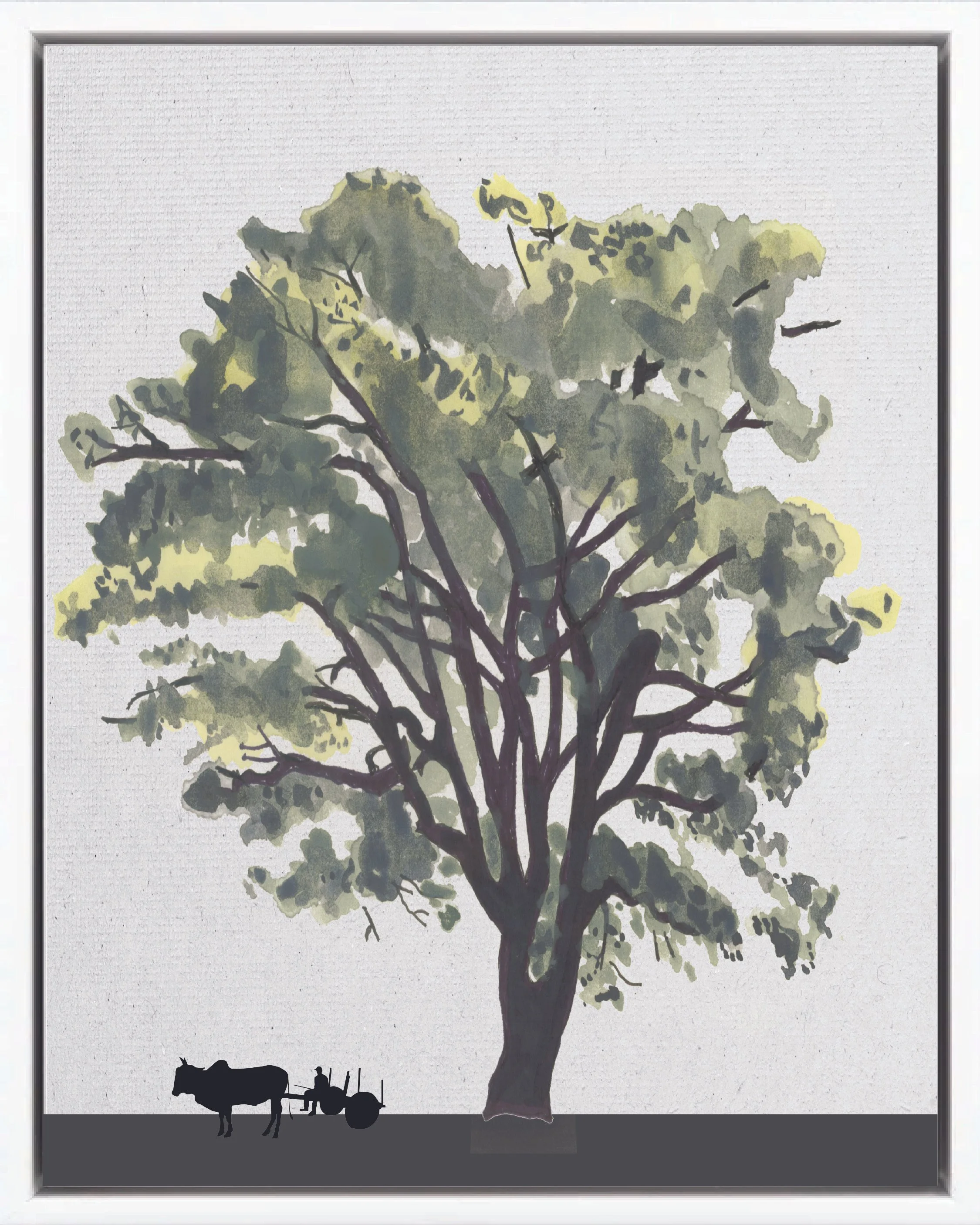
![Illustration of Níspero (Níspero tinto, chicle, sapodilla), Manilkara staminodella, climax canopy reforestation tree of Costa Rica's Neotropical Isthmian-Atlantic slope, at mature height with figure for scale.]()
Nispero
Manilkara staminodella
-
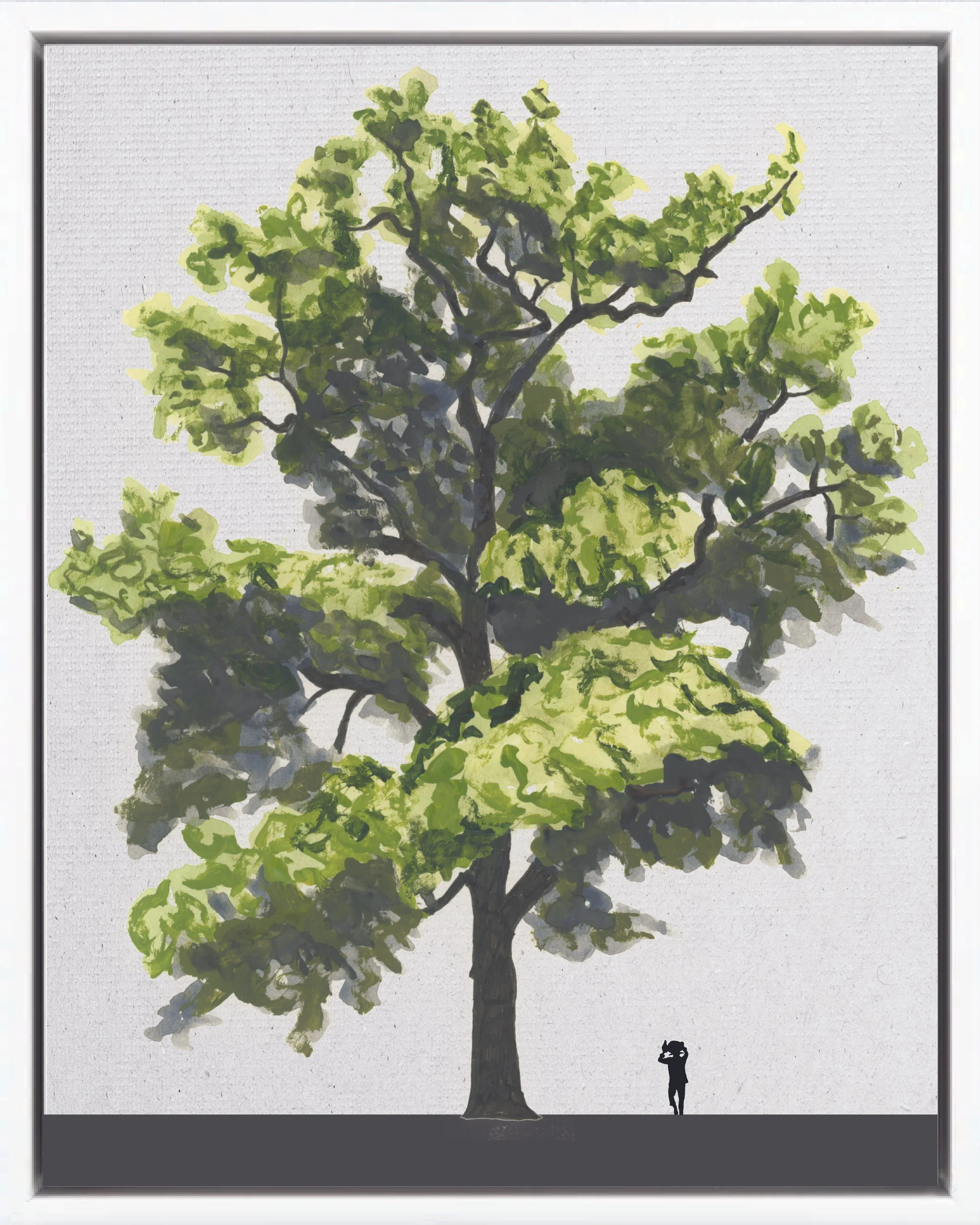
![Illustration of Ojoche (Breadnut, ramón, hichoso), Brosimum alicastrum, climax canopy reforestation tree of Costa Rica's Neotropical Isthmian-Atlantic slope, at mature height with figure for scale.]()
Ojoche
Brosimum alicastrum
-
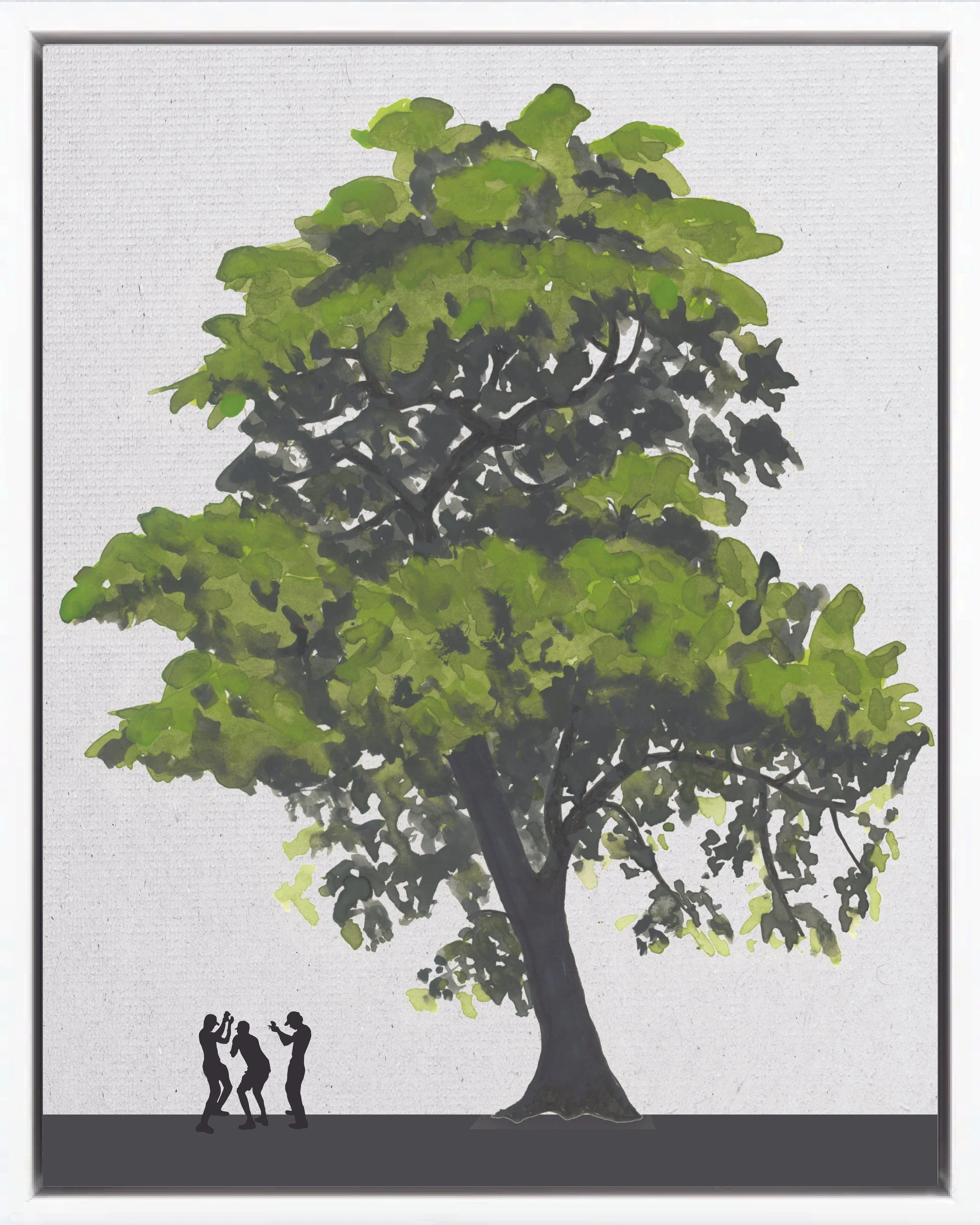
![Illustration of Pilón (Nancitón, mascarey, zapatero), Hyeronima alchorneoides, climax canopy reforestation tree of Costa Rica's Neotropical Isthmian-Atlantic slope, at mature height with figure for scale.]()
Pilón
Hyeronima alchorneoides
-
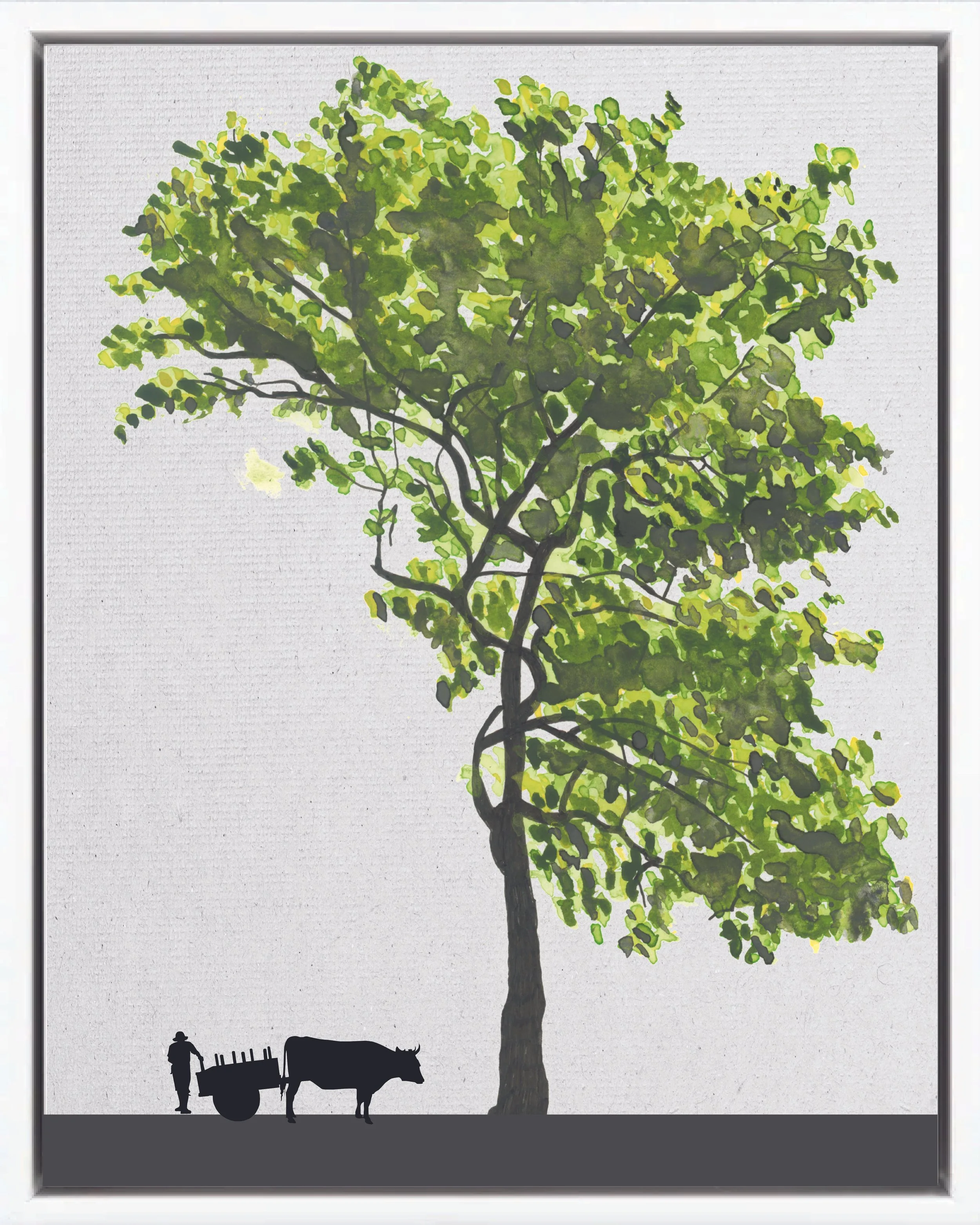
![Illustration of Ron ron (Goncalo alves, jobillo, ciruelillo), Astronium graveolens, climax canopy reforestation tree of Costa Rica's Neotropical Isthmian-Atlantic slope, at mature height with figure for scale.]()
Ron Ron
Astronium graveolens
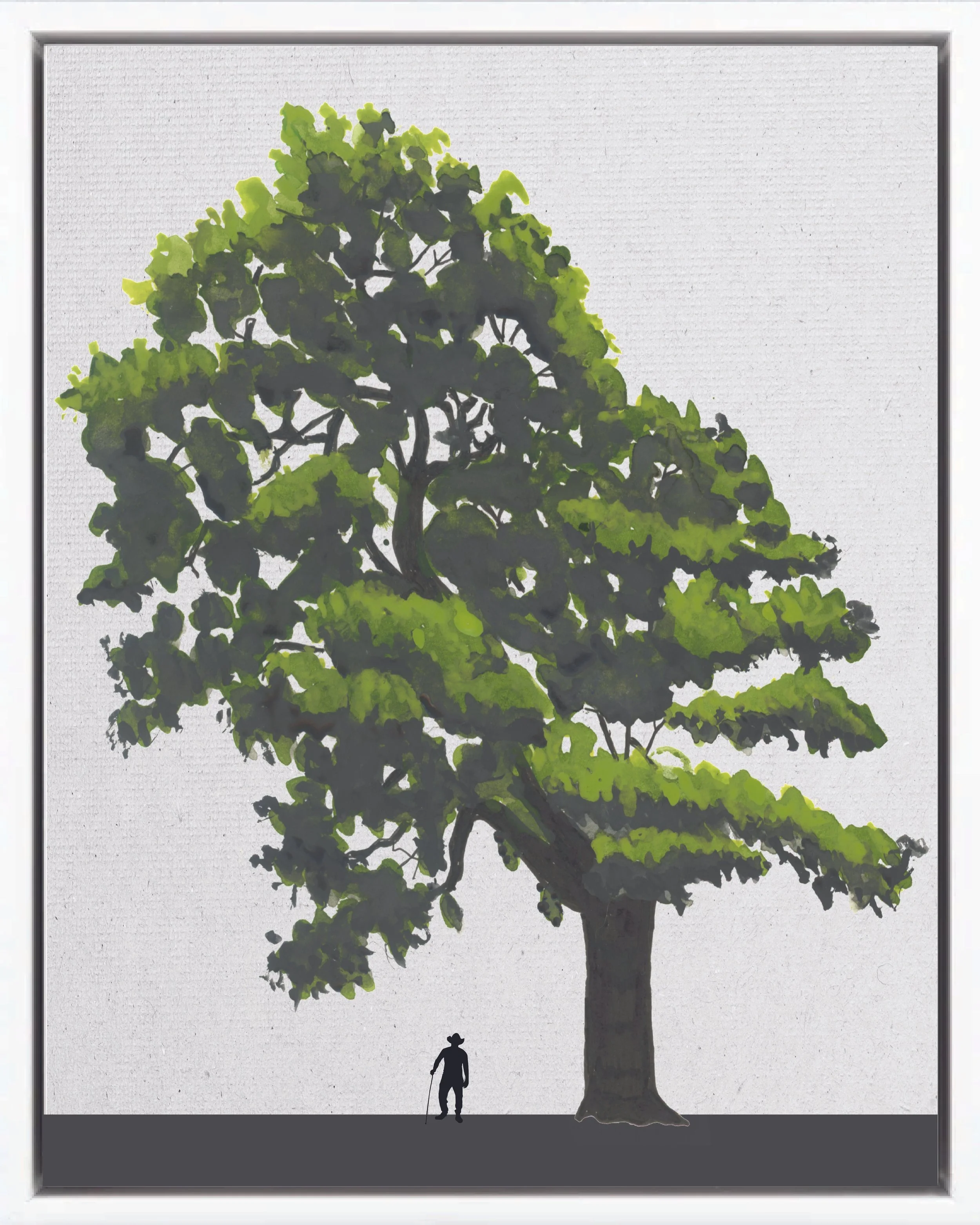
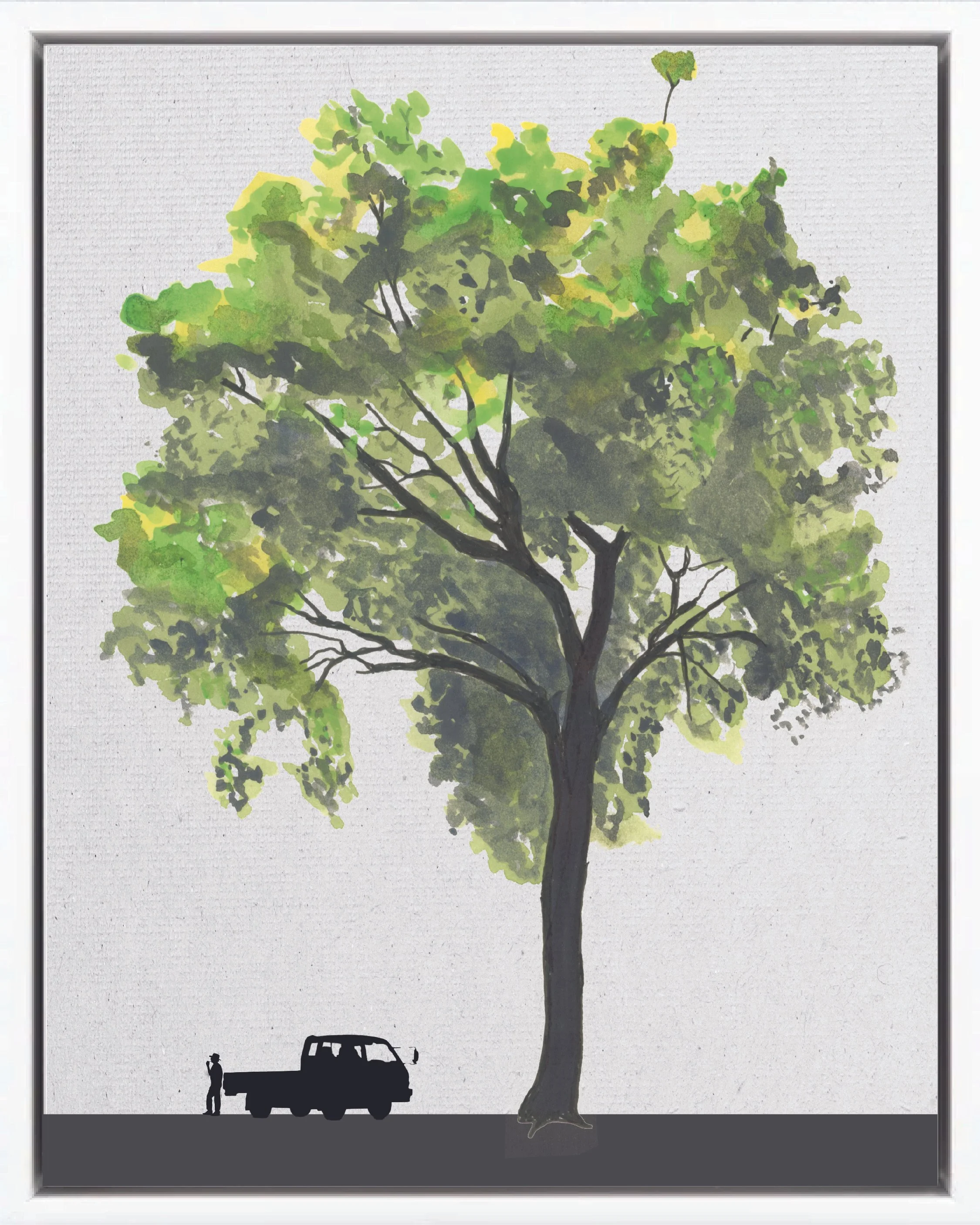
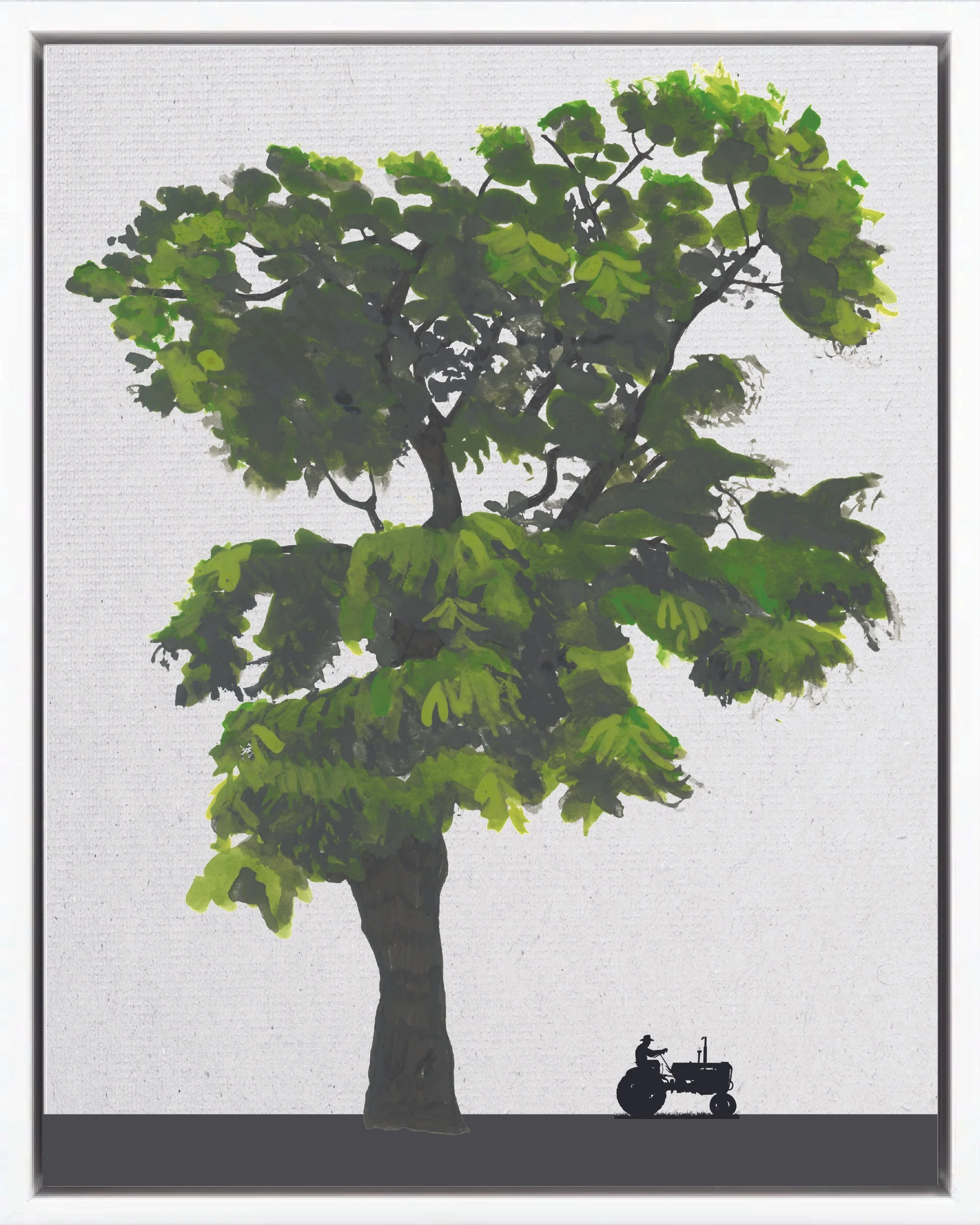
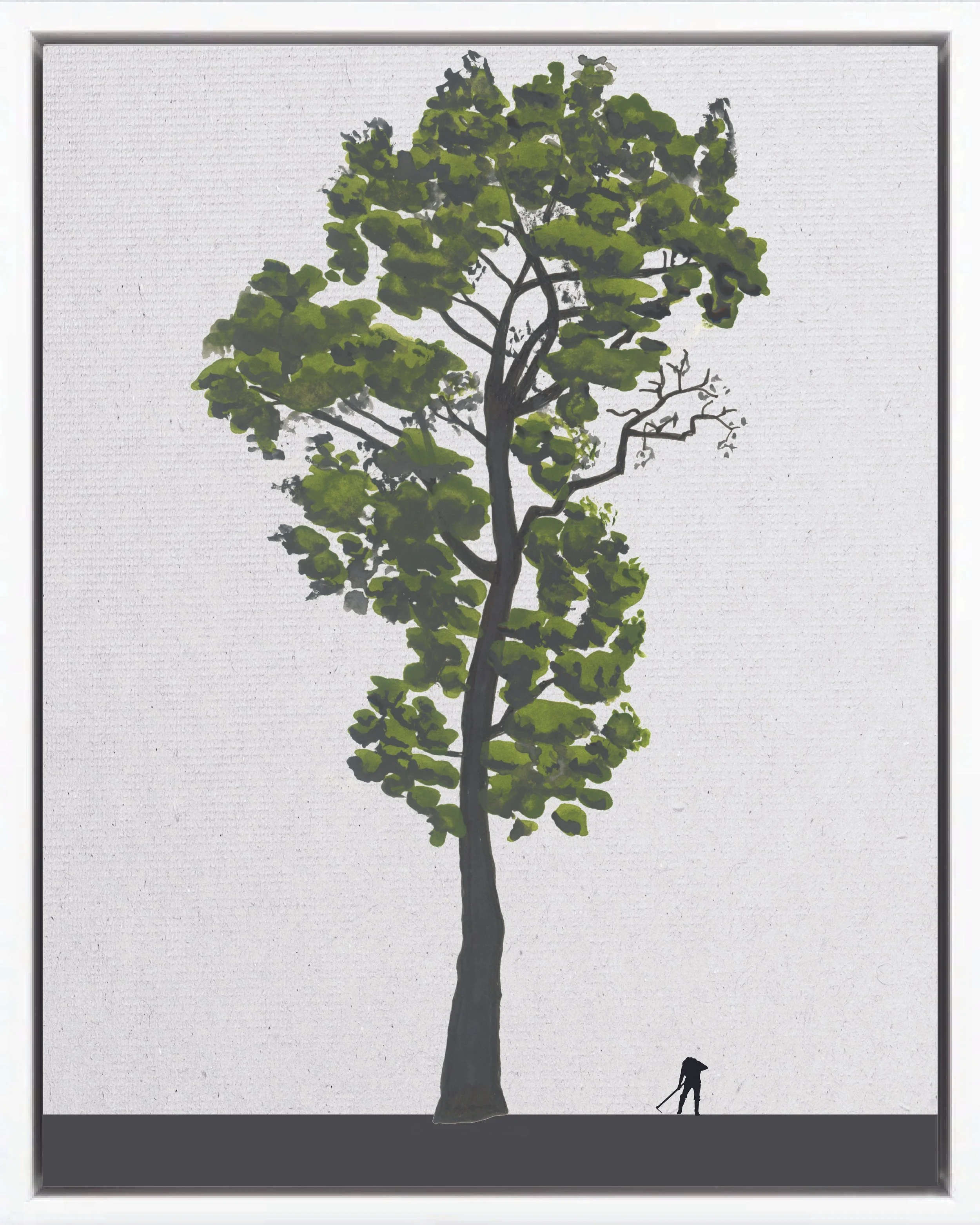

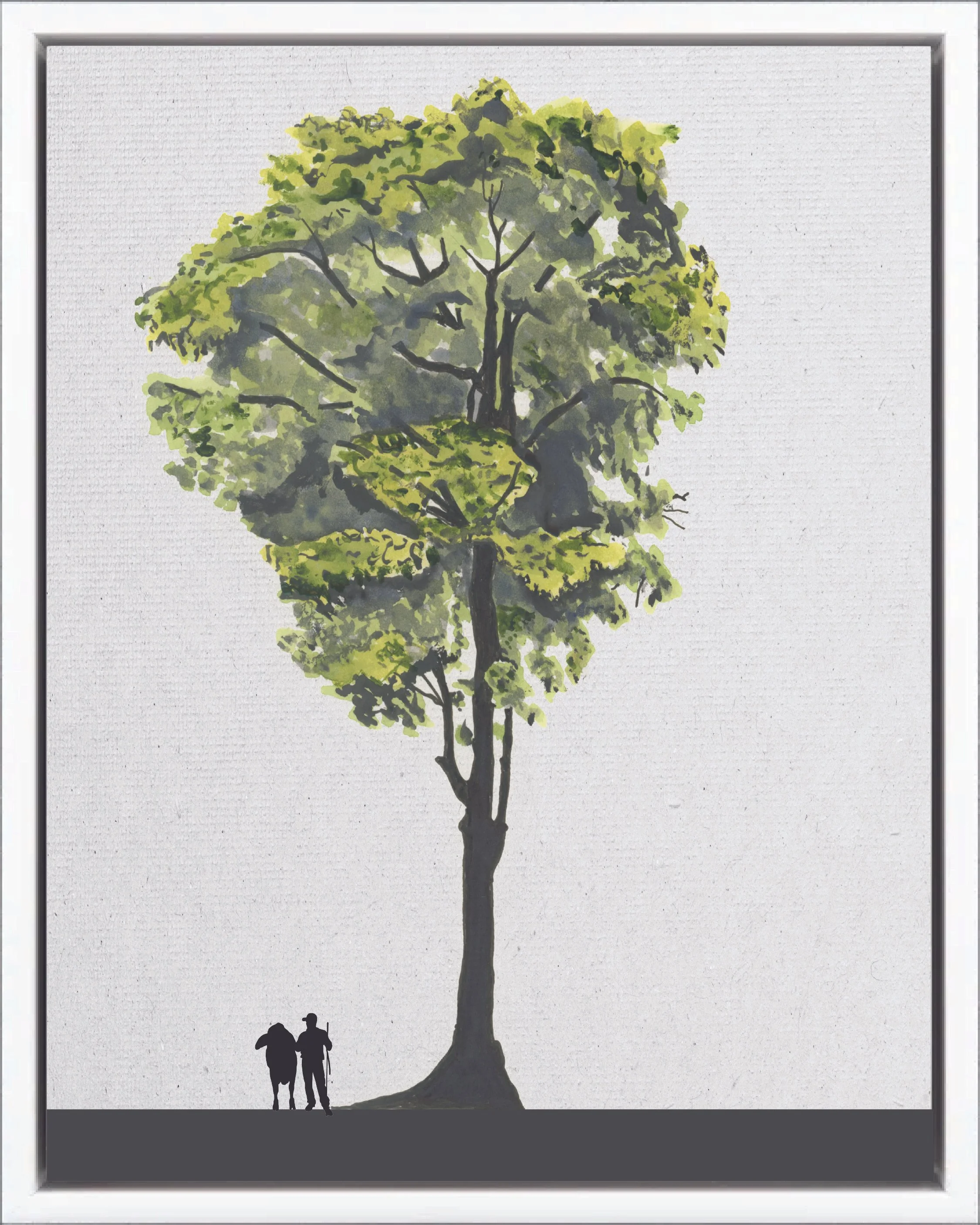

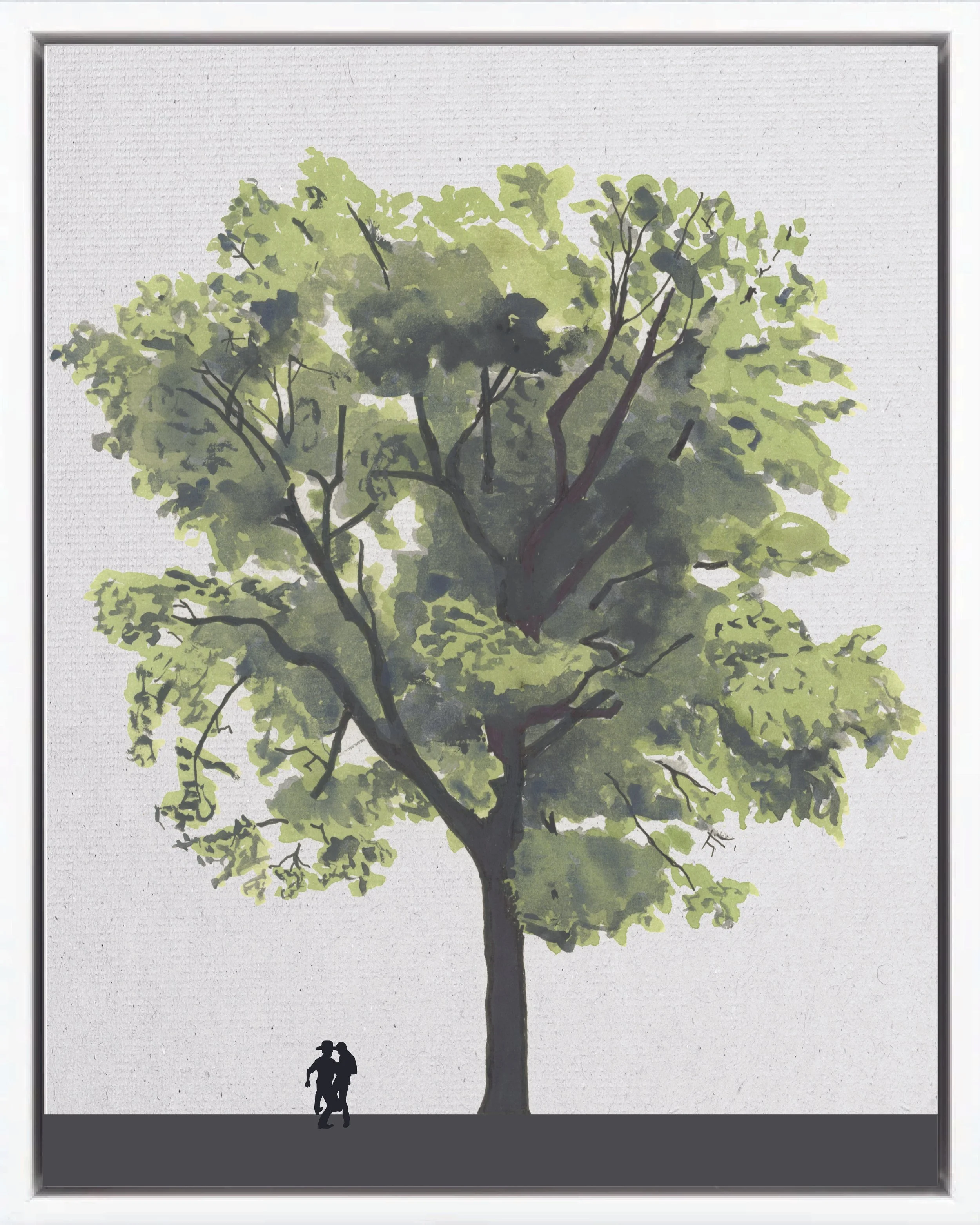
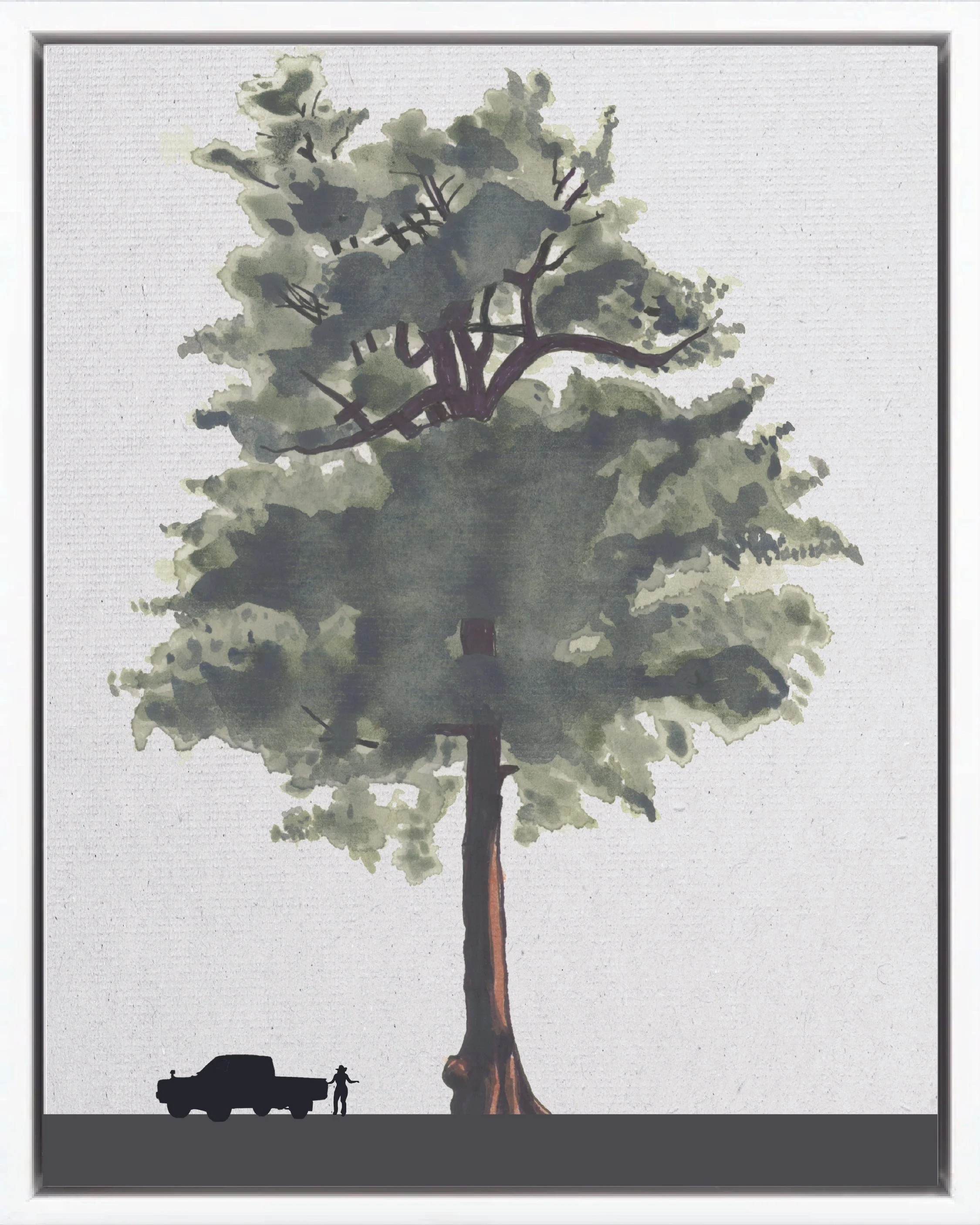
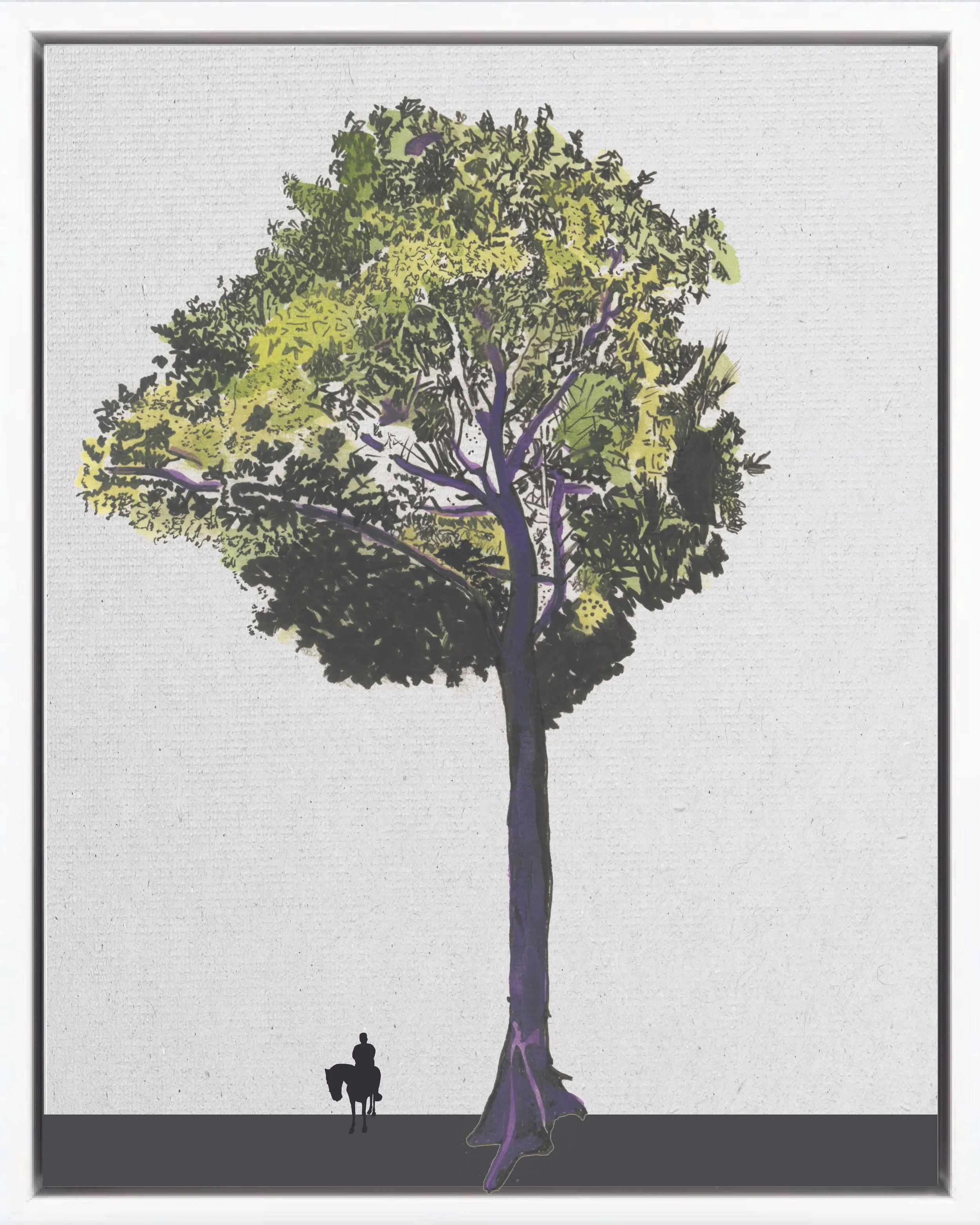
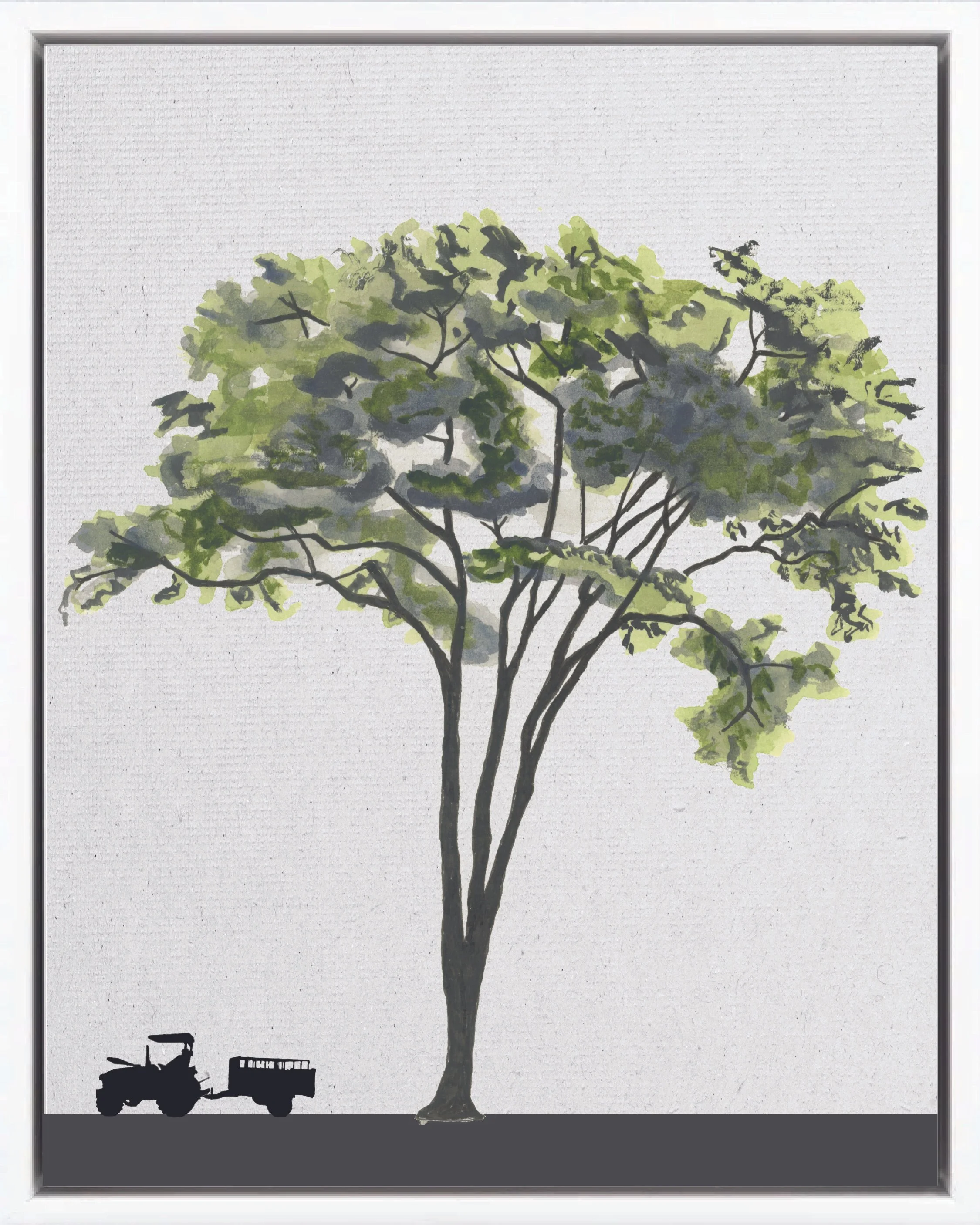
Climax Emergent
-
![Illustration of Almendro amarillo (Almendro, almendro de montaña, almendro de lapa), Dipteryx panamensis, climax emergent reforestation tree of Costa Rica's Neotropical Isthmian-Atlantic slope, at mature height with figure for scale.]()
Almendro Amarillo
Dipteryx panamensis
-
![Illustration of Amarillón (Roble coral, canux, guayabo de charco), Terminalia amazonia, climax emergent reforestation tree of Costa Rica's Neotropical Isthmian-Atlantic slope, at mature height with figure for scale.]()
Amarillón
Terminalia amazonia
-
![Illustration of Ceiba (Kapok, ceibo, lupuna), Ceiba pentandra, climax emergent reforestation tree of Costa Rica's Neotropical Isthmian-Atlantic slope, at mature height with figure for scale.]()
Ceiba
Ceiba pentandra
-
![Illustration of Cenízaro (Rain tree, samán, monkeypod), Samanea saman, climax emergent reforestation tree of Costa Rica's Neotropical Isthmian-Atlantic slope, at mature height with figure for scale.]()
Cenízaro
Samanea saman
-
![Illustration of Guanacaste (Elephant ear tree, huanacaxtle, conacaste), Enterolobium cyclocarpum, climax emergent reforestation tree of Costa Rica's Neotropical Isthmian-Atlantic slope, at mature height with figure for scale.]()
Guanacaste
Enterolobium cyclocarpum
-
![Illustration of Olla de mono (Monkey pot, jícaro, coco de mono), Lecythis ampla, climax emergent reforestation tree of Costa Rica's Neotropical Isthmian-Atlantic slope, at mature height with figure for scale.]()
Olla de mono
Lecythis ampla
-
![Illustration of Sura (Dragonwood, guayabón, guayabo de montaña), Terminalia oblonga, climax emergent reforestation tree of Costa Rica's Neotropical Isthmian-Atlantic slope, at mature height with figure for scale.]()
Sura
Terminalia oblonga

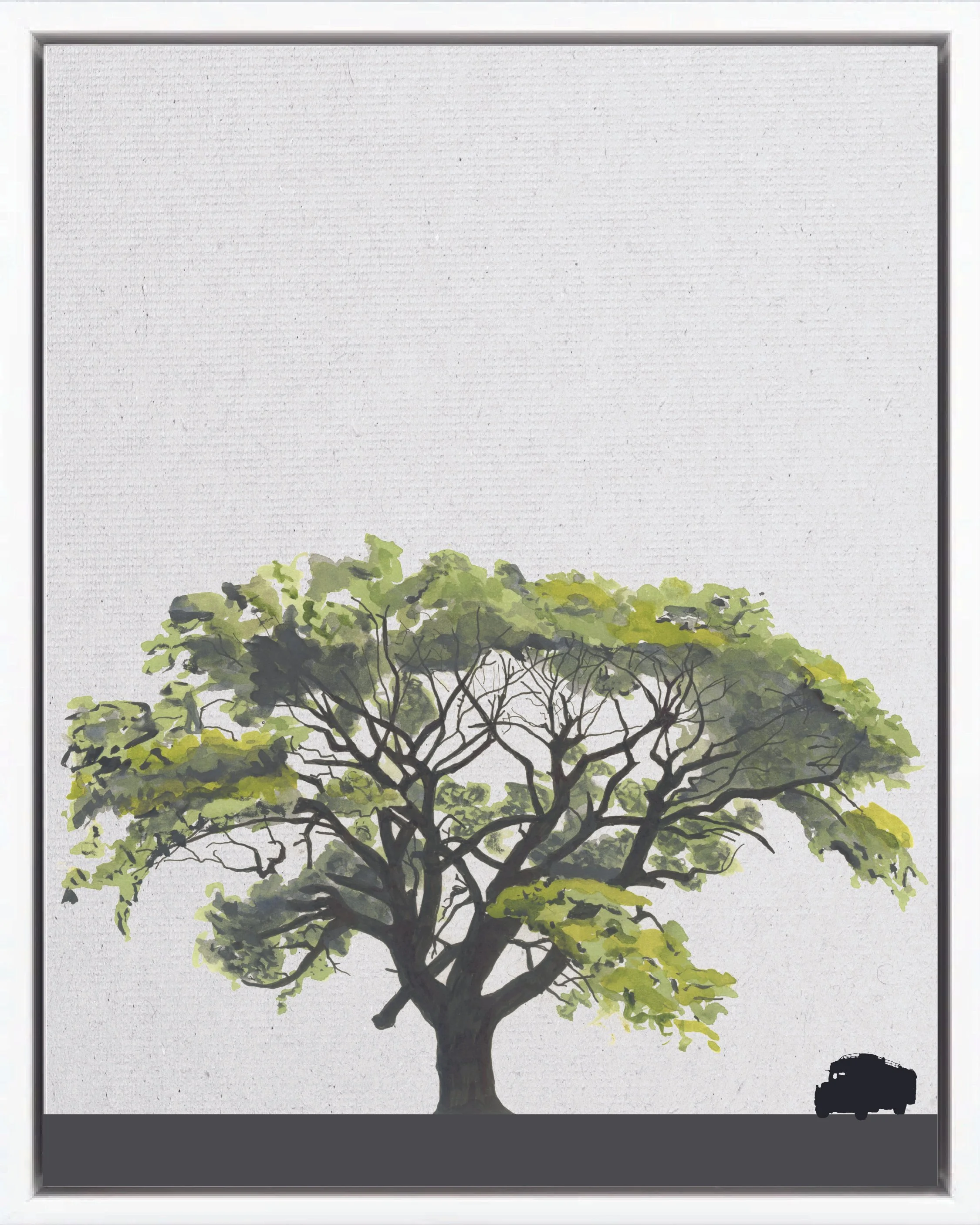
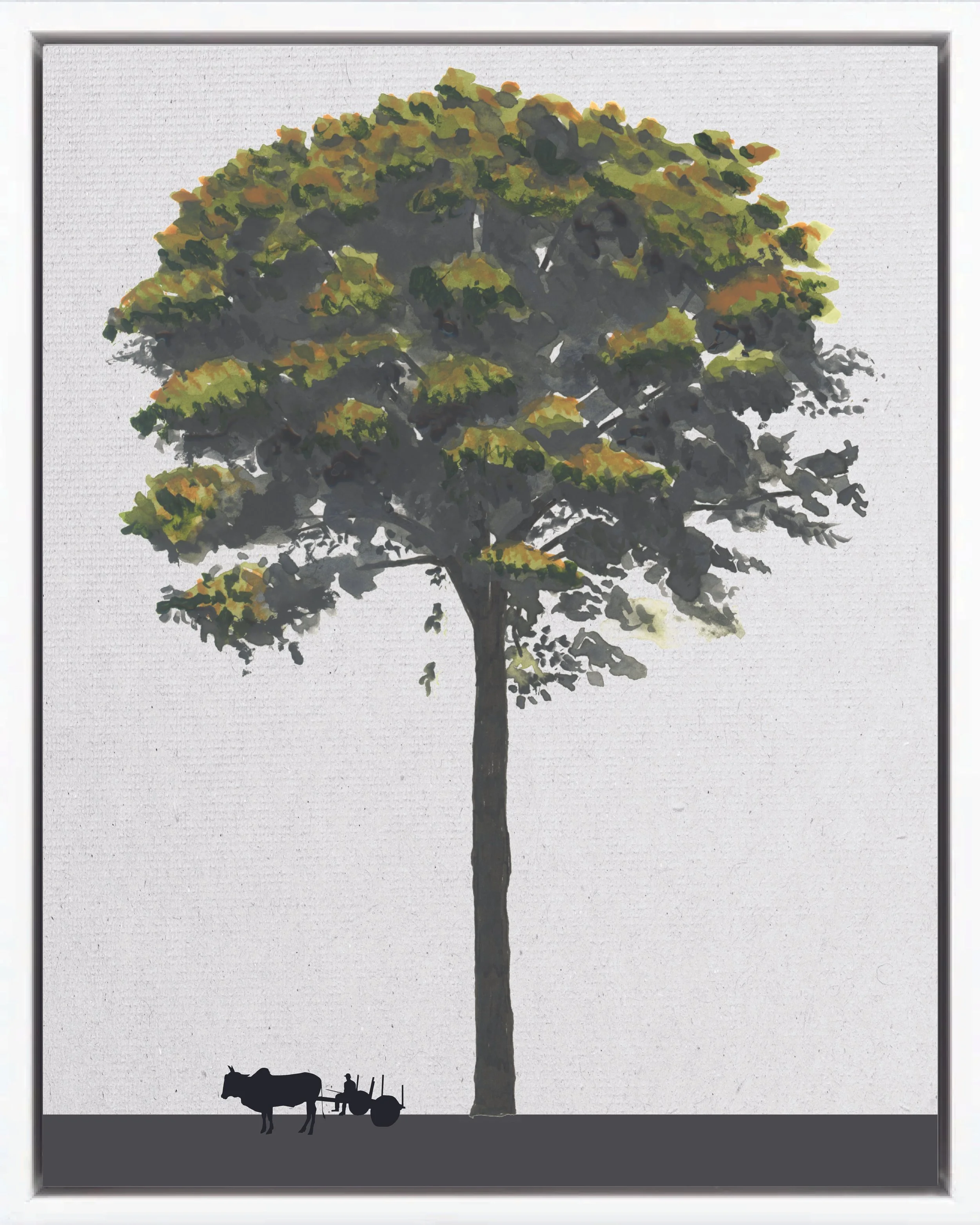
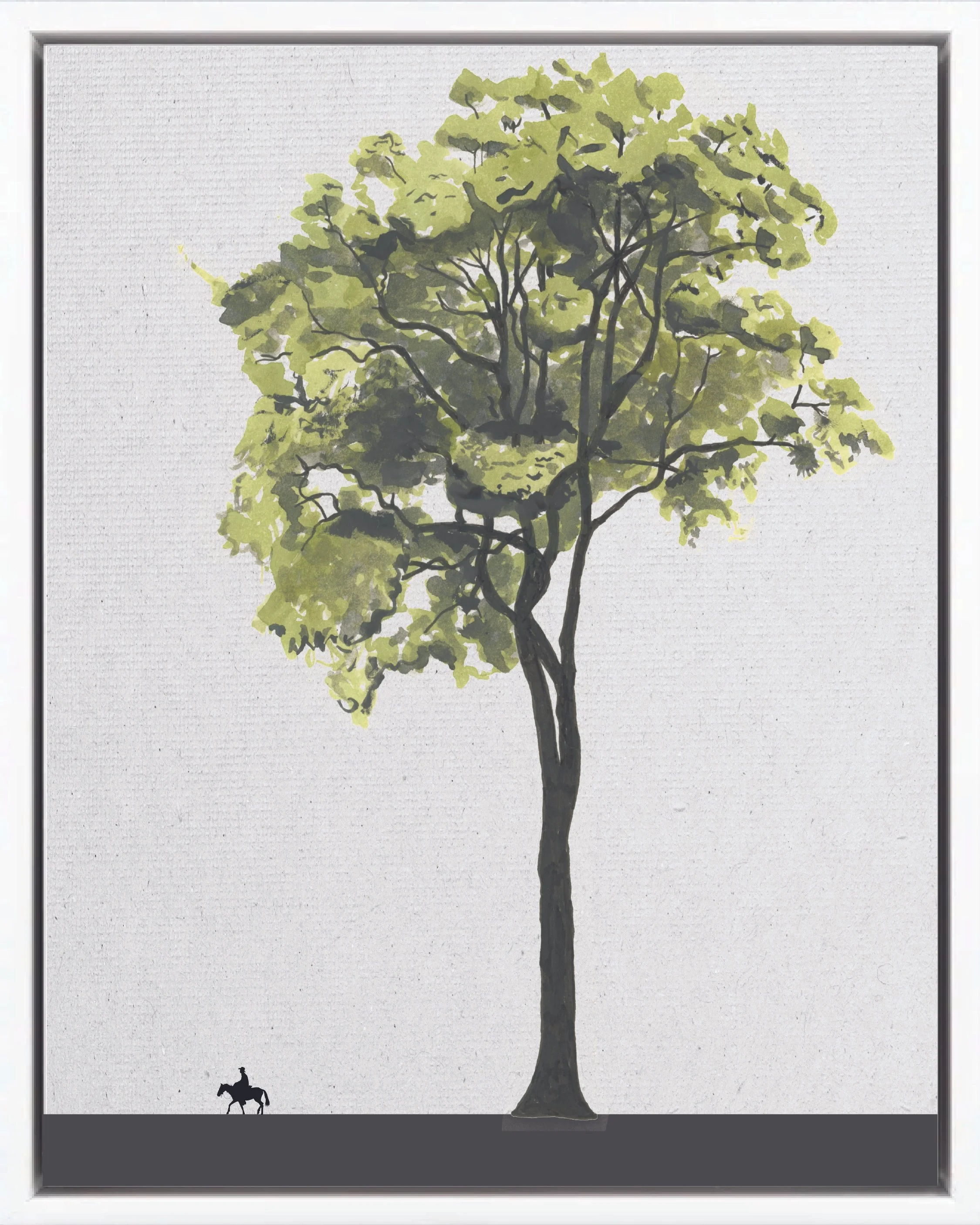
Part 2
How much work am I signing up for?
Besides a few dry weeks in April, the rain never lets up here. Invasive vines smother young saplings in a few weeks, borers tunnel into the growing tips of tree species like mahogany and jackfruit and kill them outright, and leaf-cutter ants can strip our favorite cauliflorous fruit trees of leaves in a single night. Even just reaching our planting zones has been its own project: every trail out there, we cut and maintain ourselves. Planting trees is easy. Growing trees takes grit.
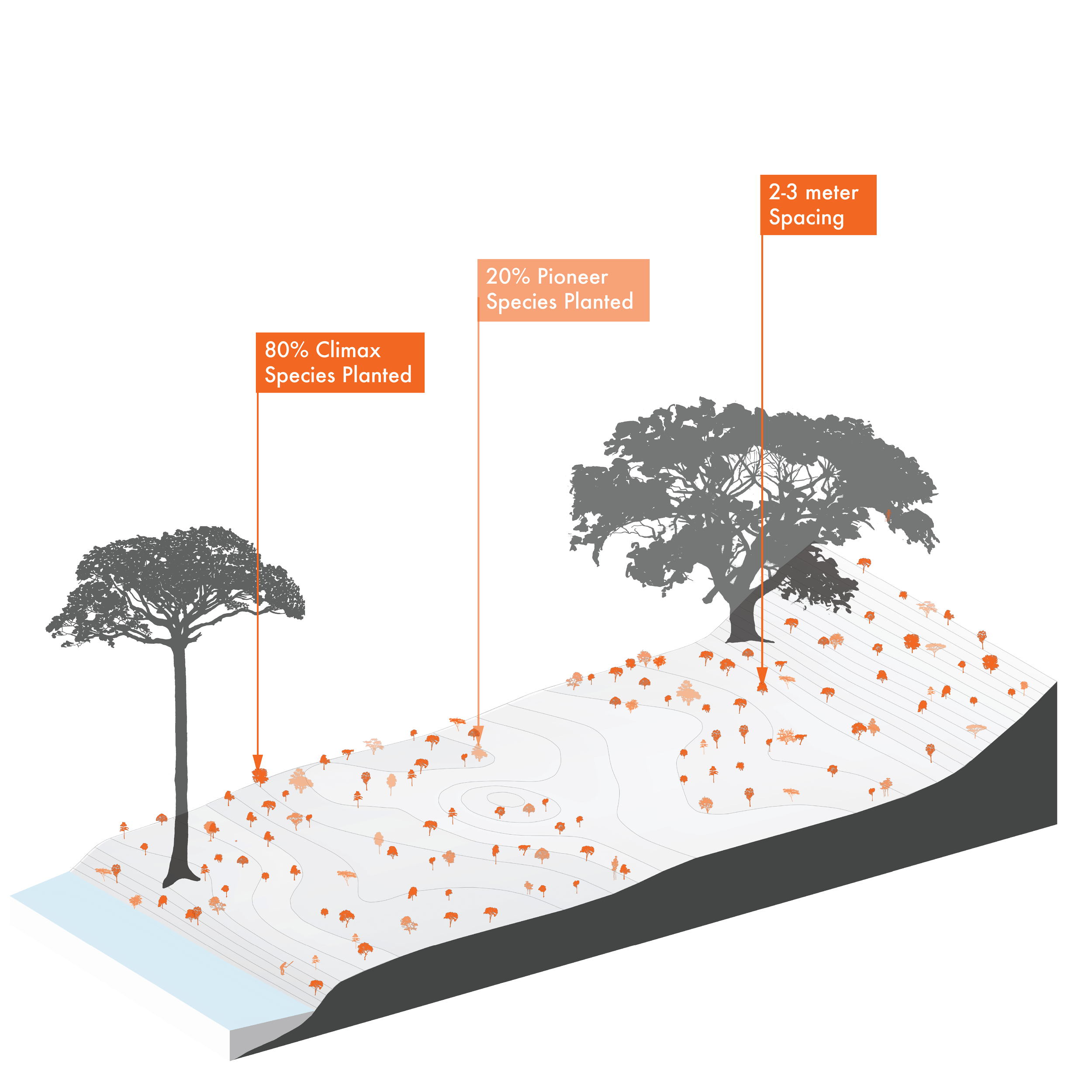
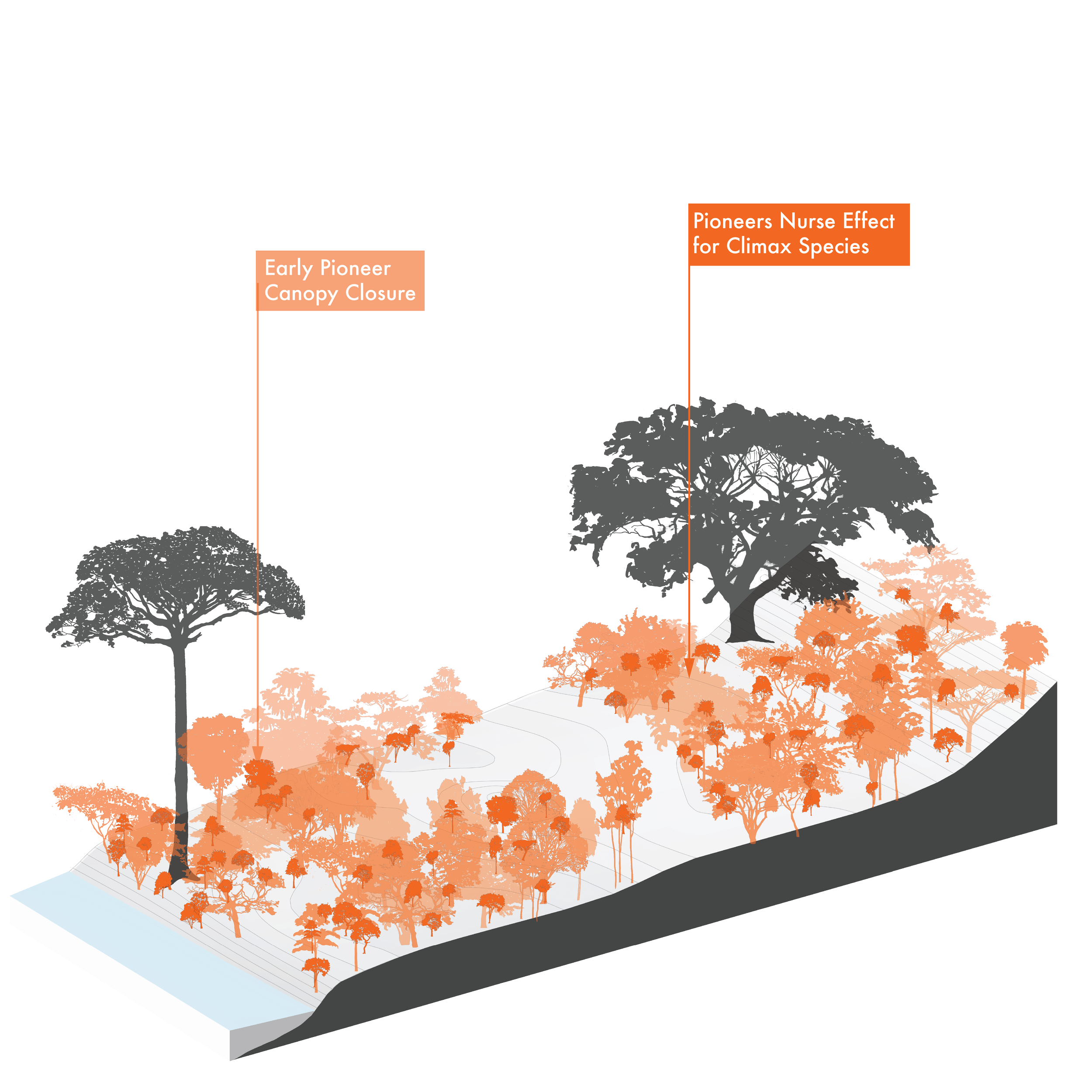
At Rancho Garza, we initially and unknowingly went the highest intensity route available to us. We tried to leapfrog the pioneers entirely and plant straight for the climax species we actually wanted. What we failed to recognize was the maintenance work early successional species supply for free. Without a pioneer's canopy already shading the ground, weeds and vines strangle a climax seedling in days, choking something that was built to grow in shade over years. As we learned to surround our long term species with nurse species, weed suppression quietly became handled overhead by a tree instead of by hand and machete at the base of one.
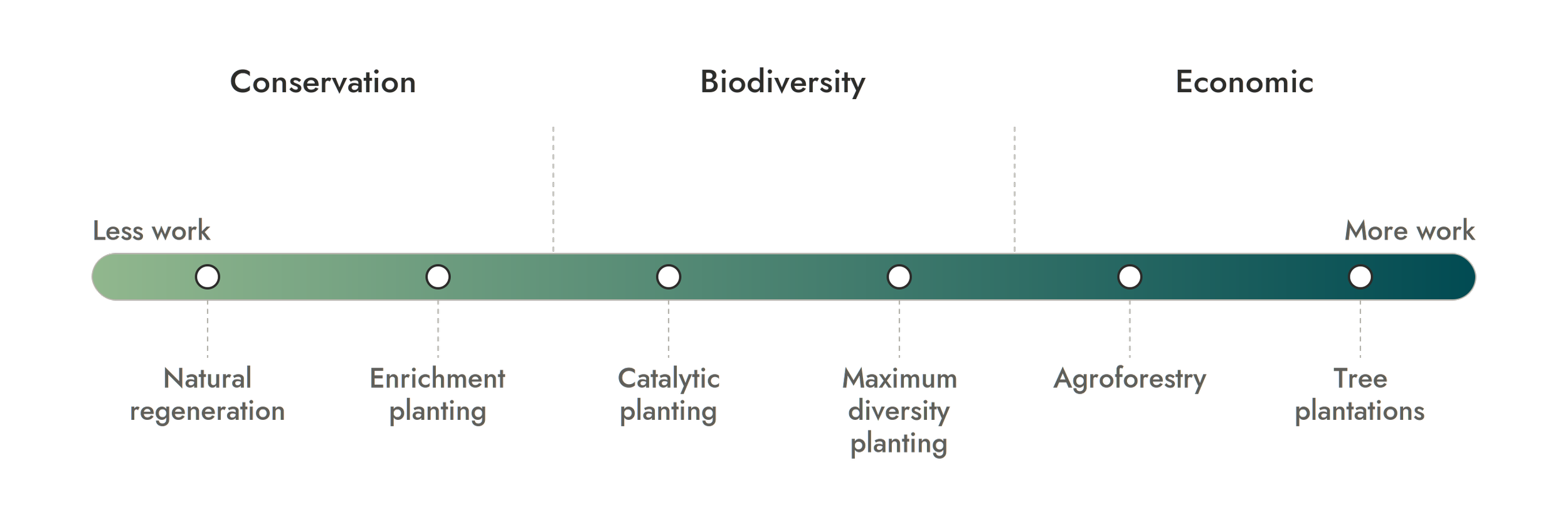
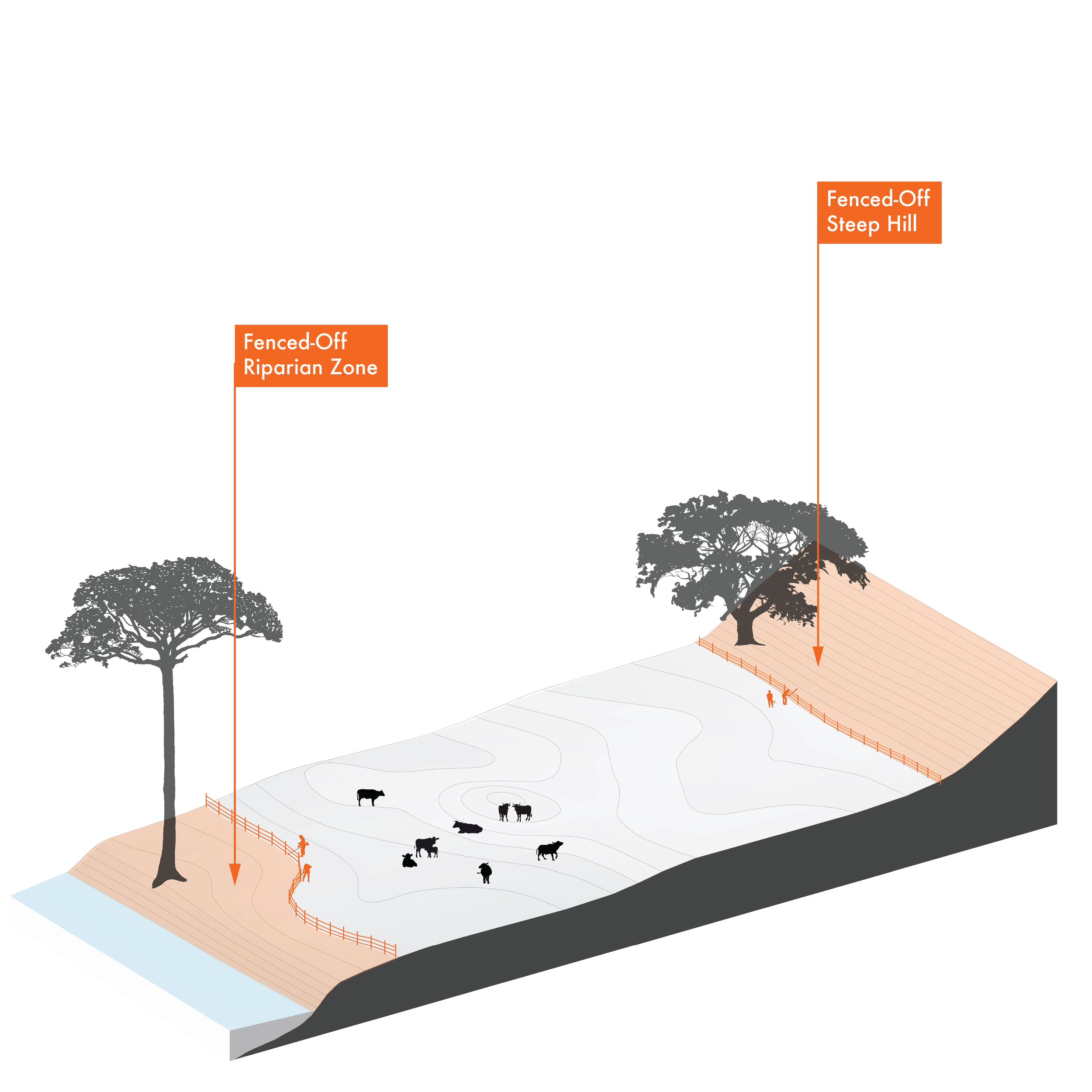
For a long time, forest restoration got sorted into two neat boxes: "passive" (leave it alone) and "active" (plant trees, intervene directly). But even natural regeneration demands that a landowner fence cattle out of a section of land so the forest can recover on its own. There's no restoration approach that's actually free of human decision making. Here I present three approaches a landowner might take to building forest, depending on whether the goal is conservation, biodiversity, or economic return, each one asking more of the landowner's labor than the last.
As an ecological enthusiast, I'm partial to biodiversity planting. The world doesn't just need the two meter high “woody mass” that a map is happy to represent with a green polygon as “tree cover.” It needs forest that actually behaves like forest: holistically integrated into whatever intact tracts still survive nearby, diverse enough in species to function as real wildlife habitat. A biodiverse planting feeds a wider range of animals across more of the year, buffers against the single pest or disease outbreak that can flatten a monoculture overnight, and starts building the layered structure, canopy, midstory, understory, that a working forest actually needs. But still: any tree is a good tree, and I mean that. A well managed tree plantation turns a renewable resource into real subsistence, timber, fuel, income, without cutting it from what's left of the wild forest. That's not a compromise on conservation; that's conservation, working by a different mechanism.
Many landowners manage the weeds around new plantings with herbicide, and it's easy to see why — after decades of banana, coffee, and pineapple cultivation, Costa Rica applies more pesticide per hectare of farmland than any other country FAO tracks, over 23 kilograms of active ingredient a year, more than twice the rate in China and roughly ten times the rate in the United States. I'd rather tell you to skip the chemicals entirely and lean on a pioneer's shading power for weed control instead, and wherever that's realistic, do exactly that. But if a few seasons of herbicide is genuinely what it takes to get your saplings' crowns above the grass line, that's a bounded cost, not a permanent one: once the canopy closes and starts doing that shading work on its own, the weeds it starves out stop competing, and the need for chemicals goes with them. Whatever you use, follow the label exactly, and never apply anywhere near water.
It's always been a farmer's favorite pastime to study one individual plant and guess at whatever accelerated or held it back. Observation may be a farmer's sharpest weapon, but as a foreigner in a new world, most of the time I give that kind of speculation a nod and a shrug. There are simply too many variables for me to wrap my mind around, and there develops a long term fatigue with keeping score of nature's work. But this much I know for certain: with climate futures this uncertain, resilience isn't optional, and ecological diversity and redundancy are what build it. A dense, diverse planting spread across every guild gives succession its best odds of reaching a closed canopy, and reaching it fastest.
Reforestation intensity spectrum
Sources:
Chazdon, R. L., Falk, D. A., Banin, L. F., Wagner, M., Wilson, S. J., Grabowski, R. C., & Suding, K. N. (2024). The intervention continuum in restoration ecology: rethinking the active–passive dichotomy. Restoration Ecology, 32(8), e13535. https://doi.org/10.1111/rec.13535
—FAO (Food and Agriculture Organization of the United Nations). Pesticides Use: Global, Regional and Country Trends 1990–2018. FAOSTAT Analytical Brief 16 (2020). https://openknowledge.fao.org/server/api/core/bitstreams/323bbf39-1345-4c52-a447-1e26224b7ff5/content
Lamb, D., Erskine, P. D., & Parrotta, J. A. (2005). Restoration of degraded tropical forest landscapes. Science, 310(5754), 1628–1632. https://doi.org/10.1126/science.1111773
Conservation Planting
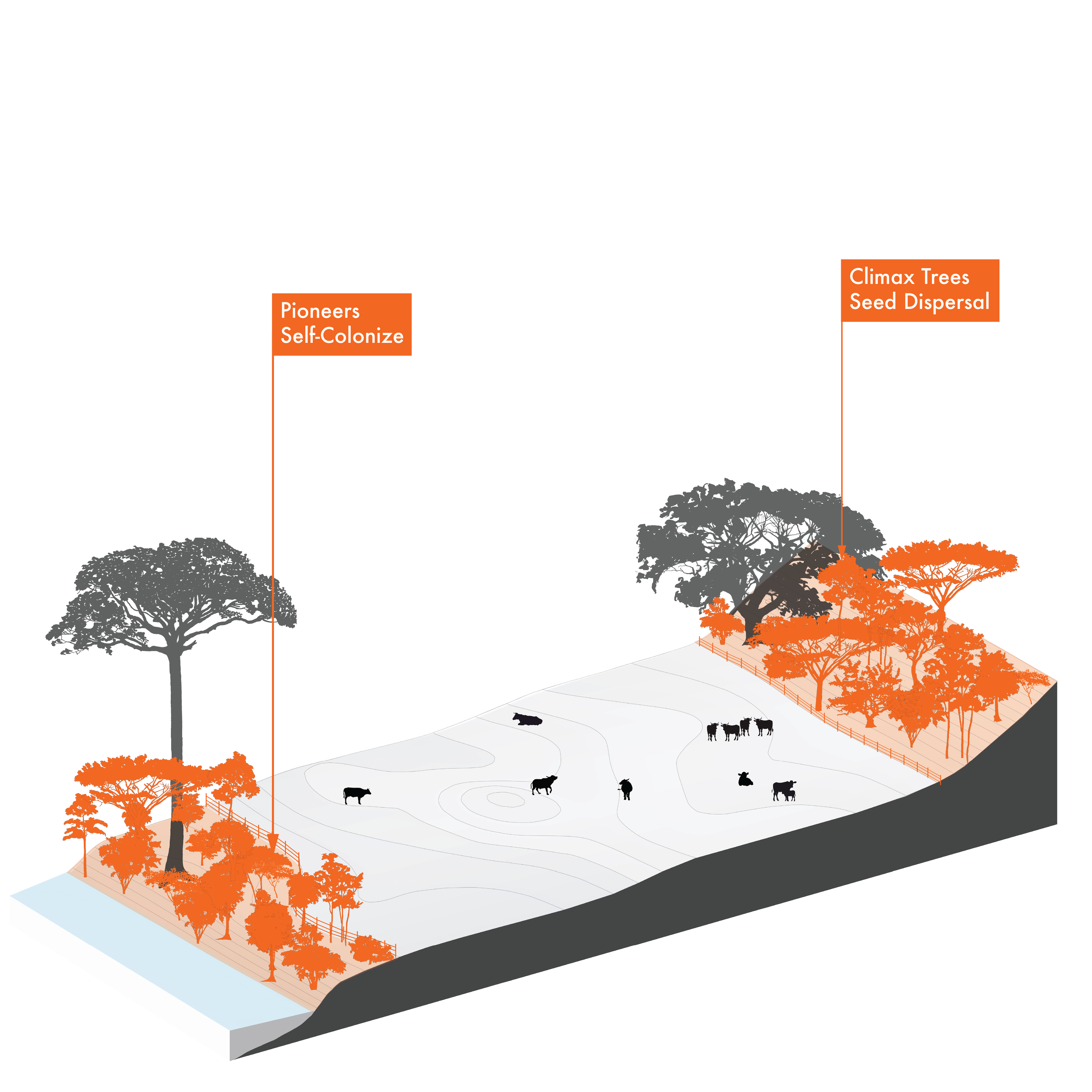
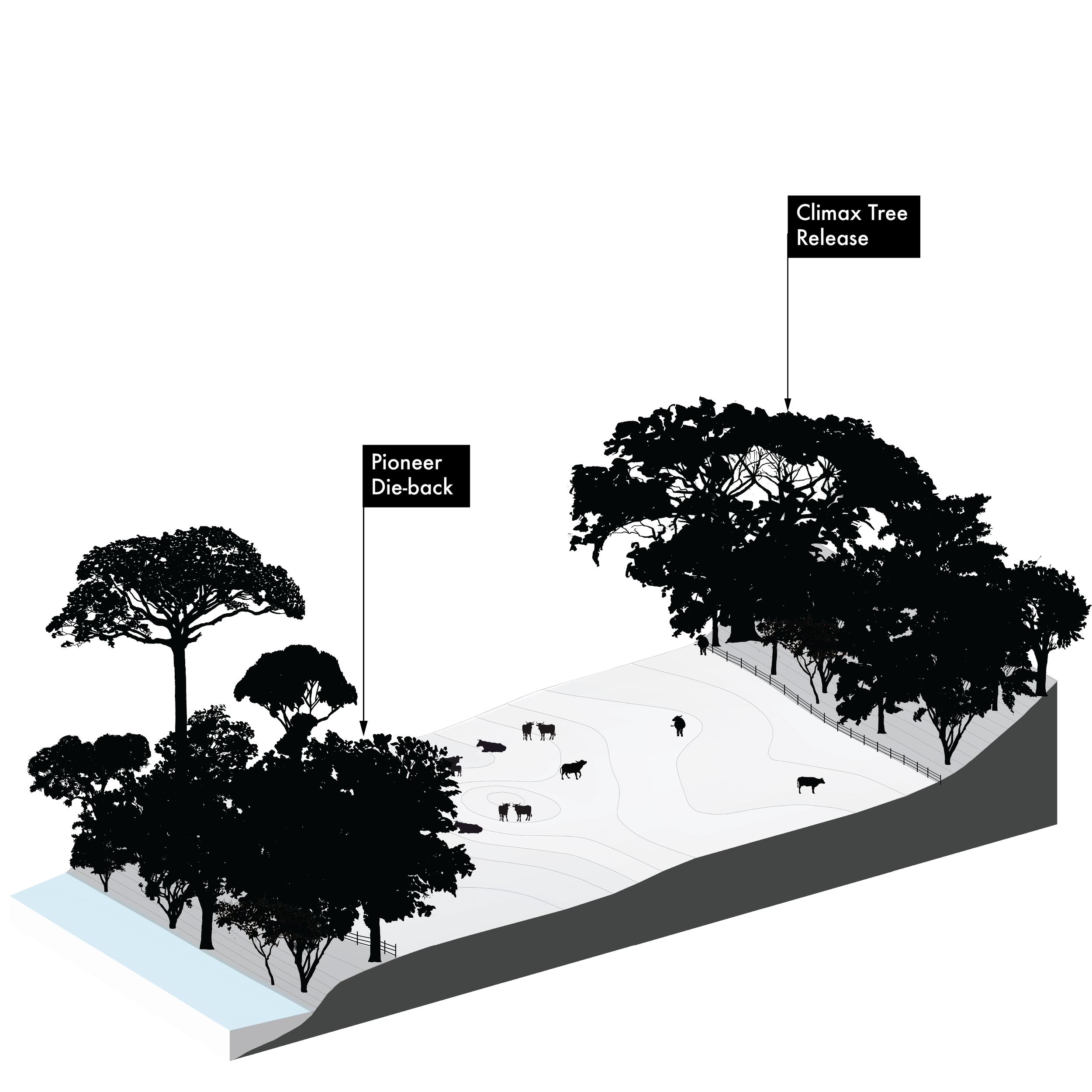
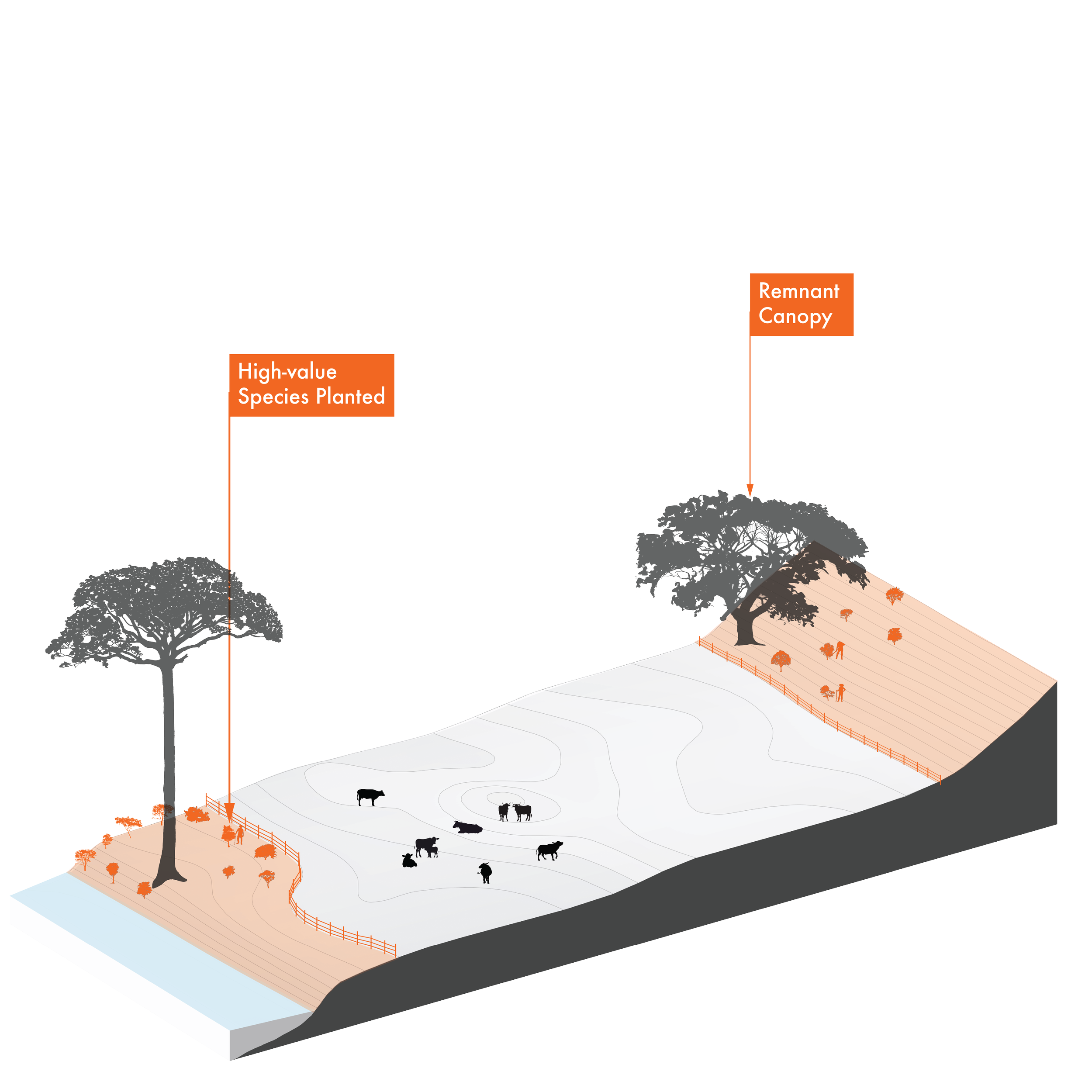
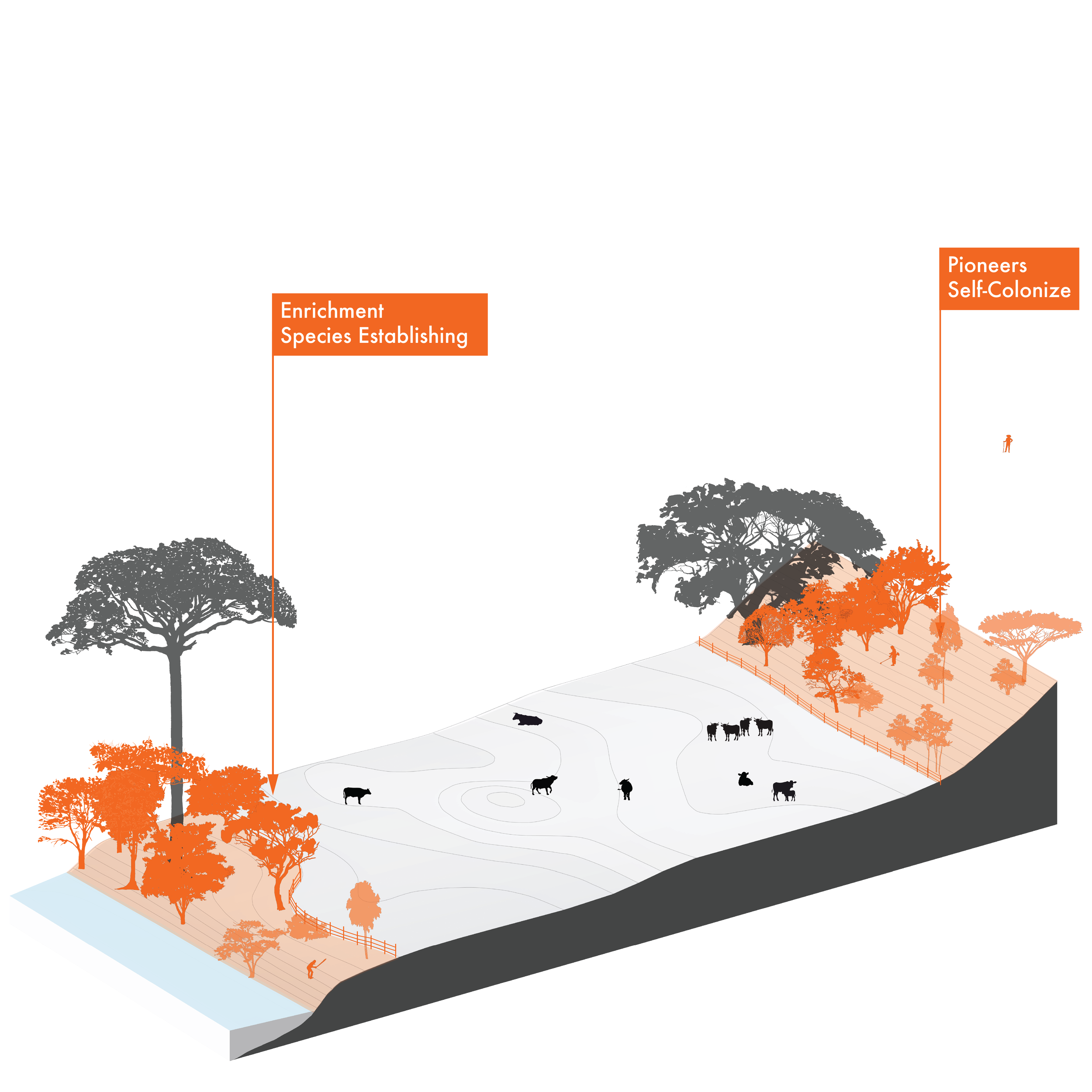
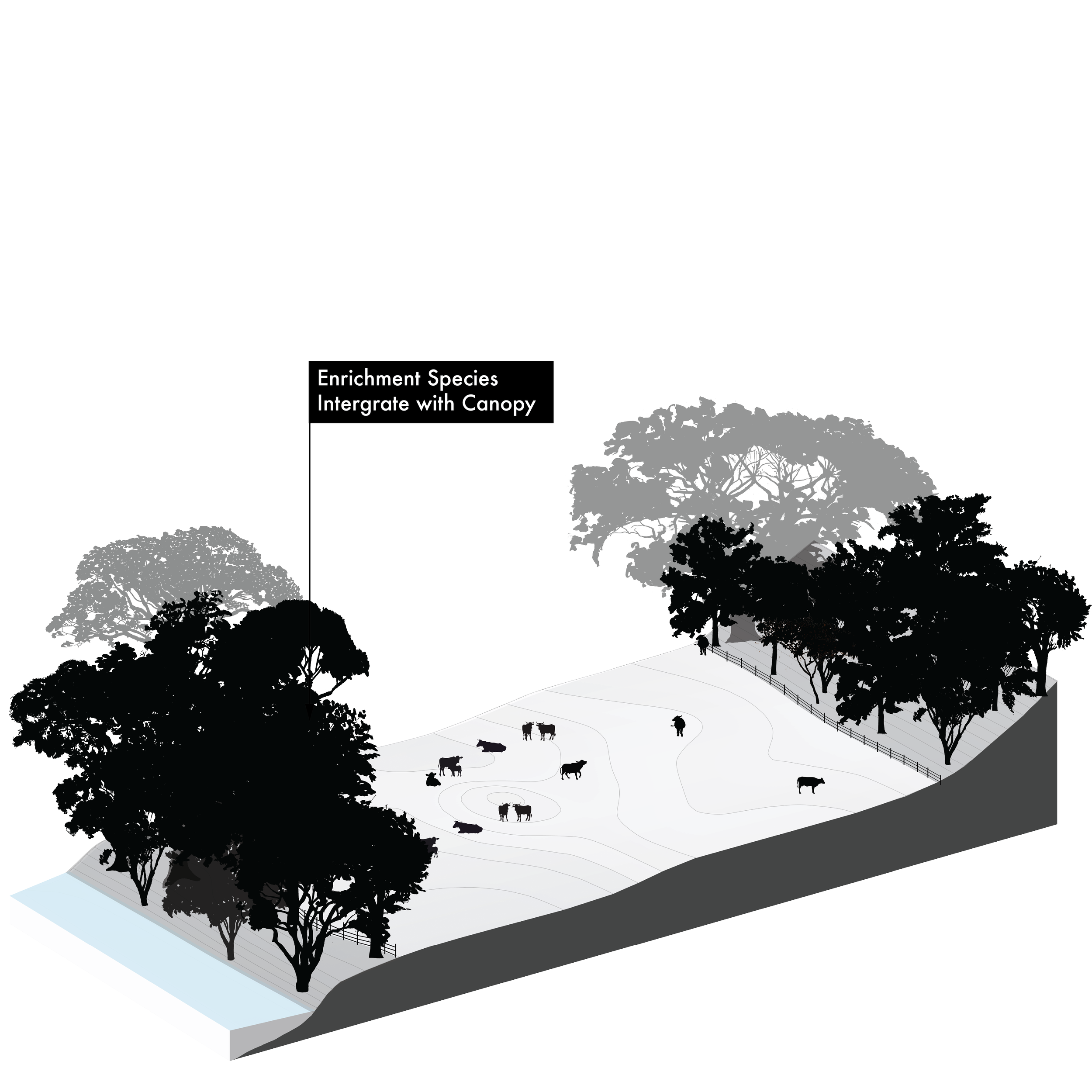
Conservation strategies ask the least of a landowner and the most of trust. Remove the disturbance, most often that means fencing cattle out of a section of land, and the forest picks up work it never actually stopped doing. The seed bank is already sitting in the soil. The root stock of trees cut decades ago is still alive underground, waiting for a reason to resprout. Whatever remnant canopy survives nearby is already dropping seed onto the cleared ground below it. Natural Regeneration asks you to do nothing further than that, to let the existing seed bank, root stock, and remnant canopy do the work on their own timeline, without choosing a single species or planting a single seedling. Enrichment Planting is the same premise with a light hand added on top, placing targeted species into regrowth that's already choosing to come back, filling gaps or introducing species the surrounding forest may have lost access to. Neither approach moves fast. Both depend on a landowner's willingness to wait, and to trust a process that mostly happens out of sight and underground.
Natural Regeneration
Remove the disturbance—for example, cow grazing—and the existing forest picks up where it left off. No species chosen, no seedlings planted, just the existing seed bank, root stock, and remnant canopy doing the work on their own schedule.
-
![Illustration of Balsa (balso, burillo, enea, nisperillo), Ochroma pyramidale, fast pioneer reforestation tree of the Isthmian-Atlantic slope, at mature height with figure for scale.]()
Year 0
-
![Illustration of Vainillo (Yellow bells; sardinillo, tronadora, amarguito, cholán, guarán amarillo), Tecoma stans, fast pioneer reforestation tree of the Isthmian-Atlantic slope, at mature height with figure for scale.]()
+10 years
-
![Illustration of Yos (Milkwood; lecherón, curupí, leche de olivo, olivo macho, pijiño), Sapium glandulosum, fast pioneer reforestation tree of the Isthmian-Atlantic slope, at mature height with figure for scale.]()
+75 - 100 years
Enrichment Planting
Add value to what's already recovering — targeted species planted into existing regrowth, working with the forest that's already choosing to come back.
-
![Illustration of Balsa (balso, burillo, enea, nisperillo), Ochroma pyramidale, fast pioneer reforestation tree of the Isthmian-Atlantic slope, at mature height with figure for scale.]()
Year 0
-
![Illustration of Vainillo (Yellow bells; sardinillo, tronadora, amarguito, cholán, guarán amarillo), Tecoma stans, fast pioneer reforestation tree of the Isthmian-Atlantic slope, at mature height with figure for scale.]()
+7 years
-
![Illustration of Yos (Milkwood; lecherón, curupí, leche de olivo, olivo macho, pijiño), Sapium glandulosum, fast pioneer reforestation tree of the Isthmian-Atlantic slope, at mature height with figure for scale.]()
+25 years
Biodiversity Planting
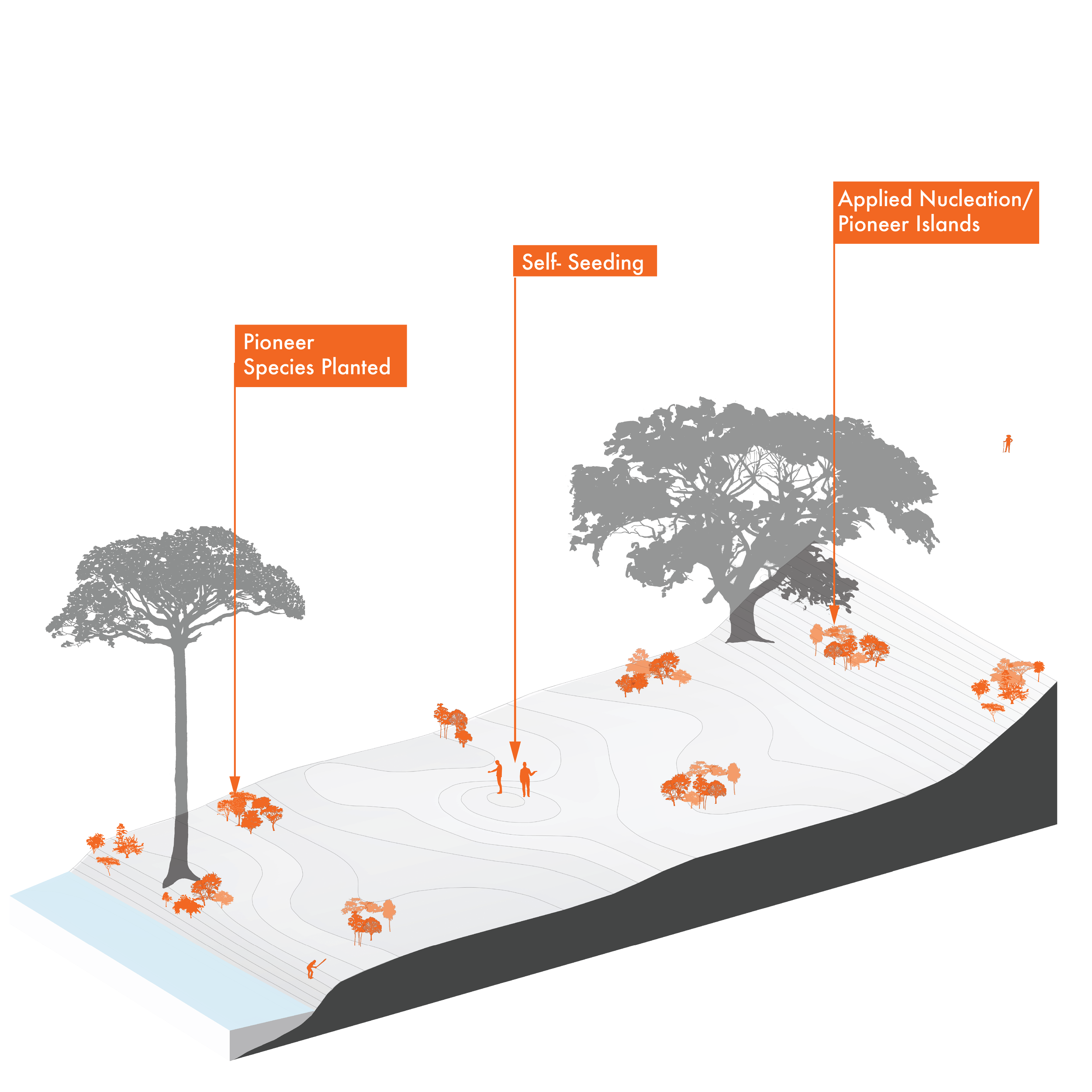
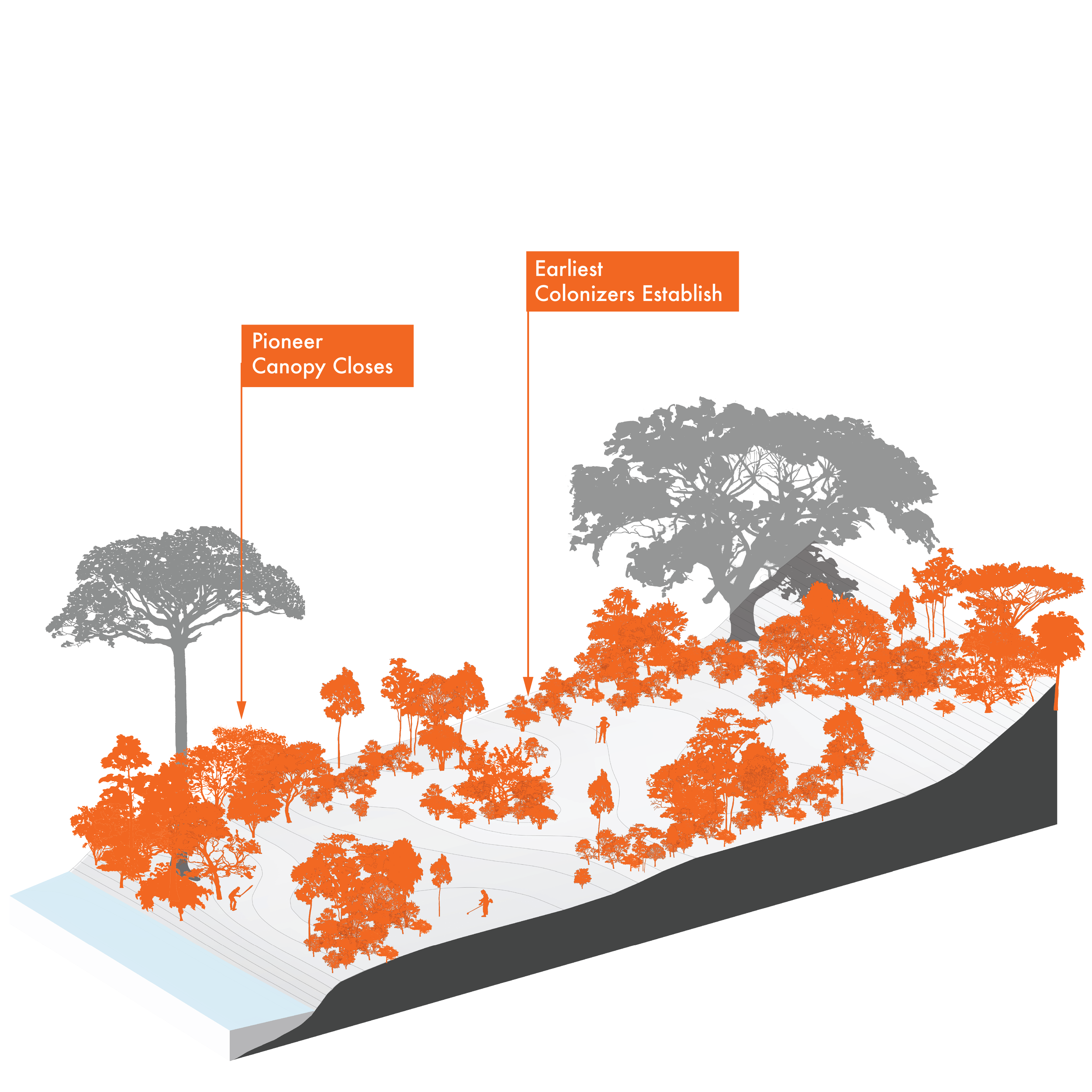
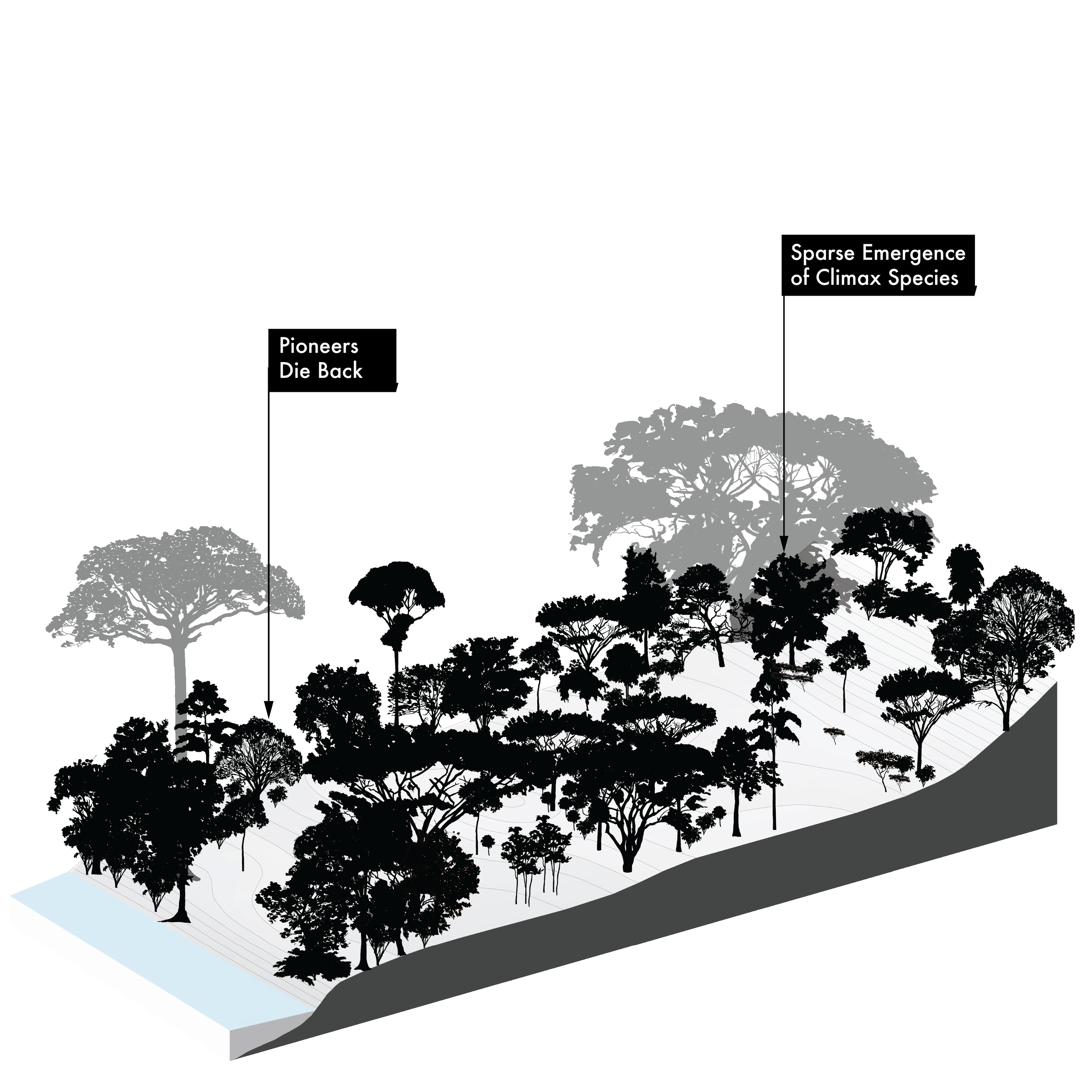
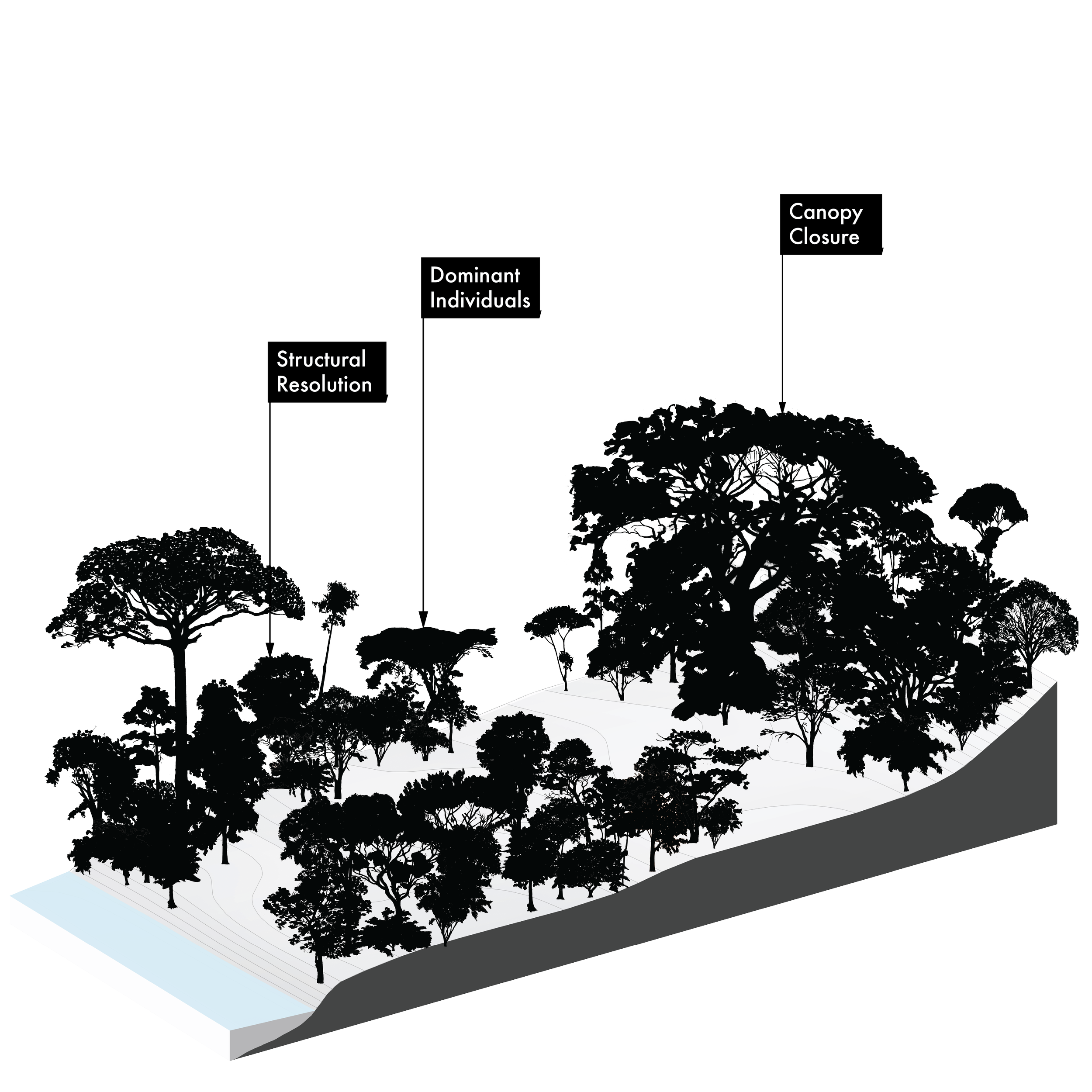
Biodiversity Planting is where a landowner starts making real decisions rather than simply getting out of the way. Both approaches here begin from bare or degraded ground, land with no forest left to recover on its own, and both commit to establishing tree cover where none currently exists. The difference is how much of the forest's eventual composition gets decided at the outset versus left open to whatever arrives on its own. Catalytic Planting puts only a handful of fast growing pioneer species into the ground, enough to shade out grass and cut fire risk and open a door, and then steps back. Nothing climax stage goes in at planting. Every bit of that later diversity has to colonize in from whatever intact forest survives nearby, carried by birds, bats, wind, and whatever seed rain happens to find that particular patch of regrowth. It's a bet, and not a small one. The eventual canopy might be rich and varied, or it might end up sparse and patchy, shaped as much by what happened to colonize as by anything a person actually chose. Maximum Diversity Planting removes that uncertainty by putting a high species count across multiple successional stages into the ground in a single event, aiming for something close to mature forest composition from day one rather than waiting years or decades to see what shows up.
Catalytic Planting
A small number of fast-growing pioneer species go in the ground to shade out grass, cut fire risk, and open the door for the forest to do the rest. Nothing climax-stage is planted at all; diversity arrives entirely through colonization from nearby intact forest. It's a bet, not a guarantee — the canopy may end up sparser and patchier, its final composition shaped as much by what colonizes as by what was planted.
-
![Illustration of Balsa (balso, burillo, enea, nisperillo), Ochroma pyramidale, fast pioneer reforestation tree of the Isthmian-Atlantic slope, at mature height with figure for scale.]()
Year 0
-
![Illustration of Vainillo (Yellow bells; sardinillo, tronadora, amarguito, cholán, guarán amarillo), Tecoma stans, fast pioneer reforestation tree of the Isthmian-Atlantic slope, at mature height with figure for scale.]()
+7 years
-
![Illustration of Yos (Milkwood; lecherón, curupí, leche de olivo, olivo macho, pijiño), Sapium glandulosum, fast pioneer reforestation tree of the Isthmian-Atlantic slope, at mature height with figure for scale.]()
+13 years
Maximum Diversity Planting
Establishes a high species count spanning multiple successional stages in a single planting event, aiming for mature-forest composition from the outset rather than waiting on colonization to arrive.
-
![Illustration of Balsa (balso, burillo, enea, nisperillo), Ochroma pyramidale, fast pioneer reforestation tree of the Isthmian-Atlantic slope, at mature height with figure for scale.]()
Year 0
-
![Illustration of Vainillo (Yellow bells; sardinillo, tronadora, amarguito, cholán, guarán amarillo), Tecoma stans, fast pioneer reforestation tree of the Isthmian-Atlantic slope, at mature height with figure for scale.]()
+4 years
-
![Illustration of Yos (Milkwood; lecherón, curupí, leche de olivo, olivo macho, pijiño), Sapium glandulosum, fast pioneer reforestation tree of the Isthmian-Atlantic slope, at mature height with figure for scale.]()
+11 years
Economic Planting
Economic Planting starts from a premise I've come to believe in fully: land that earns money is land far more likely to stay planted in trees. Treating forest cover and income as opposing uses is how a lot of well intentioned reforestation quietly fails, once the funding or the enthusiasm runs out and the land reverts to whatever pays the bills. Agroforestry refuses that tradeoff outright. Shade tolerant crops, coffee, cacao, or grazing pasture, continue working beneath a canopy that's simultaneously doing the job of income and the job of cover, the same acre earning its keep twice over. Tree Plantations commit the land more fully, planted dense and deliberate at full establishment intensity, and here the tradeoffs get more honest. An exotic monoculture, planted purely for yield, gives up almost everything else a forest offers in exchange for concentrated commercial return. A native species mixture gives up some of that yield in exchange for a real, if modest, biodiversity gain, still a plantation, but one doing more than one job at once.
Agroforestry
Agroforestry keeps the land working while the trees grow — shade-tolerant crops like coffee or cacao, or pasture, continue underneath a canopy that's doing double duty as both income and cover.
-
![Illustration of Balsa (balso, burillo, enea, nisperillo), Ochroma pyramidale, fast pioneer reforestation tree of the Isthmian-Atlantic slope, at mature height with figure for scale.]()
Year 0
-
![Illustration of Vainillo (Yellow bells; sardinillo, tronadora, amarguito, cholán, guarán amarillo), Tecoma stans, fast pioneer reforestation tree of the Isthmian-Atlantic slope, at mature height with figure for scale.]()
+7 years
-
![Illustration of Yos (Milkwood; lecherón, curupí, leche de olivo, olivo macho, pijiño), Sapium glandulosum, fast pioneer reforestation tree of the Isthmian-Atlantic slope, at mature height with figure for scale.]()
+25 years
Tree Plantations
Tree Plantations commit the land fully to trees, planted dense and deliberate at full establishment intensity — with outcomes ranging from an exotic monoculture optimized purely for commercial output to a native species mixture that trades some of that yield for a genuine, if modest, biodiversity gain.
-
![Illustration of Balsa (balso, burillo, enea, nisperillo), Ochroma pyramidale, fast pioneer reforestation tree of the Isthmian-Atlantic slope, at mature height with figure for scale.]()
Year 0
-
![Illustration of Vainillo (Yellow bells; sardinillo, tronadora, amarguito, cholán, guarán amarillo), Tecoma stans, fast pioneer reforestation tree of the Isthmian-Atlantic slope, at mature height with figure for scale.]()
+7 years
-
![Illustration of Yos (Milkwood; lecherón, curupí, leche de olivo, olivo macho, pijiño), Sapium glandulosum, fast pioneer reforestation tree of the Isthmian-Atlantic slope, at mature height with figure for scale.]()
+25 years
Part 3
Where do these trees actually go?
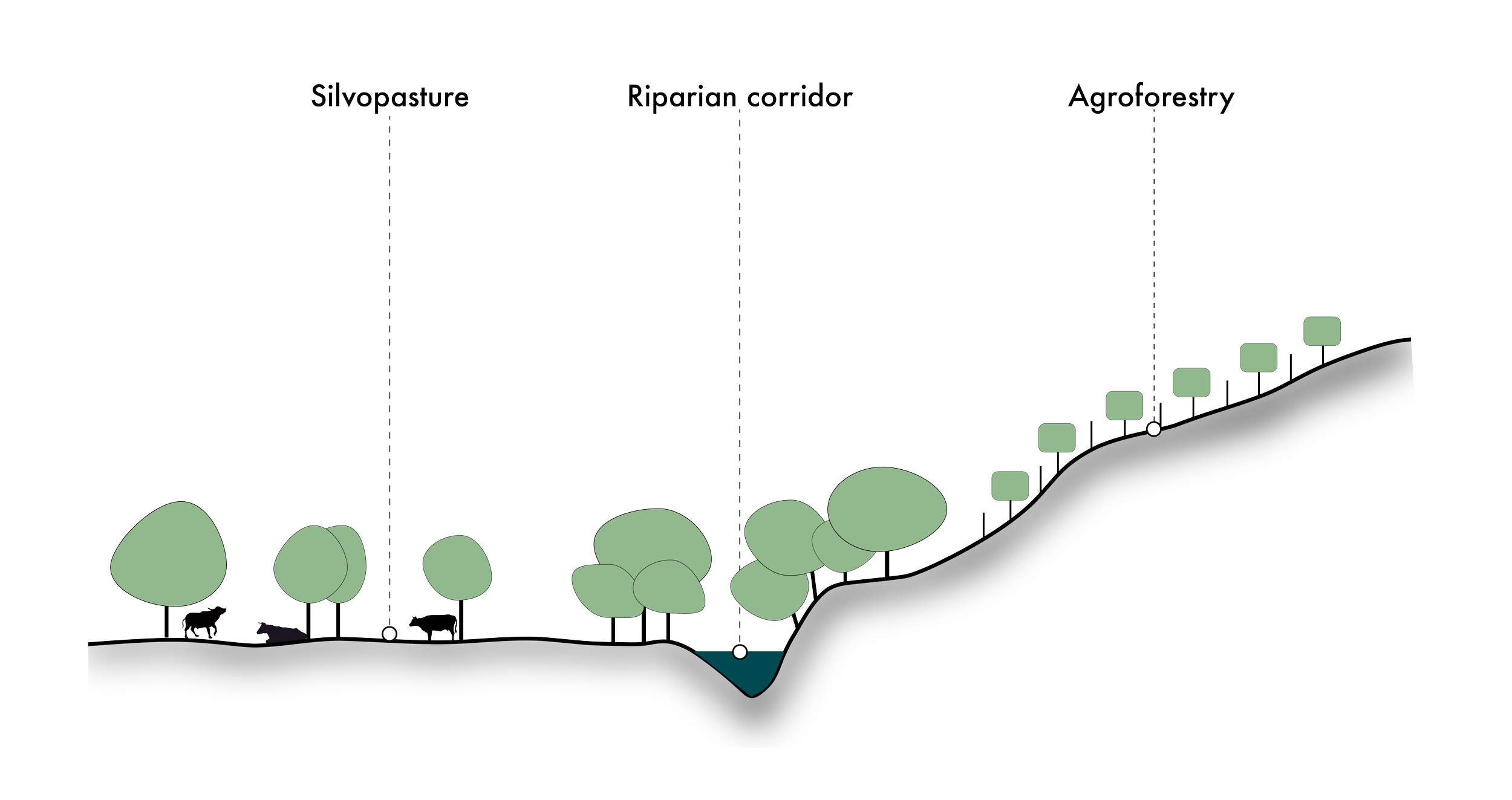
I wish the entirety of Costa Rica's volcanic spine, the chain of cordilleras running from Guanacaste through Tilarán, the Cordillera Central, and down into Talamanca, could be replanted and connected into unbroken forest. But until people stop eating beef, we have to build forests that live right alongside cattle pasture. Silvopasture, riparian corridor forests, and agroforests aren't concessions to cattle. Done right, each one makes the herd more profitable than pasture alone.
Farmers often assume more shade means less grass, and there's some truth to that, but it's not the whole story. Keep tree density modest, roughly a third of the canopy or less, and you keep most of your open pasture while still getting the upside. Legume trees like Poró or Madero negro add something grass alone can't: one Yucatán study found milk yield rose just from adding a nitrogen-fixing tree to pasture, since the tree feeds the soil nitrogen a farmer would otherwise buy as fertilizer. Less fertilizer, fewer pesticides, and a herd that keeps gaining weight through months when open pasture alone stops feeding anyone.
Two zones, though, I'd pull out of pasture entirely. Riparian corridors are the first: Costa Rican law already requires a buffer, 15 meters on each side of a river on flat ground, 50 where it's hilly, 100 around any permanent spring. Good husbandry agrees with the law here, since cattle compaction erodes and fouls fragile stream beds, while a gravity-fed trough gives them cleaner water and takes the creek out of it entirely. Steep hills are the second: cattle instinctively avoid slopes over roughly 20 percent. Climbing costs real energy that isn't turning into meat or milk. A herd working a steep hillside converts feed to weight gain less efficiently than the same herd on flat ground. You're paying to fence and maintain land that's returning less per animal than your flattest pasture ever will. Put cattle where the ground actually pays them back, and send the steep stuff to trees.
Part 3 draws these directly: the riparian buffer in cross section, roots and shade and a trough just past the fence line; the hillside, showing how trees hold ground cattle hooves would tear apart; and that same hillside worked as an agroforestry system using the Inga tree method, a working approach rather than an idea. Each is a forest I'm planting but will never see mature. There's a real pleasure in that: sketching a canopy I can only imagine, standing a hundred years from now over ground I'm standing on today.
Three zones on a working landscape
Silvopasture
Cattle retain heat the way any large-bodied animal does: their muscle mass runs high relative to their surface area, which is efficient for holding warmth in a cool climate and works against them in a hot one. Past a certain point of heat and humidity, an animal stops grazing and starts working to cool down instead, breathing harder, sweating more, pulling energy away from digestion to manage its own temperature. That tradeoff isn't incidental. It shows up directly in the numbers that matter to a rancher: heat-stressed cattle gain less weight and produce less milk, on the very pastures meant to be feeding both.
Canopy cover intervenes directly in that energy budget, intercepting radiative heat before it reaches the animal. Across ten working farms in Colombia, Argentina, and Mexico, milk and meat production per hectare rose specifically where shade trees were part of the grazing system. Along a shaded altitudinal gradient in the Peruvian tropics, cattle showed measurably reduced heat stress compared to herds on open pasture at equivalent elevation. The effect compounds where the shade tree also fixes nitrogen: a legume like Poró improves forage quality through nitrogen inputs to the soil at the same time its canopy reduces incident solar load, producing milk yield gains that trace to two distinct mechanisms operating together. What silvopasture ultimately argues is that the sun-scorched, single-species pasture was never the mature form of a cattle operation. It was the unfinished one.
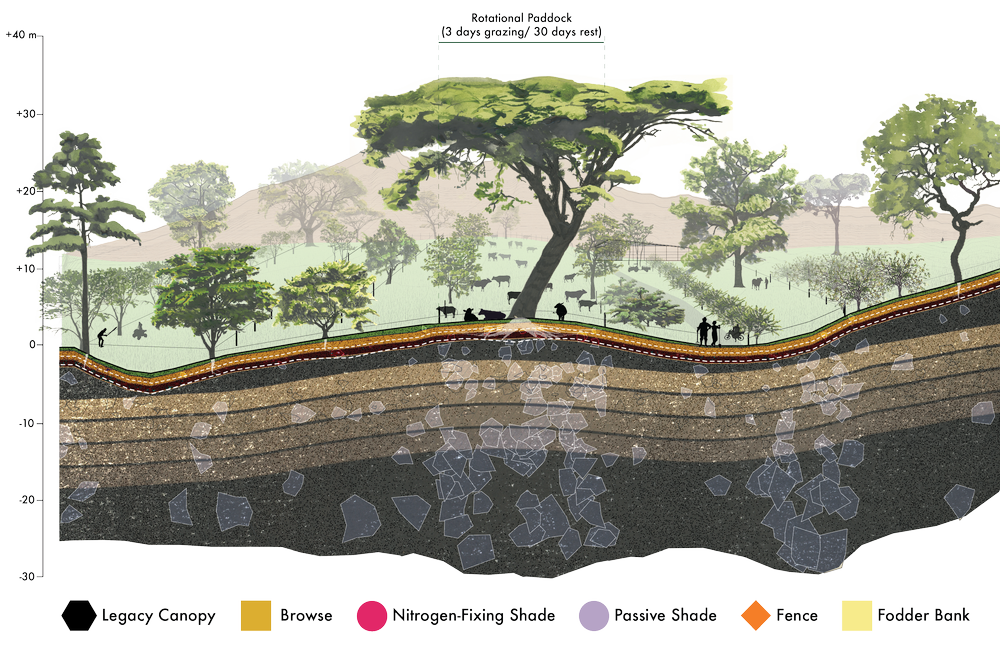
Silvopasture Species Function Key:
Legacy Canopy
A single mature Cenízaro or Guanacaste can shelter an entire herd under one canopy, with Guanacaste's crown spreading up to four times its own height. These are typically pasture survivors rather than plantings — Ceiba, for example, is left standing specifically because its wood was never worth cutting.

Browse
Cattle consumed 75% of available Guaba machete forage within 8 days in a documented Amazon browse trial, eating leaves and pods directly off the standing tree. This is zero-labor nutrition once established — no cutting or carrying required, just direct access.

Nitrogen-Fixing Shade
A single mature Poró returns up to 200kg of nitrogen per hectare annually through its prunings alone, cut back hard on a yearly cycle and left on the ground as green mulch. Silvopasture guidance targets roughly a third canopy cover or less across these dispersed legumes, keeping most of the pasture open while still delivering the nitrogen return.

Passive Shade
These trees provide canopy cover and leaf litter with no pruning cycle or deliberate nitrogen-return program attached to them. Roble sabana and Cortez amarillo are both documented specifically for shading cattle in Costa Rican potreros, independent of any soil-management role.

Fence
Madero negro is documented as the most common live-fence species across the entire tropics, planted as cut stakes that root directly into a permanent barrier. Cortez amarillo serves the same function on this property, doubling as both boundary and shade.

Fodder Bank
Guácimo's leaves and protein-rich fruit are cut and carried to cattle specifically through the dry season, when pasture grass is thinnest. This is active harvest labor rather than passive grazing — the tree can stand well outside the paddock cattle actually occupy.

Sources:
—Chará, Z., et al. — cited in "Silvopasture for cows could help reduce deforestation in Colombia." NPR, March 3, 2025. https://www.npr.org/2025/03/03/nx-s1-5219431/climate-silvopasture-cows-deforestation-amazon-rainforest
—"Current trends in silvopastoral systems." Agroforestry Systems (2024). https://link.springer.com/article/10.1007/s10457-024-01093-5
—Sarabia-Salgado, L., et al. "Increase in Milk Yield from Cows through Improvement of Forage Production Using the N2-Fixing Legume Leucaena leucocephala in a Silvopastoral System." Animals (2020). https://www.ncbi.nlm.nih.gov/pmc/articles/PMC7222761/
—"Silvopastoral systems with native forage species and their impact on milk production and quality: a case study on a farm in the Colombian Amazonian foothills." Agroforestry Systems (2025). https://link.springer.com/article/10.1007/s10457-025-01292-8
—"Silvopasture and altitudinal gradient reduce heat stress in livestock production in the Peruvian tropics." Frontiers in Animal Science (2025). https://www.frontiersin.org/journals/animal-science/articles/10.3389/fanim.2025.1521790/full
Riparian Corridor
Costa Rica's Ley Forestal N° 7575 sets a minimum width for tree cover surrounding a stream: fifteen meters on flat terrain, fifty where it steepens. Forest birds will move through that corridor between habitat patches and stop cold at the edge of open pasture, unwilling to cross ground with no cover on it. Seed-dispersing species use these same corridors far out of proportion to the sliver of land they actually occupy. What looks, from above, like a thin green line stitched along a stream is the last usable road through a landscape broken into fragments.
On the ground, cattle hooves seal the ground shut. Years of grazing compact a hillside's soil until the macropores that once let water in collapse under repeated weight. A riparian corridor undoes that. Roots pry the compacted ground back open, rebuilding channels hooves flattened, so water sinks in instead of running straight off. A riparian corridor should exist as conserved forest for its own sake because what it produces resists measurement.
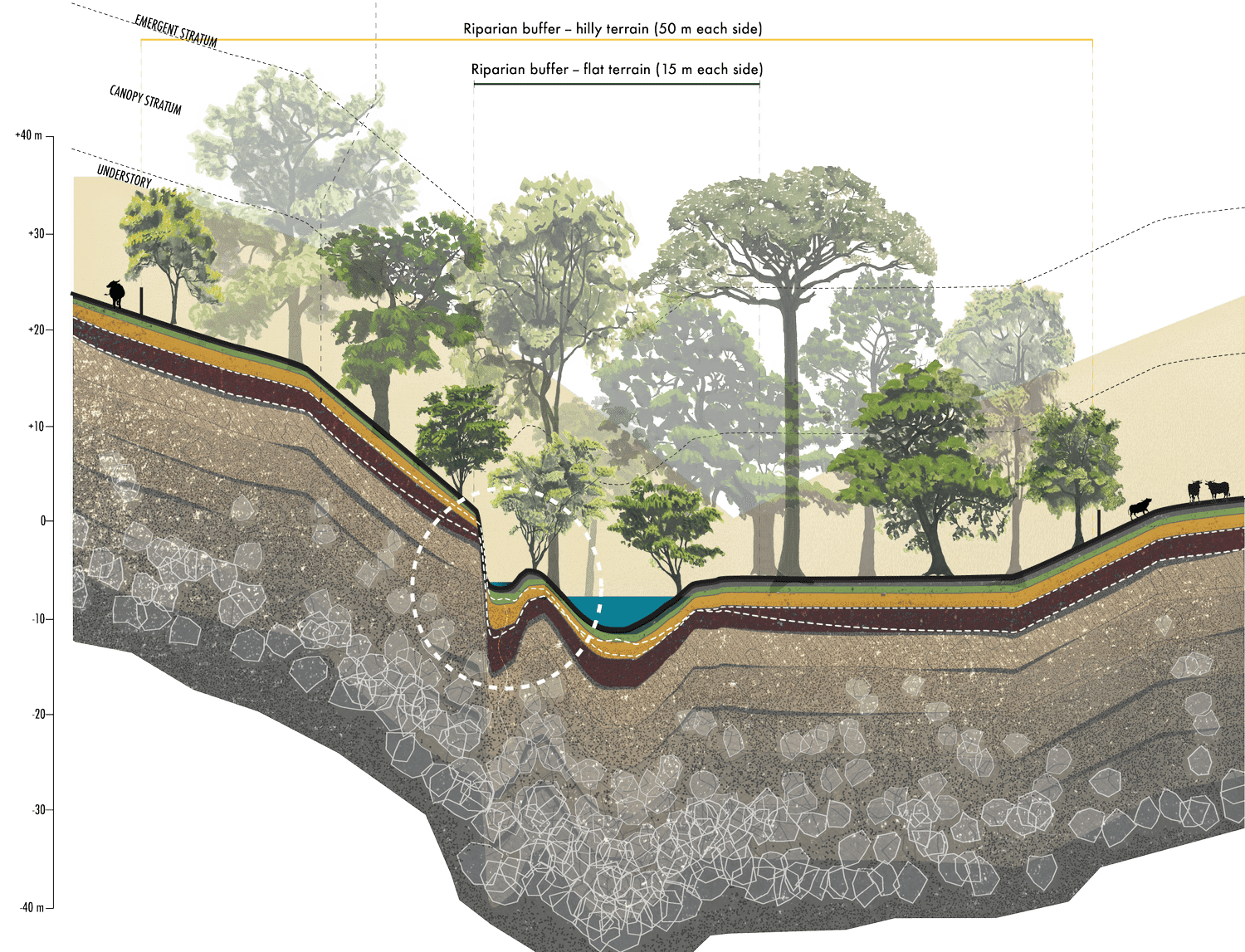
Riparian Corridor Hydrologic Cycle:
Canopy interception & throughfall
The canopy catches rain before it reaches the ground, releasing what it holds as throughfall and stemflow rather than letting all of it fall straight through.

Infiltration through roots and macropores
Root channels and macropores in the topsoil open pathways for water to sink in, rather than run off the surface. In tropical forests, 60–70% of root biomass sits in the top 30cm of soil.

Infiltration meets the tephra boundary
Water infiltrates until it meets a finer, less permeable ash/tephra layer — a permeability contrast that stops it from continuing straight down.

Interflow along the boundary
It moves sideways along this boundary as interflow — still gravity-driven, just parallel to the slope instead of straight down.

Spring daylighting
Where the buried boundary meets the ground surface, water daylights as a spring.

Arroyo discharge
The spring's flow joins the surface stream channel, completing the corridor's path back into the larger watershed.

Sources:
—Aguilar, I. L., & Alvarado, G. E. (2020). The relevant eruptions of Rincón de la Vieja in the last 6000 years based on tephrostratigraphy on his SW slope. Revista Geológica de América Central, 63, 1–19. https://doi.org/10.15517/rgac.v63i0.43403
—Bruijnzeel, L. A. (2004). Hydrological functions of tropical forests: not seeing the soil for the trees? Agriculture, Ecosystems & Environment, 104(1), 185–228. https://doi.org/10.1016/j.agee.2004.01.015
—Jackson, R. B., Canadell, J., Ehleringer, J. R., Mooney, H. A., Sala, O. E., & Schulze, E.-D. (1996). A global analysis of root distributions for terrestrial biomes. Oecologia, 108(3), 389–411. https://doi.org/10.1007/BF00333714
—Ley Forestal de Costa Rica, Ley N.° 7575, Artículo 33 (1996). https://bufetedecostarica.com/ley-forestal-de-costa-rica-7575/
—Rulon, J. J., & Freeze, R. A. (1985). Multiple seepage faces on layered slopes and their implications for slope-stability analysis. Canadian Geotechnical Journal, 22(3), 347–356. https://doi.org/10.1139/t85-047
Agroforestry
Tropical soils have a reputation they don't really earn. Stand under a moist broadleaf canopy and the ground looks rich, dark, endlessly productive, but the fertility isn't in the dirt. It's standing on top of it. In the humid tropics, most of a system's wealth lives in living tissue and leaf litter, not in the mineral soil beneath, because constant heat and constant rain mean anything the soil lets go of gets pulled straight back into a root or a fungus before the next storm can carry it downhill. This is the foundational finding of tropical forest nutrient cycling research.
Clear that canopy and the fertility doesn't transfer to the field or the pasture beneath it. Bare, grazed ground in this climate doesn't just lose topsoil, it loses the entire bank that made the forest lush to begin with, and a herd does the same work as a chainsaw, only slower, on a longer lease: hooves compact what roots once kept open, and grazing holds the ground bare long after the trees that built its fertility are gone. Agriculture here has always had to answer to that fact, whether it admits it or not. Agroforestry is one real answer: keep something alive overhead, keep litter falling and gathering on the ground, and the land keeps doing for itself what a bag of fertilizer, or another cleared hectare of pasture, would otherwise have to replace by hand. Not a compromise between forest and farm, but a deliberate mimicry of the ecosystem's own metabolism, repurposed toward subsistence.
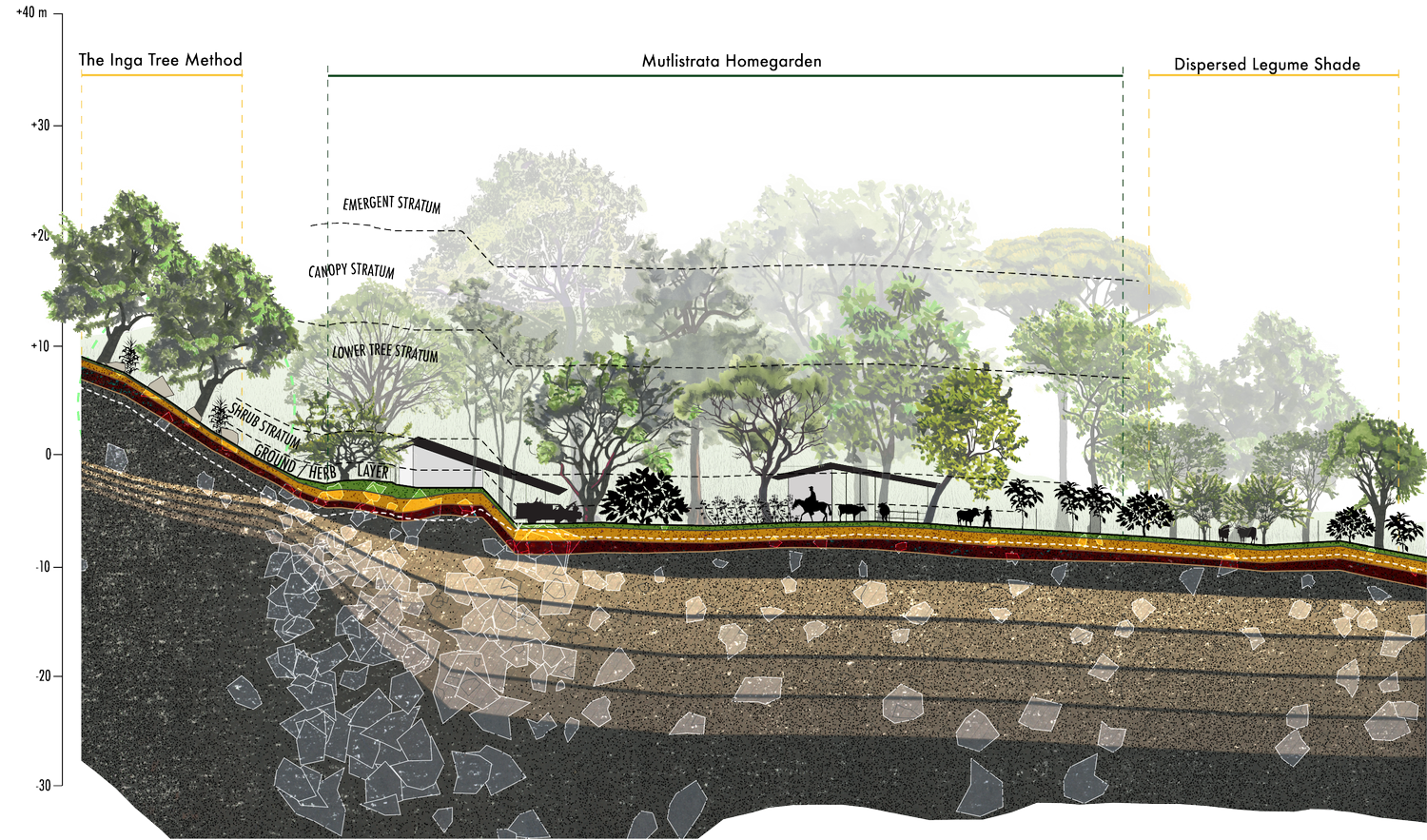
The Inga Tree Method:
Canopy establishment
Guaba machete (Inga edulis) is planted first, in rows along contour lines, forming the shade canopy the rest of the system depends on before anything is interplanted beneath it.

Pollarding & mulch return
The established canopy is cut back hard on a yearly cycle rather than left to grow freely, returning its nitrogen-rich branches and leaves to the ground as green mulch instead of standing wood.

Alley cropping
The cleared strip between tree rows is planted with maize or another annual crop, drawing on the nitrogen and weed suppression the mulch layer provides.

Slope anchoring
The root mass of the mature rows holds the hillside in place, working alongside any contour terracing built up to reinforce the same function.

Dispersed Legume Shade:
Canopy establishment
Poró, Guaba, Guajiniquil, or Madero negro are planted from live stakes or young trees, scattered through the plot rather than arranged in rows, beginning the shade cover the crop below will eventually depend on.

Living fence integration
Where Madero negro lines the plot boundary, the same stakes that root into scattered canopy trees elsewhere are set closer together along the edge, doing double duty as a living fence.

Understory planting
Coffee or cacao is planted beneath the developing canopy once shade cover is sufficient to protect the young crop from direct sun.

Litter & pruning return
Fallen leaf litter, along with any cut prunings from a pollarded Poró, accumulates on the ground and feeds the soil beneath the crop on an ongoing basis.

Root-zone nitrogen fixing
Nodules on the legume root systems build up gradually as the canopy matures, enriching the soil from below over the same years the shade above is establishing.

Sources:
—Jordan, C. F. (1985). Nutrient Cycling in Tropical Forest Ecosystems: Principles and Their Application in Management and Conservation. John Wiley & Sons.
—Beer, J., Muschler, R., Kass, D., & Somarriba, E. (1997). Shade management in coffee and cacao plantations. Agroforestry Systems, 38, 139–164. https://doi.org/10.1023/A:1005956528316
—Kumar, B. M., & Nair, P. K. R. (Eds.). (2006). Tropical Homegardens: A Time-Tested Example of Sustainable Agroforestry. Advances in Agroforestry, Vol. 3. Springer. https://doi.org/10.1007/978-1-4020-4948-4
—The Inga Foundation. "Inga Alley Cropping." https://www.ingafoundation.org/alley-cropping/